1121 Sella Basmati Rice: Uses, Grades & Export Specs
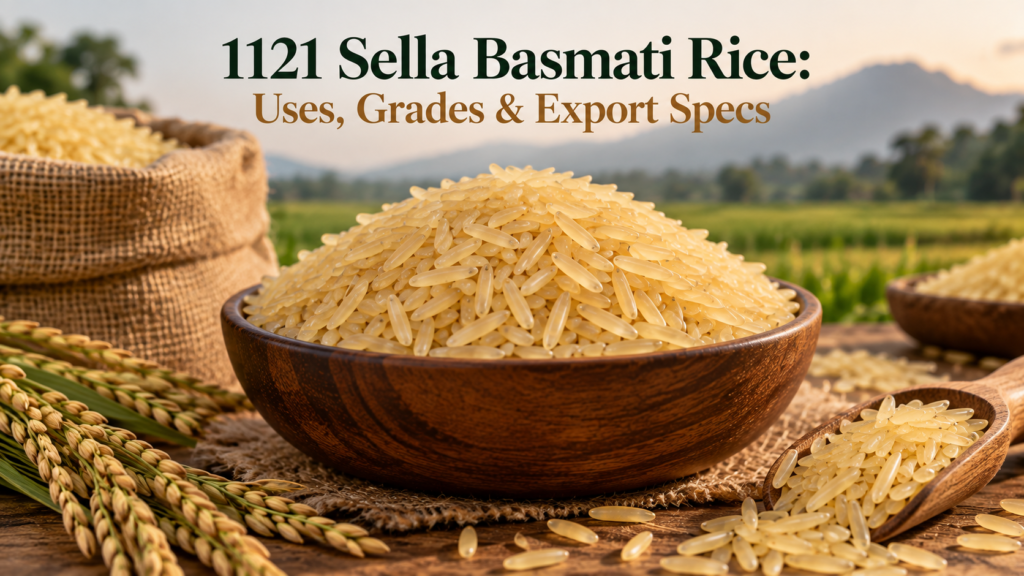
1121 Sella Basmati Rice represents a unique intersection of premium grain characteristics and extended shelf life—combining the exceptional elongation of 1121 varieties with the processing advantages of Sella (parboiled) rice. For importers, distributors, and food service operations sourcing bulk quantities, understanding the technical specifications, quality grades, and practical applications of this variety is essential. This guide gives you the details you need to source, evaluate, and use 1121 Sella Basmati in your operations.
Understanding 1121 Sella Basmati Rice
1121 Sella Basmati Rice is a parboiled long-grain variety that combines the superior elongation characteristics of the 1121 cultivar with the processing advantages of the Sella parboiling method. The “1121” designation refers to the seed variety, while “Sella” describes the processing technique applied after harvesting.
Raw grain length typically measures 7.5–8.0 millimeters, and when cooked properly, grains elongate to approximately 18 millimeters or beyond. The Sella processing gives the rice its characteristic golden or cream color and provides enhanced storage stability compared to non-parboiled rice.
This combination makes 1121 Sella particularly valuable for importers managing extended supply chains where shelf life stability is critical, while still delivering the premium visual presentation that fine dining and upscale food service operations demand.
Quality Grades and Classifications
1121 Sella Basmati is graded according to specific standards that evaluate grain characteristics, purity, and processing quality. Understanding these grades is essential for procurement decisions and for communicating specifications to end-users.
Grade 1 (Premium/Export Grade):
This is the highest quality classification for 1121 Sella Basmati rice. Grade 1 specifications require:
• Grain length: 7.5mm minimum (raw)
• Cooked elongation: 18mm minimum
• Purity: 99% or higher
• Broken grains: Less than 1%
• Moisture content: 10–12%
• Foreign materials: Virtually none (< 0.05%)
• Discolored grains: Less than 0.5%
• Damaged grains: Less than 0.5%
Grade 1 is the standard for international premium markets, fine dining establishments, and discerning importers. This grade justifies premium pricing and typically appears in specialty retail channels and high-end food service.
Grade 2 (Standard Commercial Grade):
Grade 2 maintains excellent quality for commercial operations while allowing slightly more flexibility in specifications:
• Grain length: 7.5mm minimum (raw)
• Cooked elongation: 17–18mm
• Purity: 98–99%
• Broken grains: 1–2%
• Moisture content: 10–12%
• Foreign materials: < 0.1%
• Discolored grains: < 1.5%
• Damaged grains: < 1%
Grade 2 is ideal for restaurants, food service operations, and wholesale distribution where cost-efficiency matters alongside quality. The slightly higher broken grain percentage (1–2%) doesn’t significantly impact cooking performance or presentation.
Grade 3 (Commercial Grade)
Grade 3 represents entry-level commercial pricing while still maintaining Basmati characteristics:
• Grain length: 7.0mm minimum (raw)
• Cooked elongation: 16–17mm
• Purity: 97–98%
• Broken grains: 2–3%
• Moisture content: 10–12%
• Foreign materials: < 0.2%
• Discolored/damaged grains: < 2.5%
Grade 3 suits cost-conscious bulk buyers, institutional food service, and markets where premium appearance is less critical. The variety still delivers authentic Basmati elongation and Sella shelf life stability.
Export Specifications and Compliance
Importing 1121 Sella Basmati rice requires compliance with multiple international standards, certifications, and documentation requirements that vary by destination market. Understanding these requirements prevents shipment delays and ensures seamless customs clearance.
International Quality Standards:
Reputable 1121 Sella Basmati exporters maintain certifications demonstrating compliance with global standards:
ISO 9001:2015 – Quality Management System certification
HACCP – Hazard Analysis and Critical Control Points food safety protocol
FDA Registration – Required for North American imports
SGS/Intertek Testing – Independent third-party laboratory verification
Phytosanitary Certificates – Plant health certification for international shipment
These certifications ensure the rice has been processed, tested, and handled according to internationally recognized food safety and quality protocols.
Regional Market Requirements:
Different markets have specific import requirements:
North America: FDA registration, pesticide residue testing (compliant with US tolerances), Certificates of Analysis (COA). European Union: Compliant with EU Maximum Residue Levels (MRL) for pesticides, EU food safety regulations, Certificate of Origin.
Middle East & GCC: Halal certification, Arabic labeling requirements, specific quality grade preferences. Africa: Phytosanitary compliance, standard quality certificates.
Always verify specific requirements with your destination market before finalizing orders.
Typical Export Specifications Document:
- When sourcing 1121 Sella Basmati, export suppliers provide detailed specifications including:
- Product name and grade
- Grain length (raw and cooked)
- Purity percentage
- Broken grain percentage
- Moisture content | Color description
- Packaging type and quantity
- Minimum Order Quantity (MOQ)
- Lead time from order to shipment
- Certification confirmations
- Laboratory test results
- Price per unit and total shipment value
Common Uses and Applications
1121 Sella Basmati’s unique combination of characteristics makes it suitable for diverse applications across consumer and commercial sectors.
Fine Dining and Upscale Restaurants:
The exceptional grain elongation (18mm+) and golden appearance make 1121 Sella ideal for restaurants emphasizing visual presentation. Premium biryani restaurants, contemporary South Asian cuisine establishments, and upscale Persian restaurants often feature 1121 Sella as their signature rice option. The slightly firmer texture from Sella processing also resists overcooking in busy kitchen environments.
Specialty Retail and Premium Grocery:
Specialty grocers, natural food stores, and premium retailers position 1121 Sella Basmati in their highest-tier rice sections. The Sella processing appeals to health-conscious consumers aware of the nutritional benefits of parboiled rice. The extended shelf life suits retail operations with slower inventory turnover compared to commodity white rice.
Institutional Food Service:
Large-scale institutional operations (hospitals, universities, corporate dining, military facilities) value Sella’s extended shelf life and storage stability. For facilities managing inventory across multiple locations, 1121 Sella’s 24–36 month shelf life under proper storage conditions significantly reduces food waste compared to non-Sella varieties.
Export and International Distribution:
Exporters and international distributors favor 1121 Sella for long-distance shipping and multiple warehouse transfers. The robust grain structure and extended shelf life mean less spoilage loss during extended ocean transit and warehouse storage. Middle Eastern and African importers particularly value this variety for these reasons.
Sourcing and Procurement
Sourcing 1121 Sella Basmati effectively requires understanding order minimums, lead times, pricing factors, and supplier evaluation criteria.
Minimum Order Quantities:
Most trusted exporters maintain minimum order quantities (MOQs) to ensure shipment viability. Typical MOQs range from 10–20 metric tons for Grade 1 material, though some suppliers offer smaller quantities (5–10 MT) at premium pricing. Direct sourcing from Pakistani exporters typically allows more flexibility on MOQs compared to trading companies or distributors.
Pricing Factors:
1121 Sella Basmati pricing is influenced by several factors: quality grade (Grade 1 commands 15–25% premium over Grade 2), order size (larger orders receive better per-unit pricing), seasonality (post-harvest periods offer better pricing), market conditions, and packaging type (bulk bags vs. consumer packages). Incoterms also affect final costs—FOB Karachi, CIF, and DAP pricing all reflect different levels of logistics responsibility.
Supplier Evaluation:
- When evaluating potential suppliers, assess:
- Certifications (ISO 9001:2015, HACCP, FDA registration)
- Proven export experience to your target market
- References from other importers
- Willingness to provide sample shipments
- Quality documentation (laboratory testing protocols)
- Communication responsiveness
- Logistics expertise
- Payment term flexibility
Storage and Handling
Proper storage and handling preserve 1121 Sella Basmati’s quality throughout its shelf life. While the Sella processing provides inherent stability advantages, best practices are still essential.
Storage Conditions:
Store in food-grade containers or silos in cool (15–20°C preferred), dry environments (below 12% relative humidity). Protect from direct sunlight, which can fade color. Keep in well-ventilated areas to prevent moisture accumulation. Maintain separation from strong-smelling materials, as rice readily absorbs odors.
Shelf Life:
Under optimal conditions, 1121 Sella maintains premium quality for 24–36 months. The Sella processing extends shelf life compared to non-parboiled varieties by improving resistance to insect infestation and microbial deterioration. Beyond 36 months, gradual quality degradation may occur, though the rice remains food-safe—aroma and color may fade slightly, and the grain’s cooking characteristics may marginally change.
Handling Best Practices:
Minimize grain breakage during loading, unloading, and transfer. Use pneumatic rather than mechanical grain handling when possible. Protect from excessive moisture exposure. Maintain pest control measures in storage facilities. Follow first-in-first-out (FIFO) inventory rotation for optimal freshness. Store packaged rice in dry locations with good air circulation.
Frequently Asked Questions
Q: What exactly makes 1121 Sella different from regular 1121 Basmati?
A: Both are the 1121 cultivar, but Sella undergoes parboiling (steaming under pressure before milling) which migrates nutrients into the grain and creates the golden color. This extends shelf life significantly and makes Sella more resistant to insect damage. Regular 1121 (white/steam) has shorter shelf life but whiter appearance and softer texture.
Q: Can I combine different grades in a single shipment?
A: Yes, most exporters can mix grades within a single container, though they’ll quote separate pricing for each grade portion. Clearly specify quantity and grade for each component when requesting quotes.
Q: What’s the typical lead time from order to shipment?
A: 3–4 weeks for standard orders. Expedited orders (with premium fees) may ship within 7–10 days. Lead time depends on inventory availability, quality testing requirements, and shipping port operations.
Q: Is 1121 Sella suitable for wholesale packaging?
A: Yes, many exporters offer private label packaging options. You can order in bulk (20–25 kg bags or larger) and have your branding added. Minimum order quantities for custom packaging are typically higher (40–50 MT) than for standard packaging.
Conclusion
1121 Sella Basmati Rice delivers a distinctive combination of premium grain characteristics and practical supply chain advantages. The exceptional 18mm+ elongation provides the visual impact that fine dining and upscale food service operations demand, while Sella’s extended shelf life and storage stability address the logistical realities of international supply chains.
Understanding quality grades, export specifications, and practical applications allows you to source, procure, and utilize 1121 Sella effectively for your specific business model—whether you’re operating a premium restaurant, managing institutional food service, or importing for wholesale distribution.
When evaluating potential suppliers, prioritize those demonstrating rigorous quality standards, international certifications, and transparent documentation. The modest price premium for premium grades is justified by superior performance and customer satisfaction across diverse applications.
Looking for Premium 1121 Sella Basmati Rice?
Choose the right grade for your market, application, and quality requirements. From premium export-grade rice to reliable bulk supply, make your next sourcing decision with confidence.
At Saremco Impex Private Limited, we connect international buyers with premium Pakistani rice through reliable sourcing, rigorous quality standards, and export-ready solutions.
Whether you are sourcing for wholesale distribution, food service, retail, or international markets, our team can help you find the right grade, specifications, packaging, and supply solution for your business.
Partner with Saremco Impex Private Limited for quality you can trust and supply you can rely on.
Get in touch for specifications, pricing, samples, or your next bulk order.
📧 info@saremcoimpex.com
📞 +92 341-1115222
🌐 https://saremcoimpex.com