Super Kernel Basmati vs 1121 Basmati: Key Differences and Which to Choose
When shopping for premium Basmati rice, you’ll encounter two names repeatedly: Super Kernel and 1121. Both are celebrated for their quality, but they’re not the same. Understanding the differences between these two varieties can give you confidence and help you make a better choice-whether for a good meal or an exceptional one—and it might even save you money. In this detailed comparison, we’ll break down exactly what sets Super Kernel Basmati apart from 1121, helping you make an informed decision based on your cooking style, budget, and preferences.
What Is Super Kernel Basmati?
Super Kernel Basmati is a premium-grade long-grain rice variety that’s been cultivated for decades in the Punjab region of Pakistan. It represents the traditional Basmati rice profile—refined, aromatic, and reliable. The variety is known for its consistent quality and has earned a solid reputation among both home cooks and professional chefs.
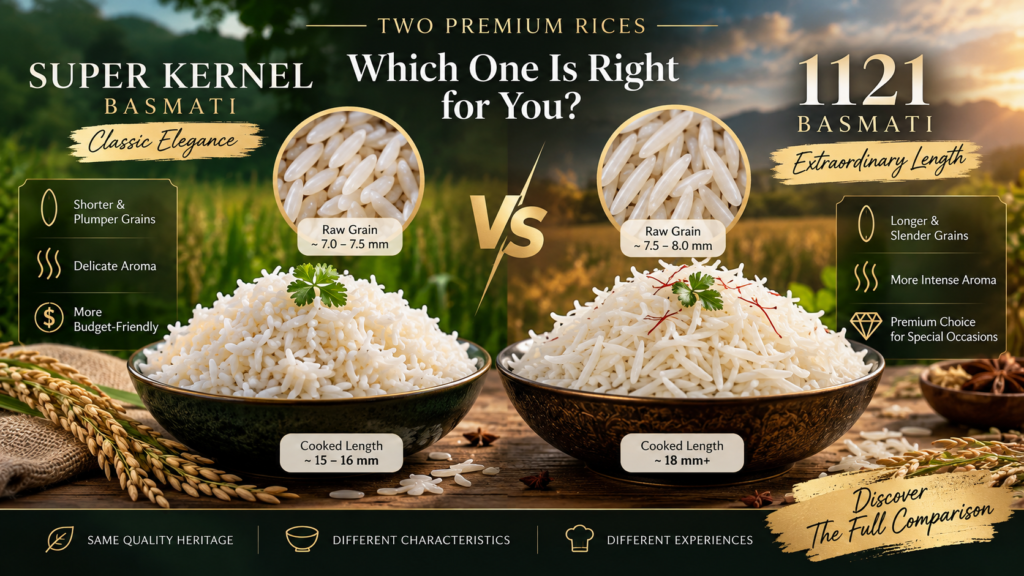
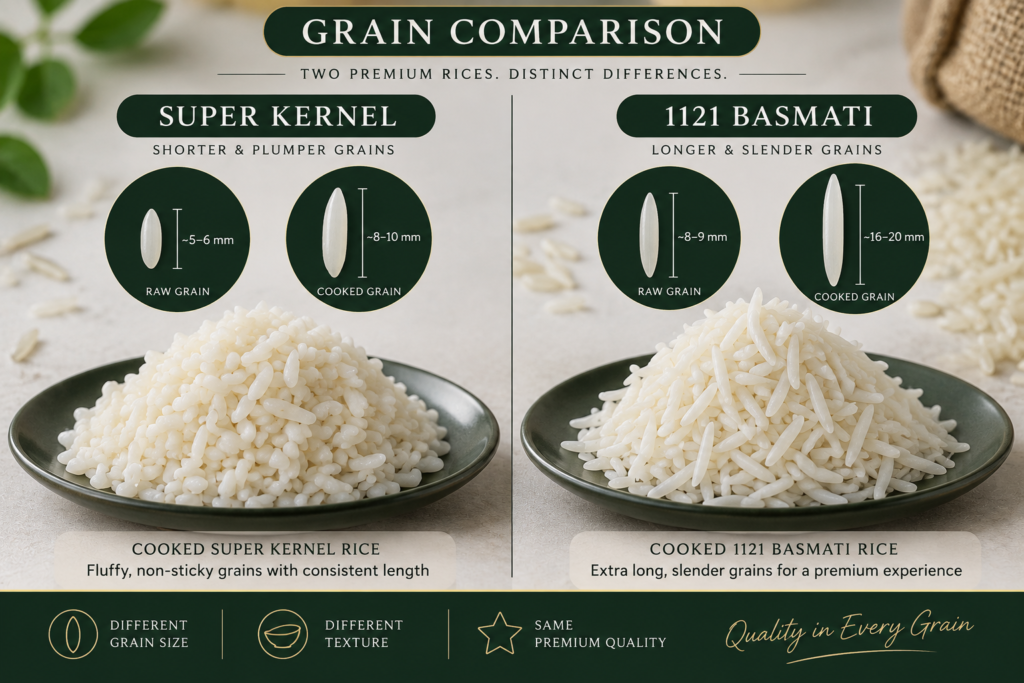
Raw Super Kernel grains typically measure 7.0–7.5 millimeters in length. When cooked properly, they elongate to approximately 15–16 millimeters. While this isn’t as dramatic as some extra-long grain varieties, it’s still impressive and provides the elegant appearance that Basmati rice is known for.
What Is 1121 Basmati?
1121 Basmati rice is a newer cultivar that emerged as a response to market demand for even more exceptional grains. The variety name comes from its cultivar code, which is used in seed certification systems. 1121 represents the cutting edge of Basmati rice breeding and refinement.
The defining characteristic of 1121 is its extraordinary grain elongation. Raw grains measure 7.5–8.0 millimeters, but when cooked, they can stretch to 18 millimeters or beyond—creating the signature needle-like appearance that commands premium prices in international markets.
Direct Comparison: Key Differences
Grain Length and Elongation:
This is the most obvious distinction between the two varieties:
- Super Kernel Basmati:
- Raw length 7.0–7.5mm
- Cooked length ~15–16mm
- Elongation ratio approximately 2:1
- 1121 Basmati:
- Raw length 7.5–8.0mm
- Cooked length ~18mm+
- Elongation ratio approximately 2.3:1 or higher
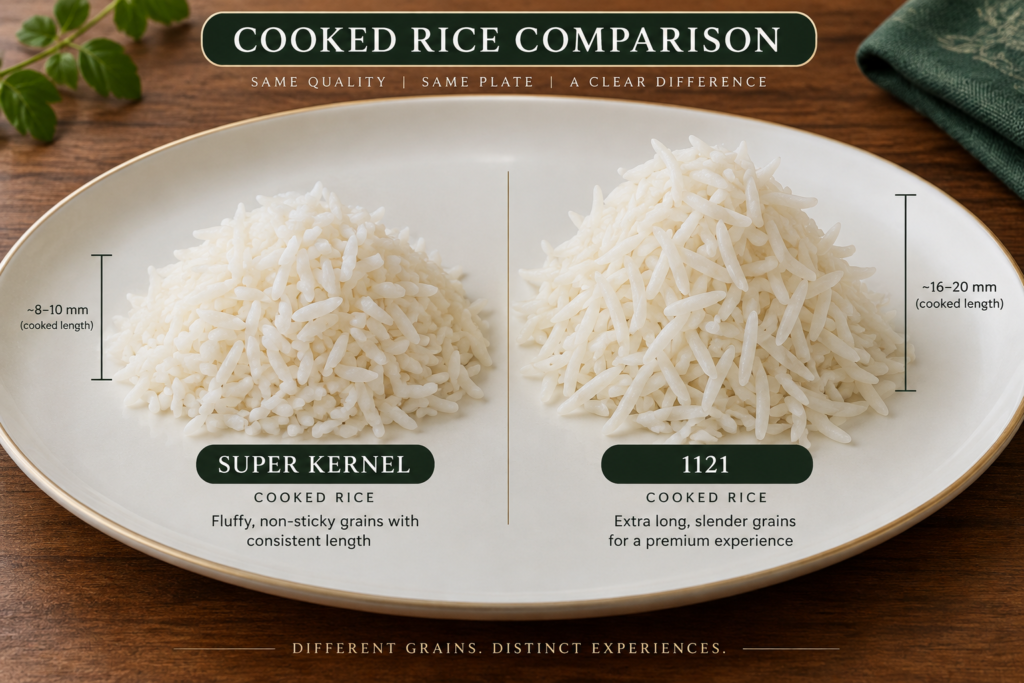
The practical difference? When you plate Super Kernel rice, you get an elegant presentation. When you plate 1121, you get a visually striking, restaurant-quality appearance. For everyday cooking, both look excellent. For fine dining or special occasions, 1121’s extra length creates memorable visual impact.
Aroma and Flavor:
Both varieties share the characteristic fragrance that makes Basmati rice distinctive—a delicate, nutty aroma derived from naturally occurring compounds. However, there are subtle differences:
Super Kernel Basmati provides a noticeable, pleasant fragrance that enhances traditional dishes without overwhelming the palate. The aroma is consistent and reliable, making it a safe choice when you want authentic Basmati characteristics without surprises.
1121 Basmati offers a more concentrated, refined aroma that develops from the cultivar’s specific genetics and longer aging process. Aged 1121 (stored 12+ months after milling) develops even more pronounced aromatic intensity, which some enthusiasts prefer for special dishes.
For flavor, both varieties are remarkably similar when cooked properly—neither has a distinctly different taste profile. The difference lies in aroma intensity, not flavor substance.
Texture and Cooking Behavior:
Both varieties maintain excellent texture when cooked—grains stay firm and separate without becoming sticky or mushy. The cooking behavior is remarkably similar:
Super Kernel Basmati requires approximately 15–17 minutes of simmering and responds well to the traditional absorption method. The grains remain tender yet slightly firm, providing excellent texture for both traditional and contemporary dishes.
1121 Basmati also cooks in 15–18 minutes and maintains nearly identical texture characteristics. The slight variation in cooking time (sometimes a minute or two longer) accounts for the marginally higher moisture content in the raw grain.
The texture advantage goes to neither—they’re genuinely equivalent in this respect.
Price Comparison:
Price is often the decisive factor when choosing between the two varieties. This is where you’ll see the most practical difference:
Super Kernel Basmati typically costs 20–30% less than 1121, making it the more accessible premium option. For bulk purchases (restaurant supply, food service), this price difference can be substantial. A 25-kilogram bag of Super Kernel might cost $45–55, while the same quantity of 1121 could run $60–75.
1121 Basmati commands premium pricing due to its exceptional grain elongation, limited cultivation area, and higher international demand. Specialty retailers and premium food stores often position 1121 as their top-tier offering.
The value equation depends on your priorities. For everyday cooking, Super Kernel offers excellent value. For special occasions or when presentation matters, 1121’s premium price may feel justified.
Quality Standards and Certification
Both Super Kernel and 1121 from reputable exporters meet rigorous international quality standards. When sourcing from established producers, you should expect:
ISO 9001:2015 certification for quality management systems | HACCP compliance for food safety | FDA registration (for North American export) | Certificates of Analysis from independent laboratories (SGS, Intertek) | Moisture content within 10–12% specifications | Purity above 99% | Less than 2% broken grains
These standards are uniform across both varieties when sourced from quality-conscious producers. The certification level you receive doesn’t vary significantly between Super Kernel and 1121—it depends more on the exporter’s commitment to compliance.
Which Should You Choose?
The answer depends on your specific situation. Here’s a practical decision framework:
Choose Super Kernel Basmati If:
- You prioritize value and budget efficiency
- You cook Basmati rice regularly for everyday meals
- You want excellent quality at a reasonable price point
- You’re buying for restaurant operations where cost management matters
- You prefer traditional, reliable Basmati characteristics without premium pricing
- You’re stocking institutional kitchens or food service operations
Choose 1121 Basmati If:
- Presentation and visual impact are important to you
- You’re preparing special occasion meals or fine dining presentations
- You want the most exceptional elongation and grain separation
- You appreciate premium, concentrated aroma from aged varieties
- You’re serving discerning guests or in high-end culinary settings
- You want to feature rice as a showcase element of your dish rather than a supporting component
Cooking Techniques for Each Variety
While both varieties cook similarly, slight adjustments optimize results:
Super Kernel Basmati:
Rinse thoroughly (3–4 times) to remove excess starch. Use a 1:1.5 water-to-rice ratio. Optional 15-minute soaking improves results but isn’t essential. Bring water to boil, add rice, return to boil, reduce heat to low, cover tightly, and simmer 15–16 minutes. Rest covered for 5 minutes before fluffing.
1121 Basmati
Rinse thoroughly (3–4 times). Use the same 1:1.5 water-to-rice ratio. 20–30 minutes of soaking is recommended (not just optional) to maximize elongation potential. Bring water to boil, add rice, return to boil, reduce heat, cover, simmer 16–18 minutes. Rest covered for 5 minutes. Fluff gently with a fork (not a spoon, to avoid breaking the longer grains).
The key difference: 1121 benefits more from soaking and requires slightly more gentle handling due to its longer grain structure.
Sourcing and Availability
Both varieties are widely available from established Basmati rice exporters, though availability patterns differ slightly.
Super Kernel Basmati is readily available year-round through most Asian grocery stores and mainstream supermarkets. Its broader commercial popularity means consistent supply and wider distribution networks. Home cooks can typically find Super Kernel at better availability and competitive pricing.
1121 Basmati, while increasingly available, is more common in specialty food retailers, premium grocery stores, and through direct export suppliers. Availability can be more seasonal, and supply may be more limited in smaller markets. International buyers (restaurants, food service operations) often source 1121 directly from Pakistani exporters for better pricing and consistent supply.
Frequently Asked Questions
Q: Is 1121 rice always better quality than Super Kernel?
A: Not necessarily. Both varieties can be premium quality when sourced from reputable exporters. 1121 commands premium pricing primarily due to its exceptional grain elongation, not because Super Kernel is inferior. From reliable sources, both meet rigorous quality standards. The choice is preference-based, not quality-based.
Q: Can I substitute one for the other in recipes?
A: Yes, completely. The cooking behavior is nearly identical, and the texture results are comparable. The main difference is visual appearance. In dishes where presentation matters less (or is hidden), substituting is seamless. For dishes where the rice is showcased visually, you’ll notice 1121’s extra elongation.
Q: Which is better for biryani?
A: Both work excellently for biryani. Traditional biryani uses Super Kernel, which provides authentic flavor and reliable cooking. Contemporary fine dining biryani often features 1121 for visual drama. Your choice depends on whether you prioritize tradition (Super Kernel) or presentation enhancement (1121).
Q: How should I store these varieties?
A: Storage requirements are identical. Keep rice in airtight containers in a cool, dry place (below 20°C and below 12% humidity). Both varieties maintain quality for 12–18 months when stored properly. Protect from moisture, pests, and strong odors.
Q: Is aged Super Kernel better than regular 1121?
A: They offer different characteristics rather than one being “better.” Aged Super Kernel (18+ months old) develops enhanced aroma and slight texture improvements. Regular 1121 offers superior grain elongation and fresher qualities. Choose based on what characteristics you value in your rice.
The Bottom Line
Super Kernel Basmati and 1121 Basmati represent two excellent points on the premium Basmati spectrum. Neither is definitively “better”—they simply serve different priorities and preferences.
Super Kernel Basmati delivers exceptional value, reliable quality, and authentic Basmati characteristics at a moderate price point. It’s the sensible choice for regular use and food service operations where cost efficiency matters without compromising quality.
1121 Basmati offers extraordinary grain elongation and refined characteristics that justify premium pricing for discerning cooks and fine dining applications. When presentation and maximum visual impact matter, 1121’s needle-like grains create memorable impact.
The best choice is whichever variety aligns with your specific needs, cooking style, and budget. Both, when sourced from quality-conscious exporters, deliver the authentic Basmati experience that has made these varieties globally renowned.
Looking for premium-quality Super Kernel or 1121 Basmati rice from Pakistan?
Saremco Impex can help you source rice for retail, restaurants, food service, and international markets.
Explore our rice range or contact Saremco Impex to discuss your requirements, specifications, packaging, and export needs.
→ Explore Saremco Impex Rice Products
E-Mail: info@saremcoimpex.com
Contact: +92 341 111 5222 +92 341 111 5333 +92 341 111 3555 +92321 646 3001