Rice Suppliers in Pakistan: Wholesale and Bulk Buying Guide
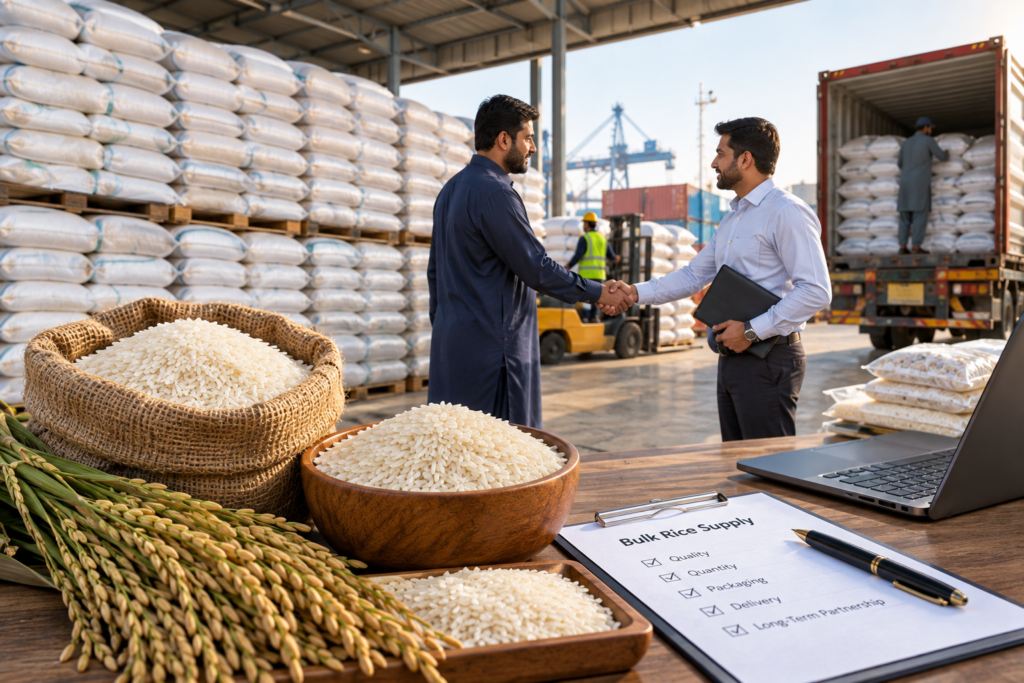
Pakistan is one of the few countries where buyers can source both premium aromatic basmati and low-cost white rice from the same supply base. The country ships rice to East Africa, the Middle East, Southeast Asia, China and beyond. For a first-time importer, though, finding reliable rice suppliers in Pakistan is rarely as simple as picking the cheapest quote. Variety, grade, milling quality, packaging, documentation and shipping terms all affect what arrives at your port.
This guide covers what you need to know before placing a wholesale or bulk order: the main rice types, how quality is judged, what a sensible supplier checklist looks like, and where the market stands now.
Why Buyers Look to Pakistan for Rice
Rice is one of Pakistan’s largest agricultural export lines. Official trade data reported by Daily Times shows Pakistan shipped more than 4.29 million metric tons of rice in the financial year that ended on 30 June 2026, worth about $2.29 billion. Basmati accounted for roughly 795,000 tons of that, valued at about $843 million.
Early figures for the current financial year point upward. ARY News reports that exports in the first two months reached a record 655,000 tonnes, with basmati growing faster than other varieties.
Production backs this up. The U.S. Department of Agriculture’s Foreign Agricultural Service estimated Pakistan’s 2025/26 rice crop at about 9.4 million tons. The same report noted that export-price policies and competition from other exporters had put pressure on shipment volumes. Policy and price conditions shift, so buyers should check current figures before committing to a large contract.
Rice in Pakistan is grown mainly in Punjab and Sindh, with Balochistan contributing as well. The central Punjab belt is closely associated with aromatic basmati, while Sindh supplies a good share of the coarser export varieties.
Main Rice Types You Can Buy from Pakistan
Knowing the categories saves a lot of back-and-forth with suppliers. Most Pakistani export rice falls into two broad groups.
Basmati Rice
Basmati is a long-grain aromatic rice that elongates when cooked and stays separate rather than clumping. Buyers commonly ask for:
- Super Kernel Basmati: the traditional long-grain variety, valued for aroma and texture.
- 1121 Basmati: an extra-long-grain type known for its length after cooking, widely used in biryani and restaurant trade.
- Steam and sella (parboiled) basmati: processed to improve hardness, reduce breakage and suit bulk handling and longer storage.
Basmati sells at a premium, so quality inconsistencies cost real money. Ask for grain length specifications, aging details, moisture and broken percentage in writing.
Non-Basmati Rice (IRRI Varieties)
Non-basmati rice, often sold as IRRI-6 and IRRI-9, is the volume workhorse of Pakistani exports. It is a competitively priced long-grain white rice, popular in African and Asian markets where it is a daily staple. It is typically traded as white or parboiled and in different broken grades, such as 5%, 25% or 100% broken. Many African markets in particular buy broken grades.
Because this segment is price-driven, small differences in broken percentage, moisture and foreign matter can swing the final landed cost.
Understanding Rice Quality and Specifications
When you compare quotes from different rice suppliers in Pakistan, you are only comparing like with like if the specifications match. A good quotation should state the following clearly.
- Variety and crop year: older, aged basmati is generally valued for cooking performance.
- Grain length: especially important for basmati.
- Broken percentage: the share of grains that are fractured or incomplete.
- Moisture content: high moisture raises the risk of mould, discoloration and spoilage in transit.
- Milling degree and polish: affects appearance and shelf presentation.
- Admixture and foreign matter: other rice varieties, stones, husk and other impurities.
- Processing type: raw white, parboiled, steam or sella.
Pakistan has its own national rice standards, which were developed with input from the industry’s exporters’ association. Ask suppliers which standard or buyer specification their rice is graded against, and request a pre-shipment inspection by an independent surveyor for large orders.
What to Check Before Choosing a Rice Supplier
Price matters, but reliability matters more once money and containers are on the line. Here are the questions worth asking every prospective supplier.
1. Can they provide samples and spec sheets?
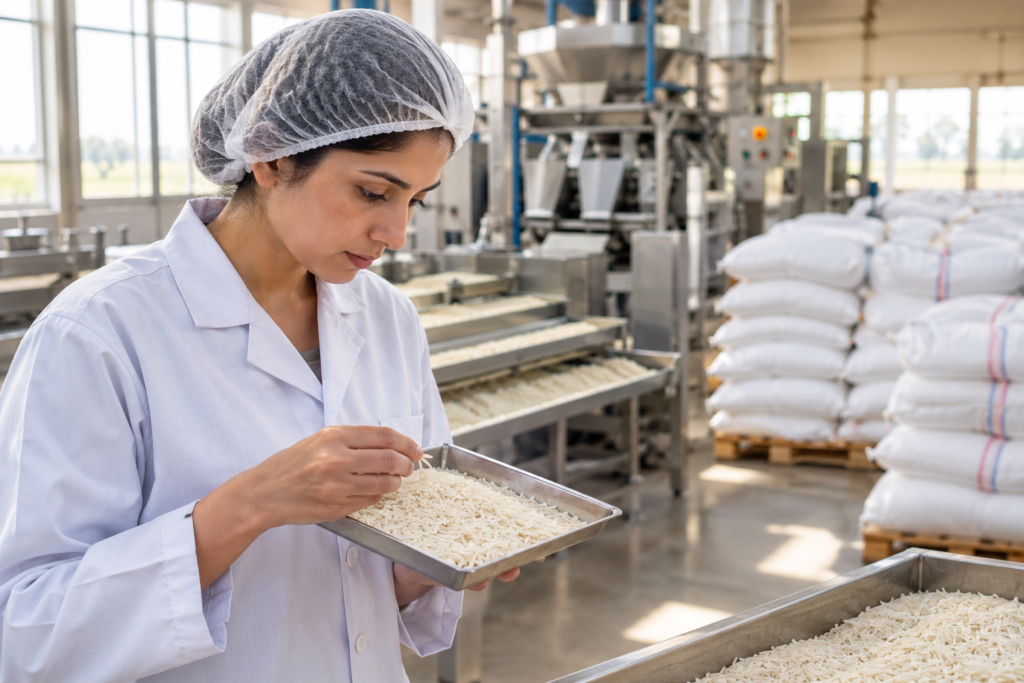
Reputable suppliers send a physical sample and a written specification before talking about contracts. Compare the sample against the spec yourself, or have a lab or inspector do it.
2. Are they a genuine exporter with proper registration?
Ask for company registration details and export-related documentation. Pakistan’s trade promotion body, the Trade Development Authority of Pakistan, is a useful starting point for understanding export procedures and registered trade channels.
3. What documents will accompany the shipment?
Typical export paperwork includes the commercial invoice, packing list, bill of lading, certificate of origin and a phytosanitary certificate. Some destinations also require fumigation certificates or specific quality and weight certificates. Confirm your country’s import requirements before the order, not after.
4. How is the rice packed?
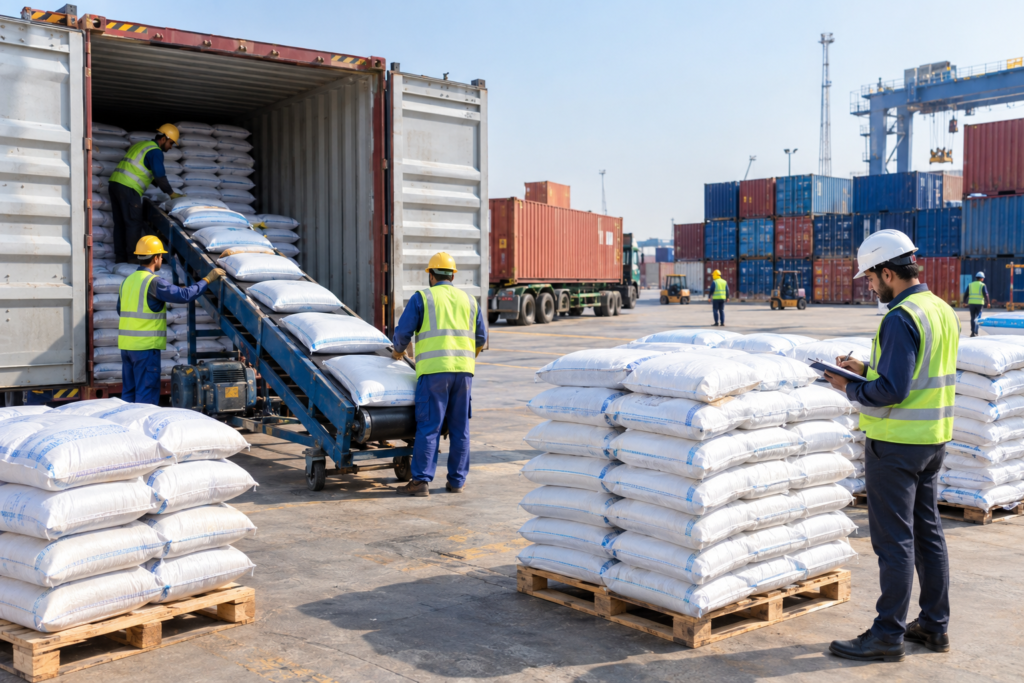
Bulk rice is commonly packed in woven polypropylene or laminated bags in sizes such as 5 kg, 10 kg, 25 kg and 50 kg, loaded into 20-foot or 40-foot containers. Retail-ready packaging is a different job from bulk packing, so state whether you want private-label bags, printed sacks or plain export packing.
5. What are the Incoterms and payment terms?
Quotes on FOB, CFR or CIF terms are not interchangeable. Make sure you know who handles freight, insurance and port charges, and agree on payment terms such as letter of credit or advance payment structures in writing.
6. Is there a clear inspection and claims process?
Agree in advance who will inspect the goods, at which stage, and what happens if the delivered quality does not match the contract.
Bulk and Wholesale Orders: Practical Planning Tips
Order Size and Container Loading
Wholesale rice is normally quoted per metric ton, with orders built around container loads. Exact payload depends on bag size, container type and the supplier’s packing practice, so ask for the loadable quantity per container instead of assuming it.
Seasonality
Pakistan’s main rice crop is harvested in the autumn, and fresh-crop supply starts reaching the market after that. Prices and availability often shift around harvest, so build this into your purchasing calendar. Forward contracts can help if you need price stability.
Storage and Shipping
Rice keeps well when dry and clean, but moisture and pests are the two main enemies. Check how the supplier stores stock before shipping, ask about fumigation practices where required, and make sure containers are inspected for cleanliness and dryness before loading. For humid transit routes, good packaging and moisture control matter even more.
Basmati vs. Non-Basmati: Which Should You Buy?
The right choice depends on your market and customer.
| Factor | Basmati | Non-Basmati (IRRI) |
|---|---|---|
| Typical use | Premium retail, restaurants, biryani and pulao | Everyday staple, mass retail, food aid and institutional trade |
| Price level | Higher | Lower, more volume-driven |
| Key quality focus | Grain length, aroma, aging | Broken percentage, whiteness, moisture |
| Common processing | Raw, steam, sella | Raw white, parboiled |
| Main buyer markets | Middle East, Europe, North America and others | East and West Africa, parts of Asia |
If you are testing a new market, many importers start with a smaller trial shipment of one variety, assess the result, then scale up.
Market Trends Buyers Should Watch
A few factors can affect cost and availability from one season to the next: government export-price policy, weather and flood risk in growing regions, global competition from other exporters, freight rates, and currency movements. Some of these moved noticeably in recent years, and reporting from Pakistan’s exporters’ association has pointed to both strong demand in new markets and pressure from regional competition. Following reliable trade news and keeping flexible contract terms help you manage the risk.
Food safety and regulatory oversight are also evolving. Pakistan created a dedicated body, the National Agri-trade and Food Safety Authority, to oversee food safety and agricultural trade compliance, as described on its public overview page. Buyers should expect compliance and documentation requirements to remain an important part of any export transaction.
Working with Saremco Impex Private Limited
Saremco Impex Private Limited is a Pakistan-based agricultural processing and export company that focuses on sourcing, processing and the global supply of agricultural by-products, with a current product range built around Pakistani maize and biomass materials. Its approach rests on structured sourcing across agricultural regions and export-ready handling from Pakistan. Buyers who want to discuss their requirements, product availability, specifications, quantities or quotations can contact Saremco Impex Private Limited with their inquiry, and the team can advise on what it is able to supply.
Final Thoughts
Choosing among rice suppliers in Pakistan comes down to matching the right variety and grade to your market, then verifying that the supplier can deliver that specification consistently. Ask for samples, get specifications and documents in writing, and compare quotes on identical terms. Start with a manageable first order, and build the relationship from there.
If you are ready to discuss sourcing from Pakistan, contact Saremco Impex Private Limited with your product, quantity and destination details, and the team will respond with what it can offer.