Super Kernel Basmati Suppliers in Pakistan: Quality and Bulk Supply
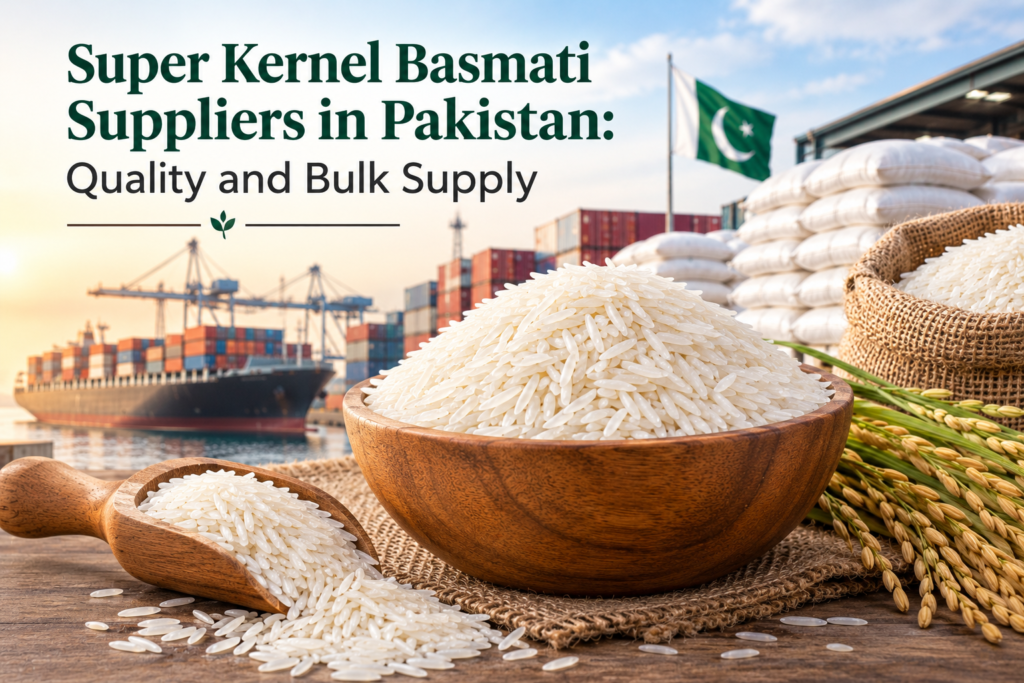
Finding reliable Super Kernel Basmati suppliers in Pakistan comes down to three questions. Does the rice match the grain specification you actually need? Can the supplier prove it with independent documents? Can they load the same quality, shipment after shipment? A supplier who answers all three clearly is worth more than one who quotes the lowest price per ton.
This guide covers what Super Kernel Basmati is, how it differs from other Pakistani Basmati grades, which quality parameters matter in a contract, and how to approach bulk buying. If you are ready to compare specifications, you can also look at the Daa Heritage Rice range on the Saremco Impex website.
What Is Super Kernel Basmati Rice?
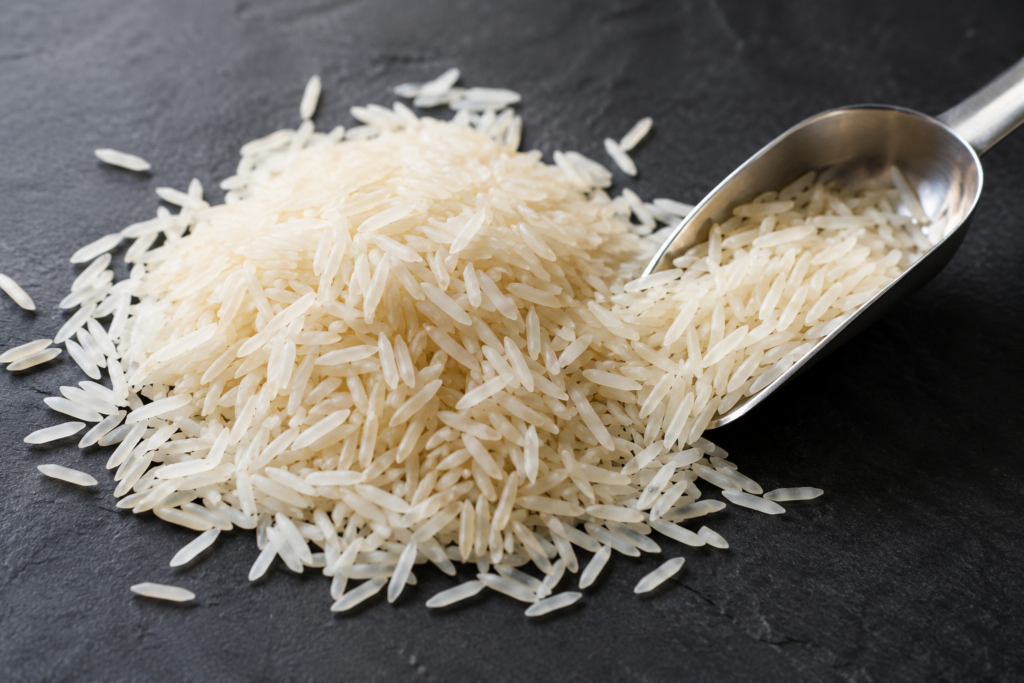
Super Kernel Basmati is a premium long-grain aromatic rice. Buyers value it for slender grains that stay separate after cooking, a distinctive natural fragrance, and a soft, fluffy texture. It is popular for biryani, pulao and other dishes where each grain needs to stay whole and dry rather than sticky.
“Super Kernel” is a trade description, not a regulated grade with one fixed definition. Market listings from Pakistani producers generally place the average raw grain length at around 7 mm or a little above. Saremco Impex lists its Super Kernel at 7.5 mm. Exact measurements vary by lot, mill and supplier, so always confirm the figure in writing before you sign a contract.
The word “Basmati” also carries legal weight in Pakistan. Pakistan registered Basmati as a Geographical Indication under its Geographical Indications Act 2020, with the Trade Development Authority of Pakistan acting as registrant. The TDAP Book of Specifications for Basmati sets out the characteristics a rice must have to be sold under that name. For importers, it is a useful reference when you want to confirm that a supplier is selling true Basmati.
Super Kernel vs 1121 and Other Pakistani Basmati Grades
Importers often ask whether they should buy Super Kernel or 1121. Both are Basmati, but they serve different buyers.
1121 (often sold as Kainat) is Pakistan’s main exported Basmati. Industry officials quoted by Dawn describe it as the principal Basmati variety shipped from the country. It is known for exceptional grain elongation on cooking, which suits catering and premium retail.
Super Kernel generally sits in a slightly different position. It is a traditional-style Basmati with strong aroma and fine texture, often preferred by buyers who value the classic Basmati taste profile and a balanced price.
A simple way to think about it:
- Super Kernel Basmati: classic aroma and flavor, widely accepted in retail and food service.
- 1121 Basmati: the longest cooked grain, popular where visual impact and elongation drive the purchase.
- Steam and Sella (parboiled) Basmati: more resistant to breakage in large-batch cooking, popular with institutional kitchens and in several Middle Eastern markets.
- Non-Basmati grades (such as PK-386, IRRI-6, IRRI-9): value-focused rice for buyers who prioritize price and volume over aroma.
Saremco Impex sorts these into two brands. Daa Heritage Rice carries the Basmati varieties, including Super Kernel, 1121, Steam and Sella. Daa Prime Rice carries the commercial non-Basmati range. For this article, Daa Heritage is the relevant one.
Pakistan’s Place in the Basmati Trade
Pakistan is a serious Basmati origin, not a niche one. According to Pakistan Bureau of Statistics figures reported by Daily Times, the country exported about 794,638 metric tons of Basmati worth roughly $843 million in the financial year ended June 30, 2026. Early figures for the new financial year look strong as well: APP reported that Basmati exports in July and August 2026 rose by more than 50 percent year on year.
Volumes this large mean buyers have real choice. They also mean quality varies a lot between suppliers. A strong supplier is one that can document its sourcing, milling and inspection process.
What to Check Before You Choose a Supplier
Price per ton is only one line in the comparison. These are the points that separate a dependable Super Kernel Basmati supplier from a risky one.
Grain length and consistency
Ask for the average grain length of the raw rice and, if cooked elongation matters to your customers, the expected cooked length. Request a sample and measure it yourself. A supplier whose sample and bulk lot match is more valuable than one with an impressive but unrepeatable specification.
Broken grains, admixture and purity
Broken grain percentage and foreign matter directly affect how your end customer experiences the rice. Specify limits in the contract rather than accepting “premium quality” as a description. Premium Basmati is normally double polished and optically sorted, but the tolerances should still be written into the sales agreement.
Moisture and ageing
Moisture affects shelf life, cooking behavior and the risk of mold during transit. Saremco Impex’s website refers to a moisture ceiling of 12 to 13 percent for its rice. Ageing practices differ by supplier, and many traders age Basmati for months to improve its cooking performance. Ask how long the rice has been aged and how it was stored.
Independent inspection and documents
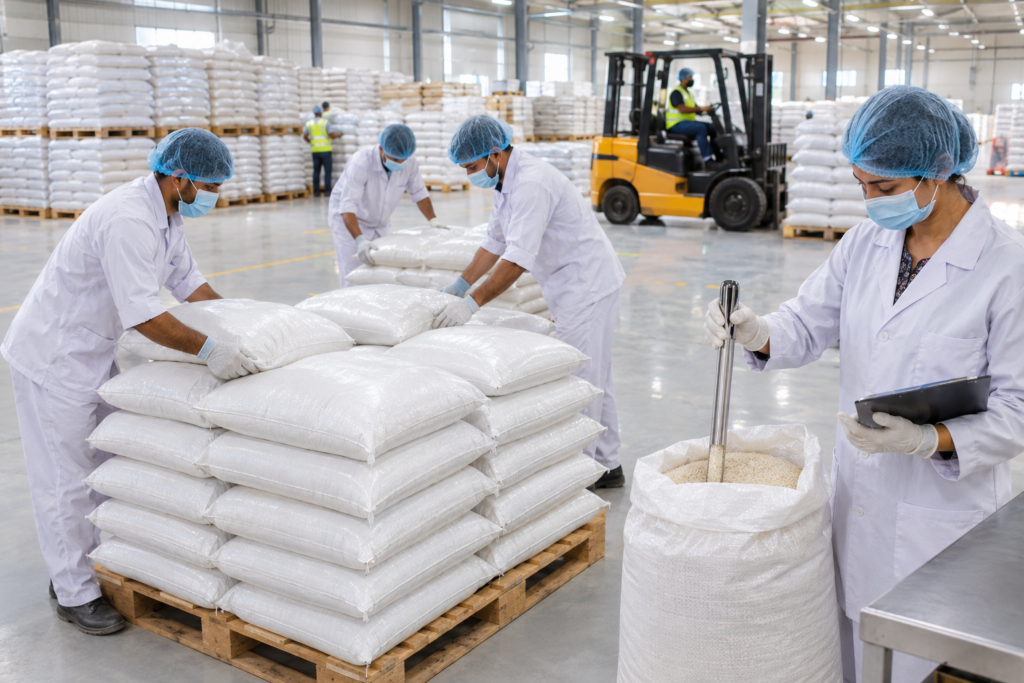
A reputable exporter should be comfortable with third-party inspection. Saremco Impex states on its website that shipments can be inspected by agencies such as SGS, Intertek or PCSIR, and that certificates of analysis, phytosanitary certificates and certificates of origin are available on request. Whatever supplier you choose, ask to see current copies of any certificates they claim, and confirm which products and facilities they actually cover.
A quick comparison table for supplier quotations
| What to confirm | Why it matters |
|---|---|
| Variety and grade name in writing | “Super Kernel” has no single legal definition, so the contract must define it. |
| Average grain length, broken % and admixture % | Sets the quality baseline for claims and disputes |
| Moisture level | Protects the rice during transit and storage |
| Crop year and ageing period | Affects cooking quality and consistency |
| Inspection body and report timing | Gives you independent proof before shipment |
| Packaging type and weight | Determines handling cost, branding and shelf appeal |
| Incoterm, port and lead time | Controls your landed cost and delivery planning |
Packaging and Bulk Supply Options
Packaging should follow your sales channel, not the other way around. Retail brands often need consumer packs in small sizes, while wholesalers and food-service buyers usually prefer larger sacks. Saremco Impex lists pack sizes from 1 kg consumer pouches through to 50 kg bags, along with larger bulk totes, and says it offers private label and multilingual packaging for importers who want their own brand.
For container shipments, ask about how the bags are palletized or floor-loaded, what moisture barrier is used, and how the container is inspected before sealing. Small errors at this stage, such as a damp container floor, can cause costly claims after arrival.
Export Process and Destination Requirements
Once you agree on specifications and price, the shipment moves through a fairly standard export sequence: contract and proforma invoice, packaging and inspection, export documentation, container booking at a Pakistani port, and sea freight to your discharge port. Saremco Impex says it ships from Karachi, Port Qasim and Gwadar, and its quotation form offers common terms such as FOB, CFR, CIF and DAP.
Documentation needs vary by destination, so check with your own authorities before you place an order. In the United States, for example, imported food requires prior notice to the FDA, and foreign food facilities generally must be registered. Other markets have their own food safety, labeling and pesticide residue rules. Ask your exporter which documents they can supply, and confirm the exact requirements with your importing authority rather than assuming one checklist fits every shipment.
How to Start a Bulk Order With Confidence
A sensible first order follows a clear path. Start by defining your target market and the grain profile your customers expect. Request a specification sheet and a sample from two or three suppliers. Compare the samples against the same checklist, ask for inspection and testing documents, and agree on packaging and Incoterms. Many buyers then place a single-container trial order before moving to regular shipments.
Saremco Impex says it can support trial containers as well as larger bulk volumes, and works with buyers on custom specifications and private label packaging. As with any supplier, treat these as points to confirm in your quotation rather than assumptions.
Conclusion
The best Super Kernel Basmati suppliers in Pakistan make the buying decision easier. They define their grade clearly, back it with independent testing, and stay consistent across shipments. Compare grain length, broken percentage, moisture, ageing and documents side by side and let those facts guide your choice alongside price.
If you are sourcing premium Basmati for retail, wholesale or food service, you can contact Saremco Impex through its website to ask about Super Kernel specifications, samples, packaging options and export quotations.