1121 Sella Rice Export from Pakistan: Quality and Wholesale Guide
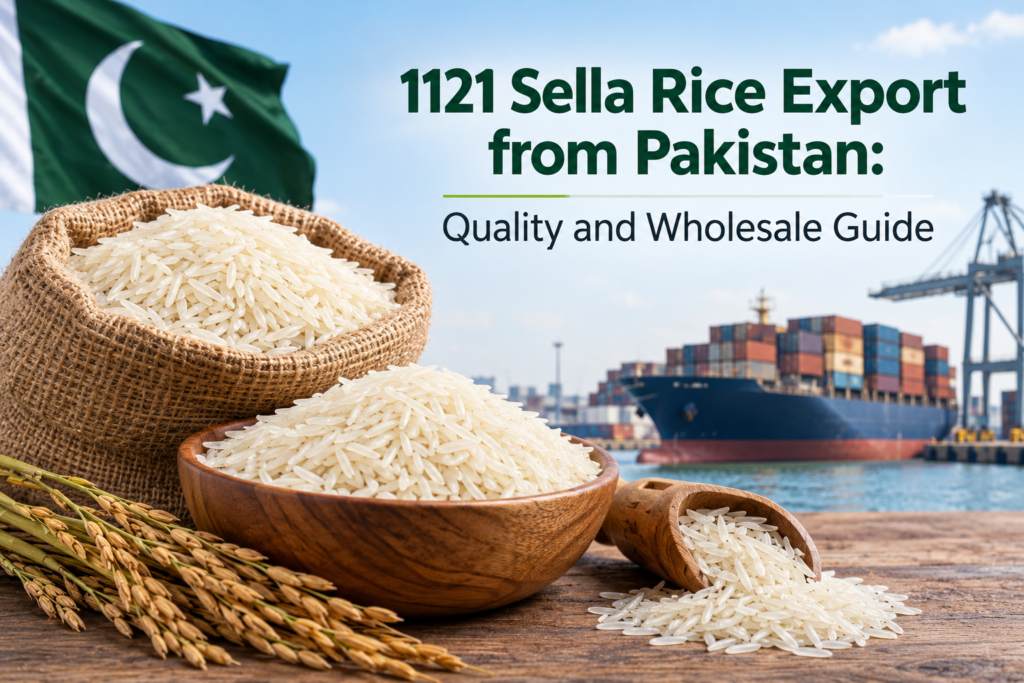
1121 Sella Rice Export from Pakistan? The question that matters comes down to a few things. What exactly are you buying? Which quality parameters protect your margin? How should a quotation be compared? And what has to be in place before the container sails? This guide covers each of them, drawing on the way Pakistani mills and exporters actually trade the product.
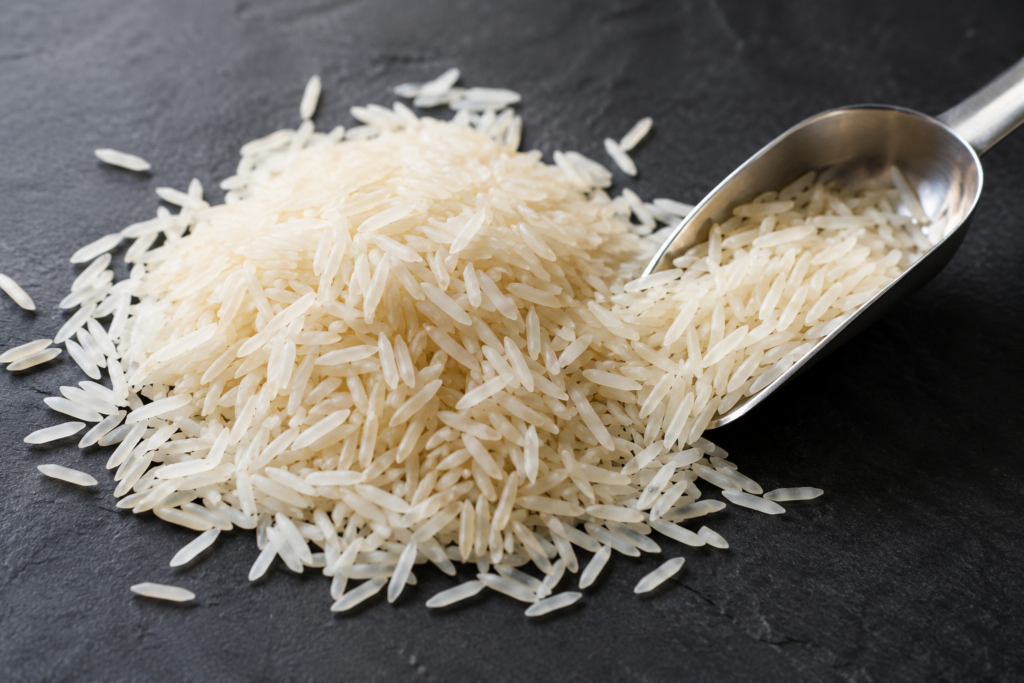
Sella is the trade name for parboiled rice. 1121 is the extra-long-grain Basmati variety that has become a commercial staple on both sides of the India–Pakistan border. Put them together, and you get a firm, golden or creamy-white grain that stays separate after cooking. That is why it is so popular with caterers, restaurant chains and biryani-heavy markets.
What Is 1121 Sella Rice?
Sella rice is made by parboiling the paddy before it is milled. The process has three stages: soaking, steaming and drying. The heat gelatinises the starch inside the kernel, and the grain hardens as it dries. The 1121 variety is already known for its length. Parboiling adds strength on top of that.
For buyers, that strength shows up in practical ways:
- Fewer grains break during milling, which usually means a better head-rice outcome.
- The cooked grain stays firm and separate instead of turning sticky.
- The rice tolerates large-batch cooking and hot holding better than raw rice.
- It generally takes slightly longer to cook than raw Basmati.
The parboiling method is also what separates the commercial forms of 1121:
- White (creamy) Sella is parboiled and then milled to a pale, creamy appearance.
- Golden Sella goes through a more intensive parboiling and drying cycle. It comes out a deeper golden colour and, according to many trade listings, has a slightly nuttier character.
- 1121 Steam sits between raw and Sella. It is usually described as lightly steamed, so it stays whiter than Sella while gaining some of the durability.
Exact shade and cooking behaviour differ from mill to mill, so always approve a physical sample before committing to volume.
1121 Sella Rice Export Pakistan: Market Snapshot
Pakistan’s basmati belt sits in central Punjab, and the country lists PK 1121 aromatic among its notified Basmati varieties in its application to the European Commission for protection of the name ‘Basmati’. Pakistan registered Basmati as a geographical indication at home in 2021, as Dawn reported.
Basmati is a smaller part of Pakistan’s rice trade than many buyers assume. In FY25, Pakistani media reporting on official trade data put Basmati shipments at roughly 800,000 tonnes worth about $830 million, while non-Basmati accounted for more than 85% of total rice export volume. In practice, Basmati exporters compete on grain quality, consistency and compliance rather than on price alone.
Parboiled 1121 sells into Gulf, East African and other markets where cooks want long, separate grains and consistent results from large pots. Buyers in these markets tend to be wholesalers, food-service distributors, caterers and private-label packers, and they care a great deal about colour uniformity and broken-grain levels.
Quality Parameters That Decide Your Margin
Two suppliers can both write “1121 Sella” on a proforma and ship very different rice. These are the points worth fixing in writing:
- Grain length. Trade listings for 1121 commonly quote about 8.0 to 8.4 mm before cooking, with cooked grains stretching to roughly twice that. Ask which length is guaranteed and how it is measured.
- Broken grains. Broken percentage affects both appearance and cooking. State the maximum and the method used.
- Moisture. Basmati is typically traded at around 12 to 13% moisture. Too high invites mould and caking in transit, so set a maximum.
- Admixture and foreign matter. Specify maximum limits for stones, husks, discoloured or chalky grains, and other varieties.
- Colour uniformity. For Sella, this matters more than for raw rice. Uneven batches look poor in retail packs and cook unevenly.
- Aroma and cooking test. Cook the sample, check elongation and texture, and compare it with your current supply.
- Residues and contaminants. Pesticide residues and aflatoxin are the most common reasons for border problems, especially in the EU. More on that below.
Written specifications also help when a shipment is disputed, because both sides can point to the agreed limits.
Raw, Steam or Sella: Choosing the Right 1121
| Form | Typical appearance | Cooking behaviour | Commonly chosen for |
|---|---|---|---|
| Raw (white) | Bright white, translucent | Softer, shorter cooking time | Premium retail, pilaf, households that prefer delicate grains |
| Steam | Light cream | Firmer than raw, whiter than Sella | Buyers who want a middle ground |
| White Sella | Creamy white | Very firm, separate grains | Catering, biryani, large-batch cooking |
| Golden Sella | Deep golden to amber | Most durable, longest cooking | Food service, hot holding, markets that prefer a golden look |
Which form is right depends less on quality and more on what your customers cook and how they judge a finished plate. Gulf and East African buyers often prefer the sturdiness of Sella, while others favour the whiter look of raw or steamed.
Packaging, Containers and Storage
Packaging should follow your sales channel. Retail packers usually ask for small consumer packs and printed bags, while wholesalers and food-service distributors lean toward larger sacks.
Saremco Impex’s website lists consumer pouches from 1 kg to 5 kg, woven and non-woven bags in sizes up to 50 kg, jute sacks and one-tonne jumbo bags, along with private-label and multilingual labelling. Confirm which options apply to your chosen variety and order size.
Some practical points for planning:
- A 20-foot container commonly carries around 25 tonnes of bagged rice, though the exact figure depends on bag size and weight limits at origin and destination.
- Rice stored or shipped damp deteriorates quickly, so humidity control and moisture limits matter in warm transit routes.
- Check that the printed packaging complies with the labelling rules of the destination country before artwork is finalised.
Documents and Import Compliance
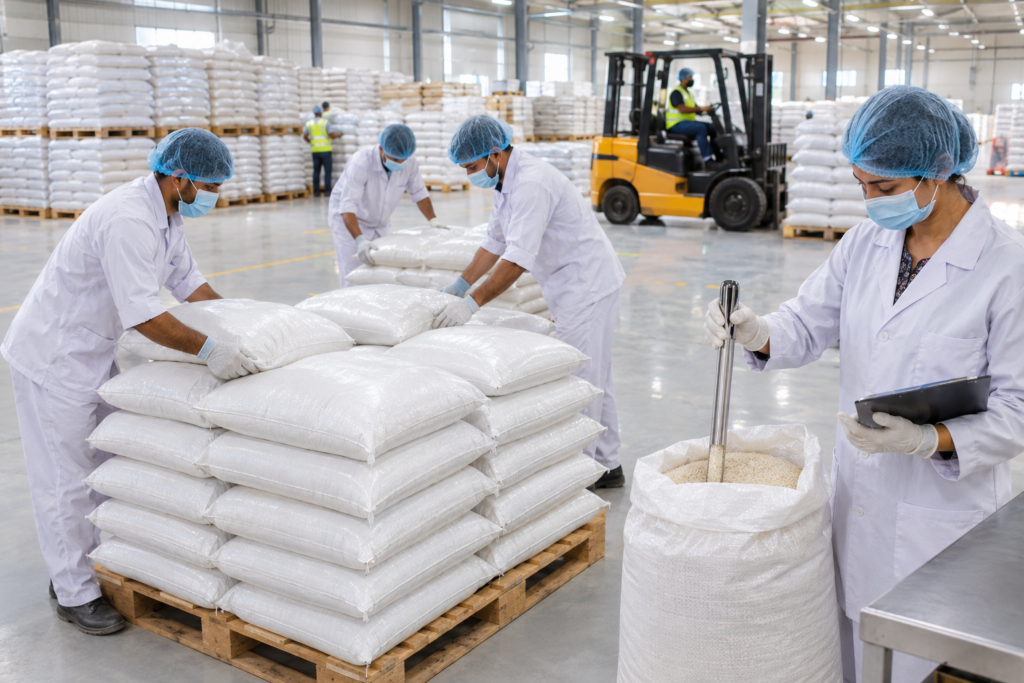
Paperwork varies by destination, product and shipment, so treat any checklist as a starting point rather than a guarantee. In most cases, buyers and exporters work with a commercial invoice, packing list, bill of lading, phytosanitary certificate and certificate of origin. Many buyers also request a certificate of analysis or an independent pre-shipment inspection report.
The EU deserves particular attention. Basmati from Pakistan and India has been subject to increased official controls on pesticide residues, and the Trade Development Authority of Pakistan has itself run awareness campaigns on residues and aflatoxin aimed at growers and exporters. If you import into the EU or UK, ask the exporter how residues are managed, request test reports for the relevant lot, and confirm current requirements with your national food authority or customs broker.
Saremco Impex says on its website that it can provide certificates of analysis, phytosanitary certificates and certificates of origin on request, and it lists ISO 9001:2015, HACCP and Halal among its certifications. As with any supplier, ask for copies and confirm which certificates apply to your product and shipment.
How to Evaluate a Wholesale Offer
A low headline price on 1121 Sella is only meaningful if the specification behind it is clear. A simple process helps:
- Fix the specification first. Variety, form (white or golden Sella), grain length, broken percentage, moisture, admixture and crop year.
- Ask for a sample from the actual lot, not a showpiece sample, and cook it side by side with your current rice.
- Compare like with like. FOB, CFR and CIF quotes are not directly comparable unless freight and insurance are accounted for.
- Confirm packaging and net weights in writing, including bag material, printing and labelling.
- Agree inspection terms. Decide whether an independent inspector such as SGS or Intertek will check the shipment before loading, and who pays.
- Check timelines. Discuss shipment windows, port of loading and payment terms. Pakistani exporters ship through Karachi and Port Qasim, so inland transit from the mills is part of the lead time.
Buyers who follow these steps avoid most of the disputes that arise from loosely worded quotations.
Sourcing 1121 Sella Rice from Saremco Impex
Saremco Impex Private Limited is the international trading and export arm of Daa Group. According to its website, its rice is milled at the Pasrur Rice Mill in Punjab and exported through Karachi and Port Qasim, with optical colour sorting and independent inspection options available.
Its premium Basmati range sits under Daa Heritage Rice, which includes Super Kernel Basmati, 1121 Kainat and 1121 Steam and Sella in golden and white forms. Buyers whose priority is a more economical commercial grade can look at the separate Daa Prime Rice range of non-Basmati varieties such as PK-386, IRRI-6 and IRRI-9.
The company lists support for private labelling, flexible packaging and a range of Incoterms, from FOB Karachi to CIF and CFR. Buyers can also request a lab specification sheet and samples through the proforma request form on the website.
If the market you serve prefers golden or white Sella, tell the team your target specification, packaging, destination port and expected volume. That lets them respond with a quotation that matches your needs rather than a generic price list.
Conclusion
Buying 1121 Sella rice is easiest when the product is defined precisely. Decide whether you want white or golden Sella, set limits for grain length, broken grains, moisture and admixture, and ask for lot-specific samples and test reports. Then check destination requirements before the shipment is booked, especially for the EU and other markets with strict residue controls.
Importers, distributors and packers looking for 1121 Sella rice export from Pakistan can contact Saremco Impex at info@saremcoimpex.com or use the proforma request form on the website. Share your destination, volume, packaging and specifications, and the team can respond with samples, documentation details and a quotation to review.