Bulk Rice Export from Pakistan: A Buyer’s Checklist
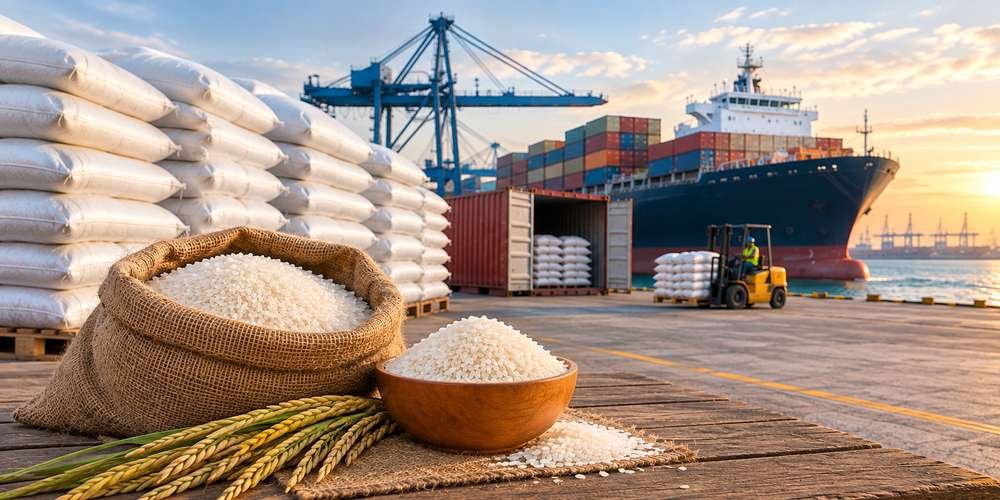
Pakistan is now the world’s fourth-largest rice exporter, shipping several million metric tons a year to buyers across the Middle East, Africa, Europe, and increasingly North America. That scale is exactly why sourcing bulk rice from Pakistan can feel overwhelming if you’re doing it for the first time. There are dozens of mills, a half-dozen wide varieties, several port options, and a stack of certificates that all need to line up before a container leaves Karachi.
This checklist walks through what actually matters when arranging bulk rice export from Pakistan, from picking the right variety and grade to vetting a mill’s certifications and getting the shipping logistics right.
Why Pakistan for Bulk Rice
Pakistan produced roughly 9.7 million metric tons of rice in the most recent full crop year, with more than 60% of that surplus available for export, according to the Rice Exporters Association of Pakistan (REAP). Total exports have run in the 5.5 to 6 million metric ton range over recent fiscal years, with non-basmati varieties like IRRI-6 and IRRI-9 accounting for the large majority of volume — roughly 85% in recent reporting — while basmati makes up the smaller, higher-value share.
For bulk buyers specifically, a few structural advantages matter: Karachi’s shipping routes to the Gulf and East Africa are shorter than competing origins like Vietnam or Myanmar, the country has no recent history of export bans (unlike India’s periodic restrictions on non-basmati shipments), and mills across Punjab and Sindh are set up to handle everything from single-container trial orders to full bulk vessel contracts.
Step 1: Choose the Right Variety and Grade
The variety decision drives almost everything downstream — price, packaging, and which markets it will sell well into. Broadly:
| Rice Type | Typical Bulk Format | Common Buyer Profile |
| Super Kernel / 1121 Basmati | 20ft/40ft FCL, jute or PP sacks, jumbo bags | Premium retail, HoReCa, GCC & EU importers |
| 1121 Steam & Sella (parboiled) | Bulk bagged FCL, private label | Biryani/catering markets, Middle East |
| 386 Fragrant Long Grain | Bagged FCL, retail packs | Value-conscious basmati-alternative buyers |
| IRRI-6 & IRRI-9 (non-basmati) | Bulk bagged FCL, jumbo totes, vessel lots | High-volume institutional and staple-market buyers |
Within any of these categories, ask for the specific grade: broken percentage, moisture content, and grain length all vary between shipments from the same mill depending on the crop season, so don’t assume last year’s spec sheet still applies.
Step 2: Vet the Mill, Not Just the Price Quote
Rice pricing is competitive enough across Pakistani exporters that price alone is a poor way to choose a supplier. What actually separates a reliable bulk shipment from a problematic one is usually traceability and process discipline at the mill level:
- Is the mill’s own processing facility named and verifiable, or is the exporter a trading intermediary sourcing from unnamed third parties?
- Do they hold recognized quality certifications — ISO 9001:2015, HACCP, Halal, and routine third-party lab audits (SGS, Intertek, PCSIR)?
- Can they produce a recent Certificate of Analysis for the specific lot you’re buying, not a generic spec sheet?
- Do they have an established export track record to your destination country or region, with references you can check?
Saremco Impex Private Limited, for example, mills its rice at the Pasrur rice mill in Punjab and backs shipments with ISO 9001:2015, HACCP, and SGS-audited quality standards — the kind of documentation worth asking any supplier for, regardless of who you ultimately buy from.
Step 3: Confirm Documentation Before You Contract
For bulk international orders, the paperwork is as important as the rice itself. Before signing a contract, confirm the exporter will provide:
☐ Certificate of Origin
☐ Phytosanitary certificate
☐ Certificate of Analysis covering moisture, broken percentage, and grain length
☐ Pesticide residue test results, especially for EU- or UK-bound shipments
☐ Halal certificate, where relevant to the destination market
☐ Bill of Lading and packing list
If you’re shipping into a market with specific residue or labeling rules — the EU and Saudi Arabia both enforce fairly strict requirements — confirm those details with the destination country’s food safety authority before finalizing the order rather than after the container has sailed.
Step 4: Decide on Packaging and Container Format
Bulk rice export from Pakistan generally moves in one of a few formats, and the right one depends on order size and destination:
- Bagged FCL containers — the standard for most orders, typically 1kg to 50kg bags packed into 20ft or 40ft containers, holding roughly 24 to 27 metric tons per 20ft unit depending on bag type.
- Jumbo bulk totes — used for larger institutional or industrial buyers who don’t need retail-ready packaging.
- Bulk vessel shipments — for very large-volume buyers, rice can be loaded loose into bulk carriers rather than bagged. However, this is typically reserved for multi-thousand-ton government or institutional contracts.
- Private label packaging — many mills offer custom retail bags or pouches under the buyer’s own brand, which is worth arranging early since it affects lead time.
Step 5: Plan the Shipping Route and Timeline
Most Pakistani rice exports move through Karachi Port or Port Muhammad Bin Qasim, with Gwadar increasingly used for some routes. Transit times vary meaningfully by destination:
- Middle East / GCC — roughly 3 to 5 days
- East & Southeast Asia — roughly 10 to 15 days
- Africa — roughly 8 to 14 days depending on the port
- Europe — roughly 18 to 22 days
- North America — roughly 24 to 28 days
These are general transit ranges rather than guaranteed timelines — actual schedules depend on vessel availability and season. Exporters that manage their own 7-step export workflow, from sourcing through documentation to port loading, tend to give more realistic and consistent lead-time estimates than intermediaries relying on third-party logistics arrangements.
Step 6: Agree on Incoterms and Payment Terms Early
Bulk international rice orders typically use FOB (Free on Board), CFR (Cost and Freight), or CIF (Cost, Insurance, and Freight) terms, with the choice affecting who arranges and pays for ocean freight and insurance. First-time buyers often default to CIF since it shifts more logistics responsibility onto the exporter, while experienced importers with their own freight relationships may prefer FOB for cost control.
Payment is usually structured around a Letter of Credit for larger contracts, sometimes with an advance payment and balance on shipment documents for repeat buyers with an established relationship. It’s worth clarifying this early — a supplier unwilling to discuss standard trade finance terms, or pushing unusually aggressive upfront payment demands, is worth a second look before committing to a large order.
Frequently Asked Questions
What’s the minimum order quantity for bulk rice export from Pakistan?
This varies by mill, but many exporters can accommodate a single 20ft or 40ft container as a trial order, with larger contracts scaling up to multiple containers or full vessel lots for institutional buyers.
How much rice fits in a 20ft container?
Roughly 24 to 27 metric tons, depending on bag size and packaging type. A 40ft container typically holds close to double that.
Is basmati or non-basmati rice better for bulk export?
Neither is universally “better” — it depends on your target market. Non-basmati varieties like IRRI-6 and IRRI-9 dominate bulk volume because of price and availability, while basmati commands a premium in markets where aroma and grain length matter to end consumers.
What certifications should a Pakistani rice exporter have?
At minimum, look for ISO 9001:2015 and HACCP certification, plus routine third-party lab testing (SGS, Intertek, or PCSIR). Halal certification matters for Middle Eastern markets, and US FDA facility registration is required for shipments into the United States.
How long does it take to arrange a bulk rice export order from Pakistan?
From initial inquiry to container loading, established exporters can often turn around a standard order within a few weeks. However, this depends on documentation readiness, packaging requirements, and vessel scheduling at the departure port.
Planning a Bulk Rice Order from Pakistan?
Bulk rice export from Pakistan works well for buyers who treat it as a process rather than a one-off transaction — vetting the mill’s certifications, confirming documentation before contracting, and agreeing on shipping and payment terms in writing before the season’s harvest gets committed elsewhere. The variety and price will vary shipment to shipment, but the checklist for getting it right doesn’t change much.
Saremco Impex Private Limited ships its full rice catalog — from Super Kernel and 1121 Basmati through IRRI-6, IRRI-9, and 386 non-basmati grades — to 45+ export destinations across five continents. If you’re planning a bulk order, you can review the company profile or request a pro forma quote to get current FOB/CIF pricing and container availability.
https://saremcoimpex.com/contact/