What Is 386 Rice? A Guide for International Buyers
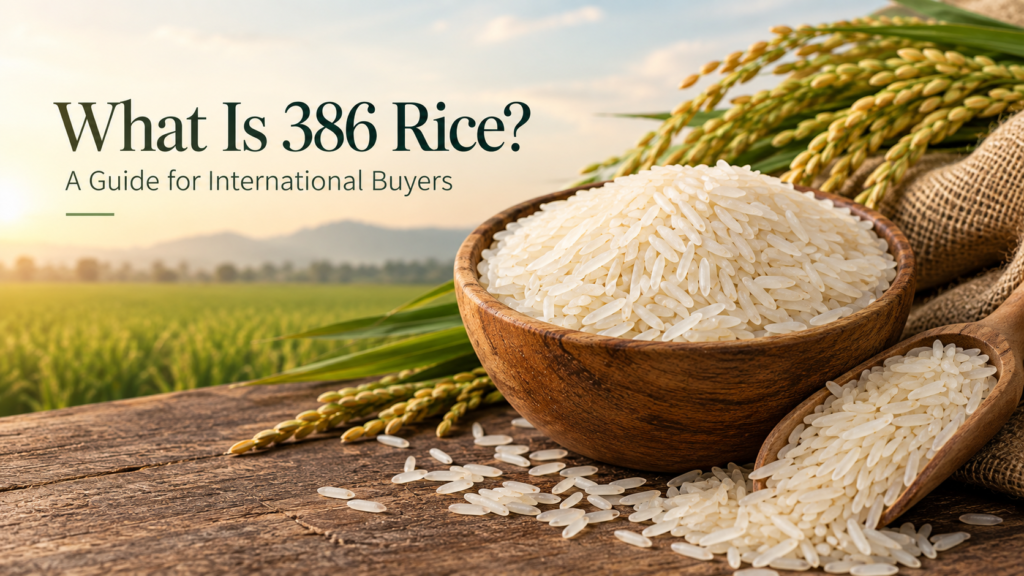
If you’ve come across “386 rice” while sourcing from Pakistan and aren’t quite sure where it fits next to basmati or IRRI varieties, you’re not alone. It’s one of those names that gets thrown around in trade conversations without much explanation, even though it’s one of the more commercially important non-basmati rice varieties grown in Pakistan.
This guide covers what the 386 rice variety actually is, how it differs from basmati and other non-basmati types, where it’s grown, how it’s typically processed, and which export markets buy it in volume.
386 Rice, Explained
“386 rice” refers to PK-386, a non-basmati rice variety developed and grown in Pakistan, primarily in Punjab. Some suppliers also market it under the name “Supri” rice. It’s classed as non-basmati because it doesn’t meet the botanical and grain-length standards that define true basmati. Still, it shares a few traits that make it a popular substitute: a mild, basmati-like fragrance and grains that elongate reasonably well when cooked.
Raw grain length generally falls between 6.0 mm and 6.6 mm, which places it below basmati’s typical 6.8 mm to 8.4 mm range but above standard IRRI varieties in overall eating quality. That in-between positioning is really the whole story of PK-386: it’s marketed as a value alternative to basmati for buyers who want some aroma and grain presentation without paying basmati prices.
Where PK-386 Is Grown
PK-386 is cultivated mainly in Punjab, with some cultivation extending into parts of Sindh. Its growing profile is generally less demanding than basmati, which contributes to more stable output and pricing year over year — a factor that matters to buyers negotiating annual supply contracts.
How 386 Rice Compares to Other Pakistani Varieties
Buyers new to Pakistani rice often confuse PK-386 with basmati because of the aroma, or with IRRI-6 and IRRI-9 because it’s technically non-basmati. Here’s roughly where it sits:
- Super Kernel / 1121 Basmati — longer grain (up to 8.4 mm), stronger aroma, higher price point, and the benchmark premium product.
- PK-386 — mid-range grain length with mild fragrance, priced as a non-basmati but marketed as a basmati-adjacent option.
- IRRI-6 / IRRI-9 — shorter, non-aromatic grain, the most affordable bulk option, positioned for volume-driven markets rather than eating quality.
Comparison at a Glance
| Attribute | PK-386 (386 Rice) |
| Category | Non-basmati, fragrant long-grain |
| Grain length (raw) | ~6.0 to 6.6 mm |
| Broken rice % | Typically 5% or less, grade-dependent |
| Growing region | Punjab, Pakistan (also grown in parts of Sindh) |
| Aroma | Mild, basmati-like fragrance |
| Cooking texture | Soft, fluffy, non-sticky, holds elongation |
| Processing types | White (raw), parboiled/sella, steam |
| Main export markets | Middle East, East & West Africa, parts of Asia |
These figures reflect commonly reported industry specifications. Exact grain length, moisture, and broken percentage vary by crop season and milling grade, so always confirm current numbers against a lab report before contracting a shipment.
Cooking Qualities and Common Uses
PK-386 cooks up soft and fluffy, with grains that separate well and hold their shape rather than turning sticky or mushy. That texture, combined with the mild fragrance, is why it’s popular for everyday household meals in South Asian, Middle Eastern, and East African cuisines where a fragrant but affordable rice is preferred over premium basmati.
It’s commonly sold in three forms:
- White (raw) rice — the standard milled form for retail and food-service use.
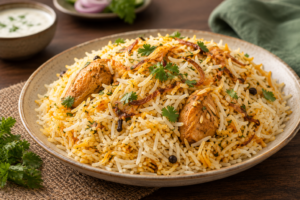
- Parboiled (sella) rice — steam-processed before milling, giving firmer grains that hold up well in biryani-style cooking and bulk catering.
- Steam rice — a lighter processing method used in some regional markets.
Export Markets for PK-386
PK-386 moves in significant volumes to the Middle East and to East and West African markets, where it’s positioned as an affordable, aromatic alternative to basmati for everyday cooking. It also has a presence in parts of Asia and, more recently, in Western markets through ethnic grocery and ready-meal channels that want basmati-style presentation at a lower cost.
Because it’s grown exclusively within Pakistan (unlike some non-basmati varieties grown across South Asia more broadly), supply and export pathways tend to run through established Pakistani exporters with direct relationships in the Gulf and East African import trade.
Buyers evaluating Pakistan’s rice sector more broadly can check the Pakistan Bureau of Statistics for national trade and export data, and the Food and Agriculture Organization’s rice market monitoring for global rice trade context.
What to Check Before Ordering 386 Rice
The variety name alone won’t tell you much about the quality of a specific shipment. A few practical checks matter more:
- Moisture content — export-grade rice is typically kept at or below 13% moisture to prevent spoilage in transit.
- Broken percentage — ask for the specific broken-grain grade, since this affects both price and cooking consistency.
- Processing type — confirm whether you’re ordering white, parboiled, or steam rice, since each behaves differently in cooking.
- Lab documentation — request an independent inspection report (SGS, Intertek, or a comparable lab) along with phytosanitary and origin certificates before the shipment is loaded.
Suppliers that maintain their own quality and lab certification standards — ISO 9001:2015, HACCP, and routine SGS or Intertek audits, for example — tend to be more consistent shipment to shipment, which matters more for repeat buyers than any single spec sheet number.
Sourcing 386 Rice from Pakistan
Saremco Impex Private Limited mills 386 Fragrant Long Grain rice alongside Basmati and IRRI varieties at its Pasrur rice mill in Punjab, with grain sorted and graded before export. Shipments are handled through the company’s standard export process, covering documentation, container loading, and port logistics out of Karachi and Port Qasim.
Frequently Asked Questions
Is 386 rice the same as basmati?
No. PK-386 is a non-basmati variety. It has a mild fragrance and decent grain elongation, which is why it’s sometimes marketed as a basmati alternative. Still, it doesn’t meet the botanical or grain-length standards that define true basmati rice.
Why is it called “386” rice?
386 refers to the variety’s registration number, PK-386, assigned when it was released for cultivation in Pakistan. It’s also sold under the name “Supri” rice in some markets.
Is PK-386 available as parboiled rice?
Yes. PK-386 is milled in white, parboiled (sella), and steam forms, with parboiled being a common choice for biryani-style cooking and bulk catering.
Which countries import the most PK-386 rice from Pakistan?
Middle Eastern and East and West African markets account for a large share of PK-386 exports, largely because it offers basmati-style aroma and texture at a lower price point than premium basmati grades.
How does 386 rice compare in price to basmati and IRRI rice?
It typically sits between the two: more expensive than IRRI-6 or IRRI-9, but more affordable than Super Kernel or 1121 basmati, reflecting its mid-range grain length and aroma.
Final Thoughts
PK-386 fills a specific gap in Pakistan’s rice export lineup — fragrant enough to feel like an upgrade from plain IRRI rice, priced well enough to compete with premium basmati in cost-sensitive markets. For buyers deciding between varieties, the right choice usually comes down to how much your customers value aroma and grain presentation versus price per ton.
If you’re evaluating 386 rice for an import order, it’s worth reviewing current specifications on the rice catalog and asking for a sample kit and lab report before committing. You can request a quote directly to get current FOB pricing and container availability.