Pakistani Basmati Rice Exporters: What Buyers Should Know
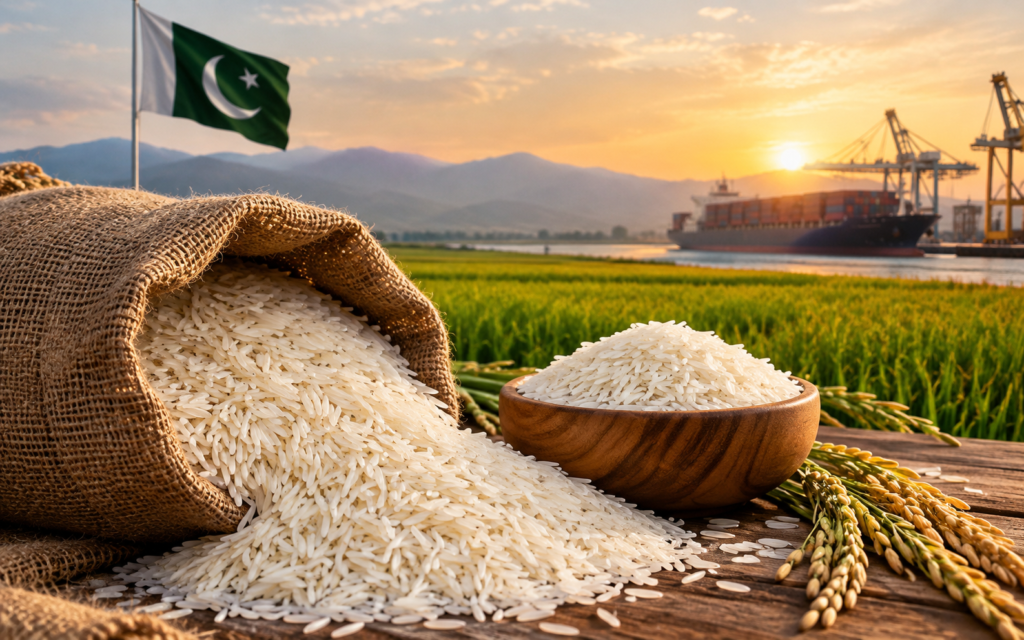
The global demand for premium basmati rice continues to climb, and Pakistan stands as one of the world’s most reliable sources. If you’re sourcing rice internationally, understanding the landscape of Pakistani basmati rice exporters is essential to making informed purchasing decisions.
Pakistan has built a formidable reputation for delivering aromatic, high-quality basmati that commands premium prices in international markets. But not all exporters operate at the same standard, and knowing what distinguishes reliable suppliers from mediocre ones can save you significant time, money, and logistical headaches.
This guide covers what you need to know about Pakistani basmati rice exporters—from quality benchmarks and certifications to export processes and how to evaluate potential suppliers.
Why Pakistan’s Basmati Dominates Global Markets
Pakistan controls a commanding 67% share of the basmati brown rice market in the European Union and United Kingdom markets, where quality standards are among the world’s most stringent. This dominance didn’t happen by accident—it’s the result of decades of cultivation expertise, milling precision, and commitment to consistent quality.
The nation’s basmati heritage runs deep, particularly in Punjab’s Hafizabad district, which is historically recognized as basmati’s original home. The fertile soil, favorable climate, and irrigation systems create ideal growing conditions that produce rice with distinctive fragrance and elongation characteristics that global buyers actively seek.
What’s particularly interesting is Pakistan’s strategic positioning: rather than compete on price, Pakistani basmati rice exporters have invested heavily in quality infrastructure and certifications. Despite premium pricing—sometimes $100 per tonne higher than competitors—international buyers continue to choose Pakistani basmati for its consistency and superiority.
Understanding Quality Standards for Pakistani Basmati Exporters
When evaluating Pakistani basmati rice exporters, quality standards form the foundation of your assessment. Here are the key metrics that define premium basmati:
Grain Length and Elongation
Premium basmati varieties like Super Kernel average 7.5mm before cooking and extend to 8.4mm or longer when cooked. This elongation is a hallmark of authentic, quality basmati. Reputable Pakistani exporters maintain strict controls over grain sorting to ensure consistency.
Moisture Content
Industry standards require moisture content between 12- 14% for export shipments. This range is critical—too much moisture invites spoilage and mold growth during transit; too little can result in brittle grains. Quality-focused exporters maintain computerized monitoring systems throughout processing and storage.
Purity and Grain Integrity
Basmati purity—the percentage of actual basmati grains free from other varieties—should exceed 99%. Modern optical sorting technology (Sortex and similar equipment) removes off-type grains, foreign material, and discolored kernels. Leading Pakistani basmati rice exporters employ multiple passes through these systems to achieve consistently high purity levels.
Aroma and Flavor Profile
The distinctive nutty aroma is basmati’s signature—it’s what justifies premium pricing and differentiates it from regular long-grain rice. This aroma derives from the variety itself and is preserved through careful milling and storage practices.
Key Certifications That Distinguish Reliable Exporters
International certifications serve as third-party verification of a supplier’s commitment to quality and safety. When dealing with Pakistani basmati rice exporters, look for these credentials:
ISO 9001:2015
This certification indicates the exporter has implemented internationally recognized quality management systems. For agricultural commodities, it means documented processes for procurement, processing, storage, and shipment.
HACCP (Hazard Analysis Critical Control Points)
HACCP is essential for food safety. It requires systematic identification of risks and implementation of controls at critical points in the production chain. Exporters with HACCP certification have demonstrated food safety protocols.
SGS and Intertek Inspection Reports
Third-party inspection agencies provide independent verification of quality specifications before shipment. Pre-shipment testing confirms moisture, grain length, purity, and microbiological safety. Many professional buyers now require these reports as a condition of purchase.
US FDA Registration
For exporters shipping to North American markets, FDA registration demonstrates compliance with US food safety regulations. This is non-negotiable for US distributors and retailers.
Halal Certification
For Middle Eastern and many Southeast Asian markets, Halal certification is essential. It confirms adherence to Islamic dietary principles throughout production and handling.
How Pakistani Basmati Exporters Process and Mill Rice
Understanding the processing journey helps explain why quality varies among exporters. The milling process significantly impacts final product quality.
Sourcing and Initial Reception
Reliable Pakistani basmati rice exporters source paddy (unmilled rice) directly from verified farmers in Punjab’s traditional basmati growing regions. Upon arrival at the mill, paddy is tested for moisture and quality before acceptance.
Drying and Moisture Control
Paddy is dried to precise moisture levels using mechanical dryers. This step is critical—improper drying leads to cracked grains or mold development. Modern mills use computerized controls to maintain consistency.
De-husking and Milling
De-huskers remove the outer hull to produce brown rice. White milling further processes brown rice to remove the bran layer. The number of milling passes and pressure settings determine grain breakage rates. Premium suppliers optimize these parameters to minimize broken grains.
Optical Sorting and Grading
This is where leading Pakistani basmati rice exporters differentiate themselves. Advanced optical sorters (Sortex, Bühler systems) automatically detect and remove off-color grains, discolored kernels, and foreign material. Multiple sorting passes achieve purity levels exceeding 99%.
Packaging and Storage
Premium basmati is packed in food-grade materials (BOPP woven bags, non-woven sacks, or consumer pouches) in clean, temperature-controlled facilities. Storage areas maintain humidity barriers to prevent moisture ingress during international transit.
The Export Process: From Order to Delivery
Understanding the export workflow helps you appreciate the logistics complexity that reliable Pakistani basmati rice exporters manage daily.
Documentation and Compliance
Before any shipment leaves Pakistan, comprehensive documentation is prepared: Phytosanitary certificates, Certificates of Origin, SGS inspection reports, and commercial invoices. Each destination market has specific requirements—EU shipments require different compliance documentation than Middle Eastern shipments, for example.
Port Operations and Loading
Pakistani basmati rice exporters typically operate through three primary seaports: Karachi Port Trust (KPT), Port Muhammad Bin Qasim, and Gwadar Port. Professional stevedoring teams handle container loading according to vessel scheduling requirements. Transit times vary: Middle East ports receive goods in 3-5 days; Europe in 18-22 days; North America in 24-28 days.
Container and Packaging Standards
Basmati is typically exported in 20ft or 40ft FCL (Full Container Load) shipments. Humidity control is paramount—containers are equipped with desiccant materials to prevent moisture damage during long ocean voyages. Professional exporters also offer customized private label packaging for retail distributors.
Tracking and Delivery
Modern Pakistani basmati rice exporters provide end-to-end tracking visibility. Bills of Lading are issued, and buyers can monitor vessel progress through standard shipping databases. Upon arrival at destination ports, importers coordinate customs clearance and final delivery to distribution centers or retail locations.
Global Markets for Pakistani Basmati Rice Exporters
Pakistan’s basmati exports reach across five continents, with specific market preferences influencing product specifications.
Middle East and GCC Countries
The Middle East represents the largest market for Pakistani basmati, with destinations including UAE, Saudi Arabia, Qatar, Oman, Kuwait, and Bahrain. Consumers in this region value the aromatic qualities of premium basmati and the convenience of sealed packaging. GCC buyers typically source in bulk and establish long-term supply relationships.
Europe and the United Kingdom
The UK, Germany, the Netherlands, Italy, France, and Spain represent high-value markets with strict food safety standards. Maximum Residue Levels (MRL) compliance for pesticide residues is mandatory. Pakistani basmati rice exporters targeting Europe invest heavily in laboratory testing to meet these rigorous requirements. Private label retail packages dominate European distribution.
North America (USA and Canada)
The North American market has grown significantly for premium basmati, both for gourmet cooking and as a specialty supermarket product. FDA registration is mandatory. Retailers emphasize organic certification and heirloom basmati varieties. Gourmet Himalayan salt products from Pakistan also appeal to the upscale US/Canadian consumer.
East and Southeast Asia
China, Malaysia, Singapore, Vietnam, and Indonesia represent growing markets for both premium basmati and commercial-grade rice varieties. These markets value competitive pricing without sacrificing quality, and 1121 Kainat basmati has established particularly strong demand.
Africa and Central Asia
Kenya, Tanzania, South Africa, and Central Asian nations source both premium basmati and higher-volume commercial rice grades (IRRI-6, 386 varieties). These markets prioritize reliable supply chains and value-for-money products.
What to Look for When Evaluating a Pakistani Basmati Rice Exporter
Beyond certifications and history, several practical factors should guide your supplier selection:
Traceable Supply Chains
Can the exporter trace their basmati back to specific farmers or growing regions? The best suppliers maintain documented relationships with paddy suppliers and can provide farm-level transparency. This matters for organic certification, fair-trade positioning, and quality consistency.
Laboratory Testing Transparency
Request sample lab reports before committing to large orders. Do they conduct independent third-party testing? Can they provide Certificates of Analysis showing moisture, grain length, purity, and microbiological results? Professional exporters view transparent testing as a competitive advantage.
Flexibility in Packaging and Specifications
Do they offer custom packaging sizes? Can they produce private-label retail pouches with your branding? Are they willing to adjust specification parameters for specific market requirements? Mature exporters accommodate diverse buyer needs.
Communication and Customer Support
Can you reach them reliably? Do they respond to inquiries in reasonable timeframes? Do they have dedicated account management? Exporting is a detail-oriented business—poor communication often leads to shipment delays or specification mismatches.
Experience with Your Target Market
Have they successfully exported to your specific destination? Exporters experienced with European markets understand MRL compliance; those shipping to the US know FDA requirements. Market-specific experience streamlines your procurement process.
Financial Stability and Payment Terms
Established exporters offer favorable payment terms (Letter of Credit is standard in international rice trade). Watch for red flags like inability to work with third-party banks or requests for unusual prepayment structures.
Frequently Asked Questions
What makes Pakistani basmati superior to Indian basmati?
While both countries produce basmati, Pakistan has focused on consistency and quality improvements. Pakistani exporters maintain quality premiums even during competitive pressure, and they’ve captured 67% of the premium basmati market in Europe and the UK. The country’s soil composition, irrigation systems, and processing technology create a different flavor and aroma profile preferred in many markets.
How long does basmati rice stay fresh?
Properly stored basmati (cool, dry conditions with humidity control) maintains quality for 12-18 months after harvest. Pakistani exporters ship with humidity barriers in containers to ensure optimal conditions during transit. Once retail-packaged and stored properly by end consumers, basmati remains viable for several years.
What’s the difference between Super Kernel and 1121 Kainat basmati?
Super Kernel (Basmati 385) is a traditional long-grain variety prized for its robust aroma. 1121 Kainat (also called 1121 Extra Long) elongates dramatically when cooked (up to 8.4mm) and offers a slightly more delicate flavor. 1121 commands premium pricing and has become increasingly popular with gourmet chefs. Both are produced by leading Pakistani basmati rice exporters.
Can I get samples before placing a bulk order?
Most professional Pakistani basmati rice exporters provide samples at minimal cost. Requesting samples is standard practice and allows you to evaluate quality, aroma, and elongation characteristics. Legitimate exporters expect this due diligence.
What payment terms should I expect?
International rice trade typically uses Letters of Credit (L/C) at sight or with short-term payment windows. Some exporters offer 30-60 day terms for established buyers with good payment history. Direct bank transfers and escrow arrangements are also used. Always verify the exporter’s banking credentials and payment stability before committing.
Making Your Decision: Next Steps
Selecting the right Pakistani basmati rice exporter is an investment in your business’s success. Premium basmati is a differentiated product commanding margins that justify the effort of finding a reliable supplier.
Start by identifying 3-4 exporters that match your requirements. Request their certifications, sample lab reports, and references from other buyers in your region. Ask specific questions about their supply chain, processing methods, and market experience. Request samples and evaluate them objectively—aroma intensity, grain elongation, and visual quality should all meet your standards.
The best suppliers view their relationships with buyers as partnerships. They’re willing to invest time in understanding your market requirements, offering customization, and providing reliable support throughout the export process. Look for exporters who approach your inquiry with professionalism and genuine interest in your success.
Pakistan’s basmati rice exporters have built a global reputation for quality that spans decades. By focusing on the factors covered in this guide—certifications, quality standards, processing transparency, and supplier reliability—you can confidently source premium basmati that delights your customers and strengthens your market position.
Partner with Saremco Impex Impex Limited for premium-quality Pakistani Basmati rice, reliable export services, and professional support for international buyers. Whether you need 1121 Basmati, Steam, Sella, or Parboiled Rice, contact us to discuss your requirements and get a quotation.
https://saremcoimpex.com
info@saremcoimpex.com