Basmati Rice Export from Pakistan: Complete International Buyer’s Guide
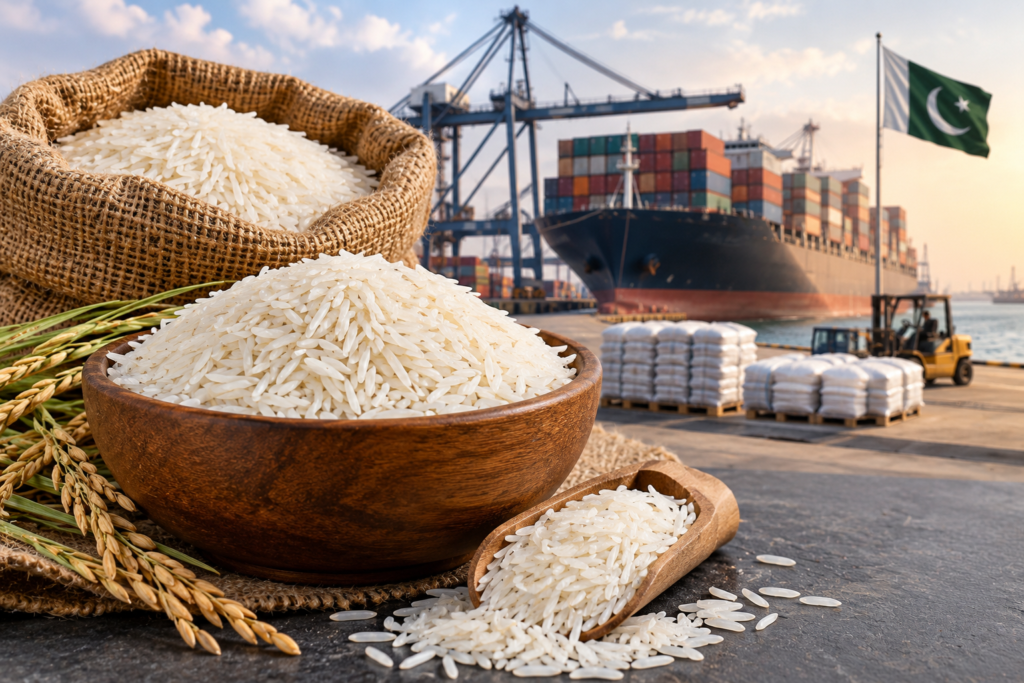
Importers who want to source premium long-grain rice usually have the same questions. Which Pakistani basmati variety suits my market? What specifications should go into the contract? What paperwork will the shipment need? How do I tell a dependable exporter from one that only sends attractive price lists? This guide covers each of these, so that your next purchase of basmati rice export from Pakistan is based on specifications and not guesswork.
Why Pakistan Is a Serious Source for Basmati
Basmati is a long-grain aromatic rice that is traditionally grown in the Himalayan foothill region of the Indian subcontinent. Pakistan’s basmati belt lies mainly in central Punjab, where the climate, soil and water conditions have supported aromatic rice cultivation for generations. Pakistan is among the world’s major rice exporters, and basmati is one of its most valued agricultural export products. The Food and Agriculture Organization tracks global rice trade and is a useful starting point for buyers who want market context before negotiating.
Buyers choose Pakistani basmati for characteristics that matter in the kitchen: the grain elongates considerably when cooked, the aroma is distinct, and the cooked texture stays separate and fluffy instead of sticky. These qualities are why basmati is in demand with restaurants, caterers, biryani and pulao producers, retail packers and wholesalers across the Middle East, Europe, North America, Africa and Asia.
Main Pakistani Basmati Varieties and Types
The variety you choose affects price, cooking performance and customer perception. These are the ones most often requested.
Super Kernel Basmati
Super Kernel is a long, slender, traditional-style basmati known for its aroma and refined cooked texture. Importers who position a product as premium table rice often look at this variety first. It is widely associated with Pakistan’s basmati heritage.
1121 Basmati
1121 is one of the longest-grain basmati varieties traded internationally. Its grains stretch noticeably during cooking, which makes it popular for biryani and for food-service buyers who want an impressive finished plate. It is usually aged before shipment, a point covered below.
Raw, Steam and Sella
The same variety can be processed differently:
- Raw (white) basmati: milled directly from paddy. It has a pale colour and a delicate texture, and it is preferred where the traditional look and aroma matter.
- Steam basmati: the paddy is steamed before milling, which gives a slightly creamier tone and a somewhat firmer grain.
- Sella (parboiled) basmati: the paddy is soaked, steamed and dried before milling. The grain turns a golden shade, resists breaking, and holds up well in large-batch cooking, so it suits catering and many bulk-consumption markets.
If you are unsure which suits your customers, ask the exporter for cooked-rice samples of each type. Regional preference is strong, and a type that sells easily in one market can struggle in another.
Quality Parameters Buyers Should Specify
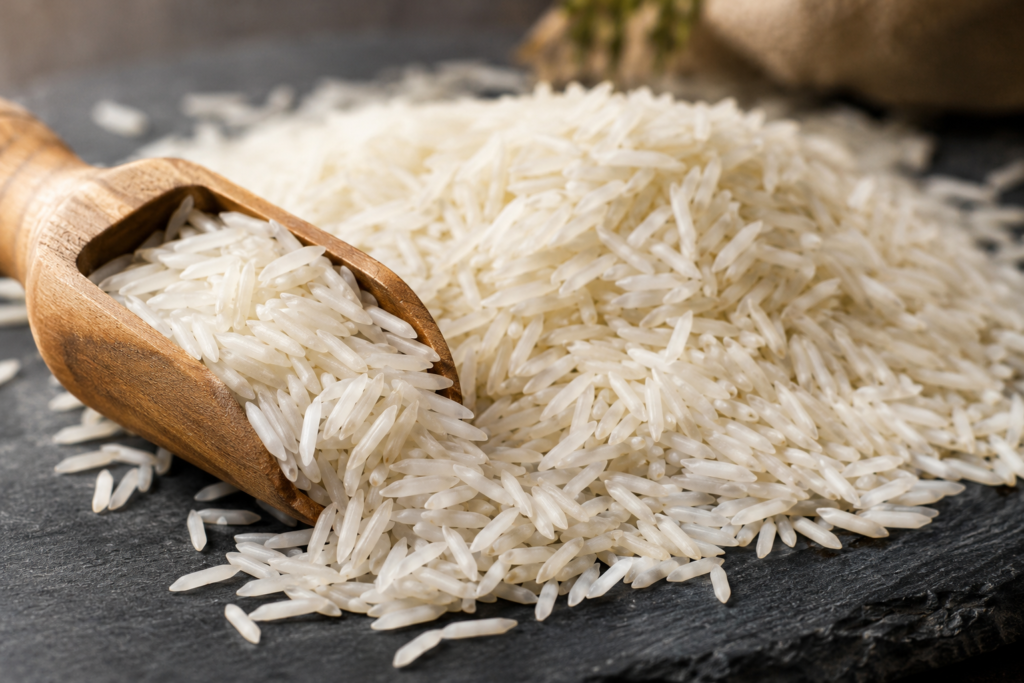
A contract that says “premium basmati” invites disputes. Specifications should be written down and agreed before a purchase order is issued. The usual points include:
- Variety and crop year: state exactly which variety you are buying and, if relevant, the harvest year.
- Average grain length: specify raw grain length and, where it matters to your market, cooked grain elongation.
- Broken grain percentage: the maximum share of broken kernels allowed in the lot.
- Moisture content: an agreed maximum, since moisture affects storage life and mould risk.
- Purity and foreign matter: how much non-basmati rice, stones, husk or other material is tolerated.
- Colour and polish: especially relevant for raw white rice.
- Ageing: many buyers prefer rice stored after harvest because aged basmati usually cooks drier and separates better. State the minimum ageing you expect.
Exact figures vary between grades and trade agreements, so do not accept generic numbers. Ask for a written specification sheet from the exporter, then compare it against what the pre-shipment sample shows. Independent inspection is common in the rice trade, and buyers can ask for third-party inspection of quality and quantity before loading.
Choosing an Exporter: What to Check
Price matters, but it is a poor way to compare suppliers on its own. A lower quote can reflect lower grade, higher broken percentage, thinner packaging or a different ageing period. When you evaluate suppliers of basmati rice from Pakistan, look at:
- Specification clarity: does the quotation name the variety, grade, broken percentage, moisture limit and packaging?
- Sample policy: will the supplier send a representative sample before you commit, and will the shipment match it?
- Documentation capability: can the exporter explain what paperwork your destination market will require?
- Communication: does the supplier answer technical questions precisely?
- Terms: are the Incoterms (FOB, CFR, CIF), payment terms, shipment window and inspection arrangement clear?
- Verifiable credentials: ask for the registrations, certifications and test reports that are relevant to your market and confirm them yourself.
Pakistani traders and exporters are also represented by industry bodies such as the Rice Exporters Association of Pakistan, which can be a helpful reference for understanding the trade landscape.
Packaging and Container Loading
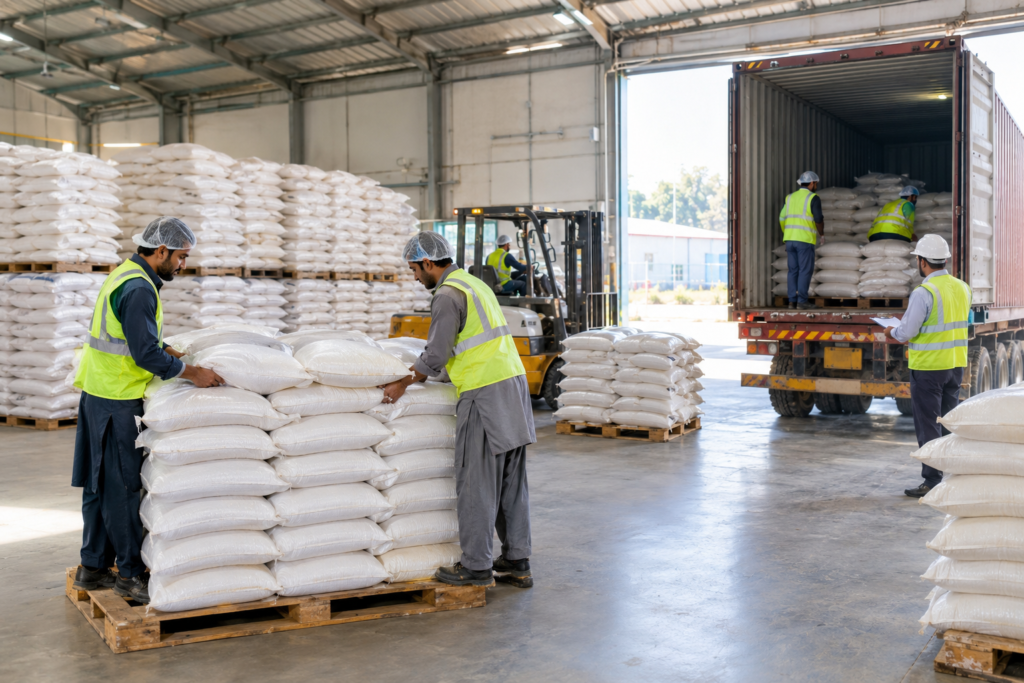
Basmati is commonly shipped in woven polypropylene bags, jute-style bags or laminated bags, with sizes ranging from small retail packs to bulk sacks of 25 kg, 50 kg or more. Retail-ready packs and private-label packaging are also available from many exporters, so confirm whether that is an option and what minimum order quantity applies.
When discussing packaging, agree on:
- Bag material and weight per bag.
- Printing and labelling requirements for the destination market, including language, ingredients, origin and batch information.
- Palletisation or loose loading.
- Container type and the number of containers per shipment.
- Moisture protection, such as container liners or desiccants, particularly on longer voyages or humid routes.
Labelling rules differ by country, so check them with your local food authority before the packaging artwork is approved.
Export Documentation and Compliance
Documentation depends on the product, the destination country and the shipment, so treat the following as a general overview and not a checklist that applies everywhere. Typical papers include:
- Commercial invoice and packing list.
- Bill of lading or other transport document.
- Certificate of origin.
- Phytosanitary certificate, usually issued with the involvement of Pakistan’s plant quarantine authority, the Department of Plant Protection.
- Quality or inspection certificates where agreed or required.
- Any additional test reports required by the importing country, for example for residues or contaminants.
Pakistan’s trade promotion body, the Trade Development Authority of Pakistan, publishes information about export-related support and procedures. Importing countries also set their own conditions, so confirm requirements with your national food safety, agriculture and customs authorities before placing an order. Ask your exporter in writing which documents will accompany the shipment, and ask early, as late discovery of a missing certificate can mean delays and extra storage costs at port.
Where Daa Heritage Rice Fits
Saremco Impex Private Limited is a Pakistani export and trading company associated with Daa Group. Its premium basmati offering is sold under Daa Heritage Rice, which covers varieties such as Super Kernel Basmati and 1121 Kainat Basmati, along with steam and sella options. Buyers can start on the Saremco Impex website to see the current rice range and brand information.
The company also supplies commercial non-Basmati rice (PK-386, IRRI-6 and IRRI-9) under Daa Prime Rice. Some importers buy both: a premium basmati line for retail shelves and a non-basmati line for volume sales. That is a practical reason to discuss your whole requirement with one supplier, so that quotes, packaging and shipments can be coordinated.
A Practical Buying Process
For a first order, a sensible sequence looks like this:
- Define your market, target customer and preferred cooked-rice profile.
- Shortlist varieties and processing types (raw, steam or sella).
- Request specifications, quotations and samples from several suppliers.
- Test samples by cooking and compare grain length, aroma, breakage and uniformity.
- Confirm packaging, labelling, Incoterms and payment terms in writing.
- Arrange inspection and verify documentation before shipment.
- Start with a manageable quantity and scale once performance is proven.
Conclusion
Successful basmati rice export from Pakistan comes down to precision: the right variety for your market, a written specification, clear packaging terms, correct paperwork and a supplier who is open about all of it. Buyers who invest time in samples and documentation up front generally avoid the costly problems later.
If you are evaluating Pakistani basmati for import or distribution, you can contact Saremco Impex Private Limited to ask about Daa Heritage Rice, available varieties, specifications, packaging options, samples and quotations. Tell the team your target market, grade and expected volume so they can respond with relevant details.