Basmati Rice Suppliers in Pakistan: Wholesale and Bulk Supply
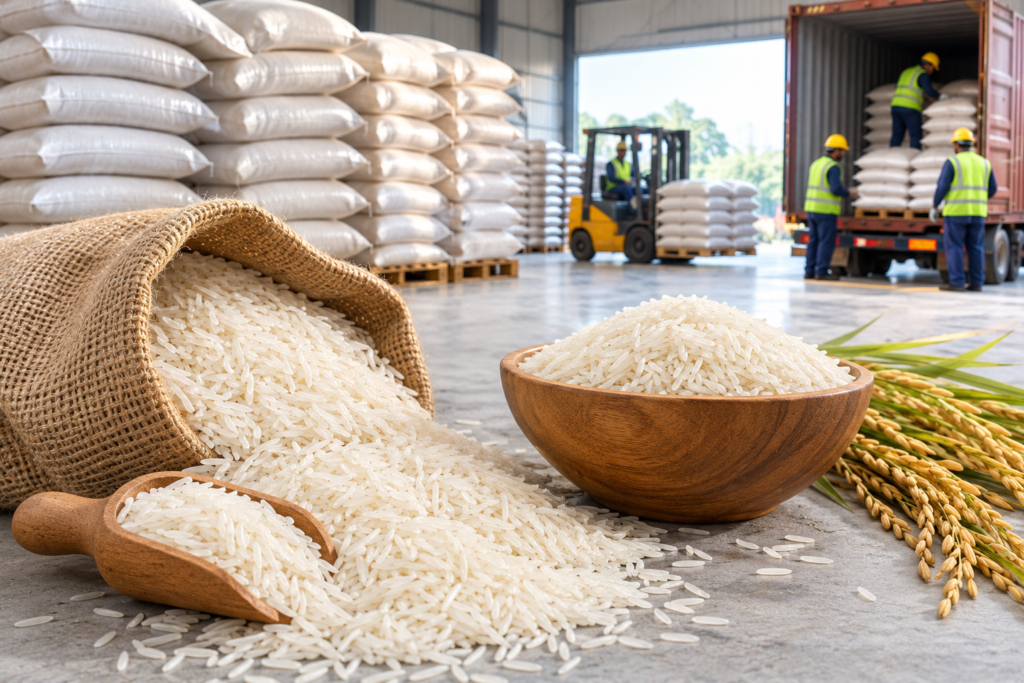
Finding basmati rice suppliers in Pakistan is easy. Finding the right one is harder. Dozens of mills, brokers and trading companies will quote you a price per metric ton. Still, the quotations are rarely comparable until you know what sits behind each number: the variety, the processing method, the grain quality, the packing, the paperwork and the shipping terms.
This guide is written for importers, wholesalers, distributors and food businesses that want to buy Pakistani basmati in volume. It explains what to compare, which questions to ask, and how to avoid the mistakes that tend to cost buyers money after the contract is signed.
Why Buyers Source Basmati Rice from Pakistan
Basmati is a long-grain aromatic rice grown in the Indo-Pakistani subcontinent. Pakistan and India are the two principal producing countries. Pakistan’s basmati belt lies mainly in central Punjab, where the climate, soil and water suit the crop and where much of the country’s milling and export activity is based.
Buyers choose Pakistani basmati for three practical reasons. First, the grain: Pakistani varieties are known for length, aroma and the way the kernel stretches when cooked. Second, the range: a single supplier can usually offer premium extra-long grain as well as more economical commercial grades. Third, the trade relationships: Pakistan has long exported rice to the Middle East, Africa, Europe and other regions, and its exporters are used to container-based shipments to many ports.
For current export statistics and trade support, the Trade Development Authority of Pakistan is a useful official starting point, and the FAO’s rice market resources provide wider market context.
Types of Pakistani Basmati Rice Buyers Can Source
Not every basmati order is for the same product. A supplier should be able to explain clearly which of the following you are being offered.
Super Kernel Basmati
Super Kernel is the traditional name associated with Pakistani basmati. It is prized for its aroma and fine, slender grain, and is often positioned as a premium product for retail packs, restaurants and biryani-focused markets.
1121 Basmati
1121 is an extra-long-grain variety popular in export trade because the cooked grain elongates noticeably and stays separate. Many importers use it for biryani and pilaf. Saremco Impex’s own buyer’s guide to 1121 Basmati rice goes deeper into what to look for in this variety.
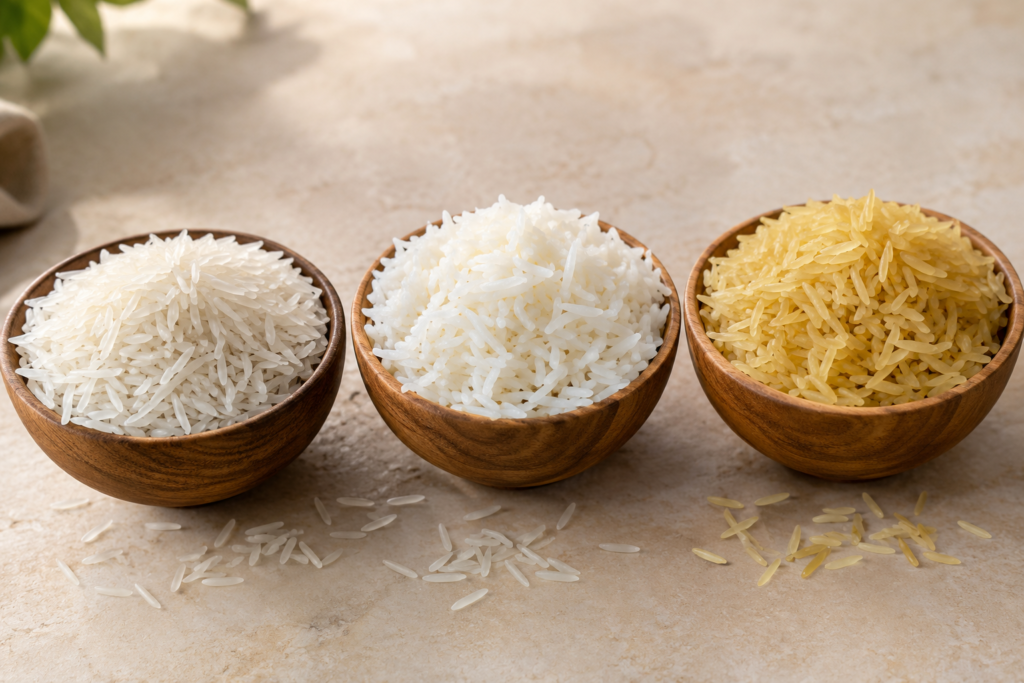
Raw, Steam and Sella Basmati
The processing route changes both the appearance and the cooking behavior of the rice:
- Raw (white) basmati is milled from unparboiled paddy. It has a pale, natural look and the most delicate aroma.
- Steam basmati is lightly treated with steam before milling, which tends to give a firmer grain with a slightly more uniform color.
- Sella (parboiled) basmati is parboiled in the husk before milling. The grains are golden, very firm, and hold up well in large-batch catering and long cooking times.
Different markets prefer different styles. A buyer in one region may ask only for sella, while another may want raw white rice for retail. Confirm the style before you compare prices, because the processing route affects cost.
How to Evaluate Basmati Rice Suppliers in Pakistan
A good quotation is the result of specific requirements, so start by writing them down. Then compare suppliers against the same checklist.
1. Product specification
Ask for a written specification for the exact variety and grade. Key points usually include:
- Variety and processing style (raw, steam or sella)
- Average grain length and the share of whole kernels
- Broken grain percentage
- Moisture content
- Purity and foreign matter
- Crop year, and whether the rice is aged
Do not accept vague descriptions like “premium quality.” Ask for numbers, and make sure they appear in the contract or proforma invoice. Ageing matters because older basmati generally cooks drier and more separate than freshly harvested rice, and some buyers specify a minimum ageing period.
2. Milling and sorting
Cleaning, grading and optical colour sorting are what remove discolored and damaged grains before packing. Saremco Impex’s article on how basmati rice is graded for export markets explains how these quality parameters are usually discussed between exporters and importers. Ask any supplier what sorting equipment is used and request a sample that reflects the actual production lot, not only a hand-selected showpiece.
3. Samples before contracts
Request a pre-shipment sample and, for larger orders, agree in advance which specifications will be checked against it. Cook it the way your customers will: as plain steamed rice for one test and as biryani for another. A sample that looks perfect raw but cooks sticky is a warning sign.
4. Documentation and compliance
Export paperwork varies by destination, but buyers commonly ask for a commercial invoice, packing list, bill of lading, certificate of origin and a phytosanitary certificate. Some markets also require laboratory test reports, for example, for pesticide residues. Requirements differ between countries and change over time, so check them with your own import authority and customs broker first, then confirm with the exporter exactly which documents they can provide.
5. Certifications
Ask for copies of any food safety, quality management or Halal certificates a supplier claims and check that they are current and cover the facility and product you are buying. Certificates held by a company do not automatically apply to every shipment, so ask what scope each one covers.
Bulk Supply: Packaging, Containers and Shipment Planning
Wholesale basmati is typically shipped in full container loads. Planning this part carefully protects both quality and margin.
Packing options
Common packing formats include 1 kg, 5 kg, 10 kg, 20 kg and 25 kg woven polypropylene or laminated bags, along with larger bulk bags for industrial buyers. If you plan to sell under your own brand, ask whether the supplier handles private-label printing, what the minimum order quantity is, and who approves the artwork. Check that all labelling meets your destination country’s rules for language, ingredients, weight and origin.
Container loading
The standard options are 20-foot and 40-foot containers. Ask how many metric tons fit in each with your chosen bag size, whether pallets are used, and how the container is protected against moisture during the voyage. Rice that is packed too moist or exposed to condensation can deteriorate in transit, so moisture control and clean, dry containers matter.
Terms and timelines
Agree on Incoterms (for example, FOB or CIF), the payment method, the port of loading, and a realistic lead time from confirmed order to shipment. Treat any supplier who promises unusually fast or fixed delivery without asking about your volume and packing with some caution.

Choosing Between Premium Basmati and Commercial Rice
Many wholesale buyers need more than one product. A restaurant distributor may want premium extra-long basmati for biryani dishes and a cheaper commercial grade for everyday meals. It helps to work with a supplier that covers both ends of the range.
Saremco Impex, the international export and trading arm of Daa Group, offers rice through two brands. Daa Heritage Rice is its premium basmati-oriented line, including Super Kernel and 1121 varieties. Daa Prime Rice is the commercial non-basmati range, covering varieties such as PK-386, IRRI-6 and IRRI-9. Having both under one exporter can simplify purchasing when your customers span different price tiers. You can read more on Saremco’s piece about what makes extra-long grain rice premium.
According to its website, the company works with a rice mill in Pasrur, Punjab, and uses Sortex sorting equipment. As with any supplier, buyers should ask for current documentation and a lot-specific sample to confirm what is being offered for their order.
Mistakes Wholesale Buyers Should Avoid
- Comparing price alone. Two quotes for “1121 basmati” can differ in broken percentage, ageing and sorting, which explains the price gap.
- Skipping the sample. Photos and brochures do not show cooking behavior.
- Leaving specifications out of the contract. If it is not written down, it is hard to enforce.
- Ignoring import rules. Check destination requirements for labelling, residues and documentation before ordering, not after the container ships.
- Assuming every supplier is a mill. Some are brokers. Neither is wrong, but you should know which you are dealing with and who is responsible for quality.
Conclusion
The best basmati rice suppliers in Pakistan make your decision easier: they explain varieties plainly, put specifications in writing, send honest samples, and are clear about packing, documents and shipping terms. If you are comparing offers, build your checklist first, then evaluate each supplier against it.
If you would like product specifications, sample information, packaging options or an export quotation for Super Kernel, 1121 or other rice varieties, you can contact Saremco Impex with your target volume, destination port and packing requirements, and the team can guide you from there.