Himalayan Pink Salt: Benefits, Myths, and Facts — A Practical Guide for Distributors and Users
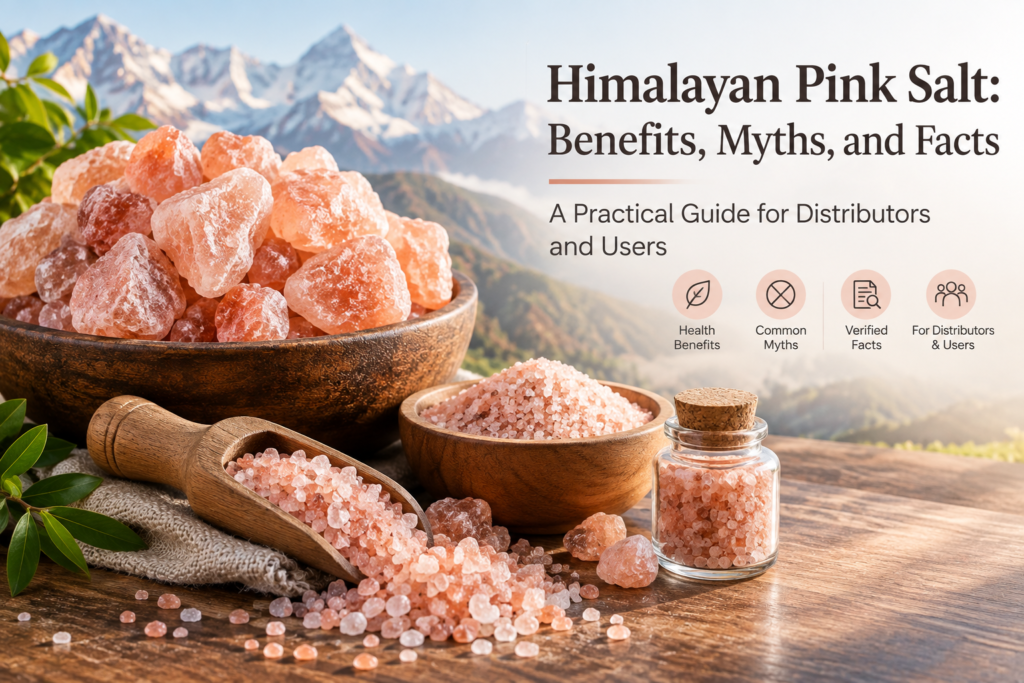
Himalayan pink salt has become one of the most sought-after specialty salts globally. Its distinctive pink hue and mineral composition make it attractive for culinary, wellness, and industrial applications. However, the market is saturated with exaggerated health claims. This guide separates documented benefits from popular myths, providing practical information for businesses sourcing, distributing, or reselling Himalayan pink salt.
Understanding Himalayan Pink Salt: Origin and Composition
Himalayan pink salt is mined from the Khewra Salt Mine, located in Jhelum District of Punjab, Pakistan, which produces approximately 350,000 tons per annum of about 99% pure halite. The salt deposits formed millions of years ago when the Indian landmass collided with Asia and the remaining sea evaporated, leaving vast deposits of ancient salt that remained below soil for millions of years and solidified under high pressure.
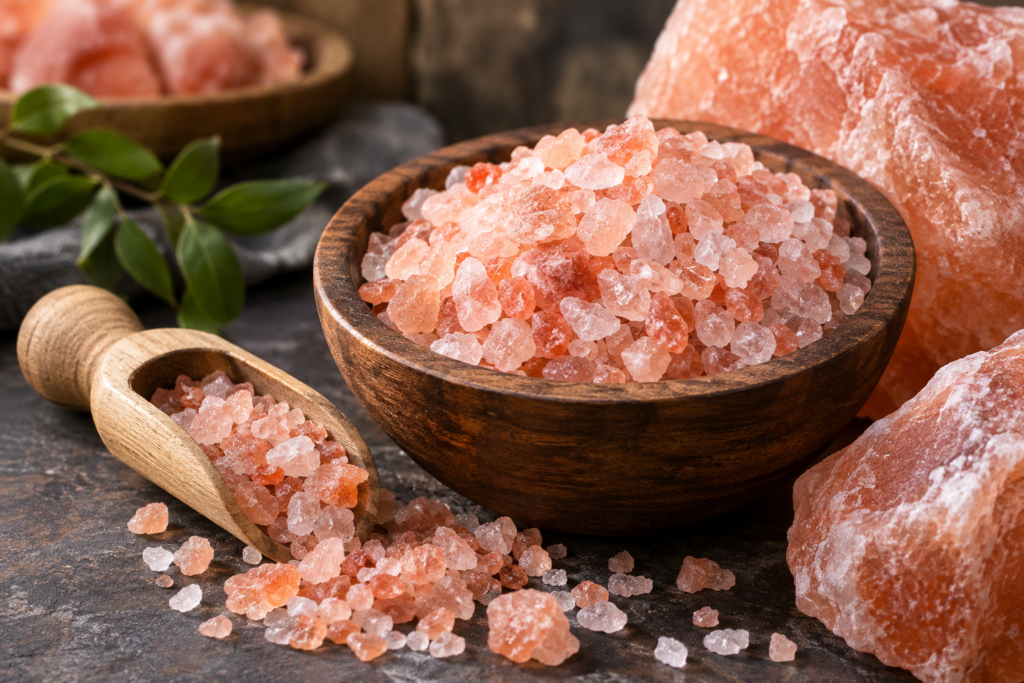
The characteristic pink color—ranging from pale rose to deep crimson—comes from trace minerals, primarily iron oxide. Pink Himalayan salt contains up to 84 other minerals and trace elements beyond sodium chloride, including potassium, calcium, magnesium, iron, strontium, and molybdenum. This mineral composition is what sets it apart from heavily processed table salt. Healthline
Unlike table salt, which undergoes extensive refining that removes most minerals, Himalayan salt is minimally processed. This preservation of natural minerals appeals to both consumers and commercial buyers seeking less-refined products.
The Real Benefits: What the Science Actually Shows
While many claims about Himalayan pink salt exist, it’s important to distinguish between marketing hype and documented properties.
Trace Mineral Content
Table salt typically contains only sodium and added iodine after processing, whereas pink Himalayan salt contains more calcium, potassium, magnesium, and iron. However, the amounts of these minerals in pink Himalayan salt are very, very small. The trace minerals in pink salt are present in quantities too small to provide clinically meaningful benefits at normal consumption levels; you would need to consume impractically large and dangerous amounts of salt to obtain appreciable mineral intake from salt alone. Is Pink Himalayan Salt Better Than Regular Salt?
This is an important distinction for retailers and distributors to understand. While the mineral content is real, consumers cannot rely on pink salt as a primary source of minerals like magnesium or potassium. The value lies in its composition compared to refined salt, not as a mineral supplement.
Natural, Unrefined Alternative to Table Salt
The primary documented benefit is that Himalayan pink salt is a natural, minimally processed alternative to heavily refined table salt. Table salt is heavily refined and processed, destroying many of the salt’s natural health benefits. In contrast, Himalayan salt contains over 84 trace minerals because it doesn’t go through a refining process like regular table salt.
Culinary and Practical Applications
Beyond health claims, Himalayan pink salt serves legitimate culinary and practical purposes. Its unique flavor profile, attractive appearance, and texture make it valuable for fine dining, food presentation, and specialty cooking applications. It’s also used for decorative salt lamps, spa treatments, and bath applications.
Debunking Popular Myths: What Himalayan Salt Cannot Do
Myth 1: It Detoxifies the Body
This is one of the most persistent marketing claims, yet it lacks scientific support.
There is no established medical basis for the idea that pink salt detoxifies the body; the liver and kidneys are the body’s main organs for processing and removing waste. Your liver and kidneys handle detoxification. Salt does not. The human body has evolved sophisticated biological mechanisms for removing toxins—salt baths and sole water solutions do not meaningfully contribute to this process.
This is critical information for distributors working with health-conscious retailers or direct consumers. Marketing Himalayan salt as a detoxification agent makes unfounded medical claims and may invite regulatory scrutiny.
Myth 2: It Balances Body pH
Your body maintains pH very tightly on its own. While some wellness sources promote Himalayan salt for pH balance, there is no strong medical evidence that Himalayan pink salt can alter blood pH in a meaningful way.
Your body’s pH is tightly regulated through the respiratory and urinary systems. Consuming salt—whether pink or white—does not meaningfully alter systemic pH. This claim appears to be pseudoscience presented in wellness language.
Myth 3: It’s Lower in Sodium Than Regular Salt
Pink salt and regular salt have similar sodium content per gram, with the real benefit lying in the added minerals. This is crucial for health-conscious consumers and medical professionals who monitor sodium intake.
If someone is restricting sodium for heart health or blood pressure management, switching to Himalayan pink salt provides no sodium advantage. Both are primarily sodium chloride.
Myth 4: Salt Lamps Purify Air and Cure Respiratory Disease
While salt lamps may help with air quality, they are not a medical treatment. Some people report subjective benefit from halotherapy (salt inhalation), but this is not supported by robust clinical evidence and should never be promoted as a cure for respiratory conditions.
Key Considerations for Distributors and Retailers
Sourcing Quality
When sourcing Himalayan pink salt for resale or distribution, verify:
- Origin authentication (genuine Khewra mine salt vs. other sources)
- Purity specifications (confirm the claimed mineral profile)
- Processing methods (hand-mined, minimally processed vs. industrial processing)
- Packaging that preserves the product during storage and transport
- Certifications relevant to your target market (food safety, organic where applicable)
Iodine Content Matters
Himalayan pink salt usually does not contain added iodine, which was originally added to table salt to prevent disabilities and illnesses caused by iodine deficiencies, such as goiters. This has public health implications. If your customers are replacing iodized salt entirely with Himalayan pink salt, they may develop iodine deficiency over time, particularly in regions where iodine-rich foods are not commonly consumed.
Responsible marketing should acknowledge this difference and recommend that consumers don’t eliminate iodized salt from their diet, or ensure adequate iodine intake through other sources.
Target Market Segmentation
Different customer segments value Himalayan salt for different reasons:
- Culinary professionals and specialty food retailers: Value the unique flavor, appearance, and texture. These buyers care about grain size, consistency, and food safety certifications.
- Spa and wellness retailers: Interested in bath products, decorative applications, and aesthetic appeal. They may have some interest in wellness claims but prioritize quality and customer satisfaction.
- General food distributors: Seek competitive pricing, consistent supply, and basic food safety compliance.
- Health-conscious consumers: Drawn by marketing but often misinformed. Responsible retailers should educate these customers about realistic benefits vs. exaggerated claims.
Marketing Responsibly
Blood sugar levels, aging, and libido are all primarily controlled by factors other than the salt in your diet, and there are simply no scientific studies to suggest eating pink Himalayan salt can benefit any of these aspects of your health.
Avoid making claims that cannot be substantiated. Instead, focus on:
- Pure, minimally processed composition
- Natural mineral profile compared to refined salt
- Culinary versatility and unique flavor
- Aesthetic appeal for presentation
- Historical and cultural significance
- Practical uses for spa and wellness applications (without medical claims)
Practical Health Guidance
For everyday use, hydration depends mainly on adequate fluid intake and overall electrolyte balance. Pink salt is not a proven hydration treatment, and adding extra salt may be unhelpful or unsuitable for some people.
Current health guidelines recommend limiting sodium intake to under 2,300 mg per day for most adults. This applies regardless of salt type. Himalayan pink salt is still salt—it contains sodium and should be used in moderation as part of a balanced diet.
If using Himalayan salt for bath soaks or spa applications, these are generally safe, and many people report subjective relaxation benefits. However, these should be positioned as wellness experiences, not medical treatments.
The Business Case for Himalayan Pink Salt
Despite the marketing noise, legitimate demand exists for Himalayan pink salt:
- Global specialty food markets continue to expand
- Professional chefs and upscale restaurants seek premium salts
- Spa and wellness industries have consistent demand
- Home cooking enthusiasts actively seek alternatives to refined salt
- Decorative and craft applications support additional market segments
The key to sustainable business success is honest positioning. Products that promise unrealistic health benefits face regulatory risk, customer disappointment, and reputation damage. Distributors who focus on authentic product quality, responsible marketing, and genuine value—whether culinary, aesthetic, or practical—build lasting customer relationships.
Himalayan Pink Salt: A Practical Summary
Himalayan pink salt is a real product with authentic properties: it’s minimally processed, contains trace minerals, offers unique culinary applications, and provides an alternative to refined table salt. However, it’s not a miracle cure or medical treatment.
The most responsible approach for businesses distributing or selling this product is to:
- Verify quality through reliable sourcing from established suppliers like Saremco Impex Private Limited, which specializes in Himalayan salt exports from Pakistan
- Educate customers about realistic benefits and documented limitations
- Avoid medical claims that lack scientific support
- Market authentically based on actual product advantages
- Serve multiple use cases: culinary, aesthetic, and practical applications
As consumer awareness of misleading health marketing increases, businesses that provide honest information and quality products will maintain competitive advantage and customer trust.
FAQ: Himalayan Pink Salt Questions Distributors and Retailers Often Encounter
Q: Is Himalayan pink salt actually from the Himalayas?
A: It’s mined from the Salt Range in Punjab, Pakistan, which is geologically part of the Himalayan system but is not in the mountains themselves. The deposits formed 600-800 million years ago from ancient sea evaporation. The name reflects its geological origin, not its current geographic location.
Q: Can I replace iodized salt entirely with Himalayan pink salt?
A: Not without planning. Himalayan pink salt typically contains no added iodine. If you’re switching entirely from iodized salt, ensure you’re getting iodine from other dietary sources (seafood, dairy, eggs) or discuss supplementation with a healthcare provider. Iodine deficiency can have serious health consequences.
Q: What’s the actual nutritional difference between pink and white salt?
A: Both are primarily sodium chloride (97-99%). The difference is trace minerals—pink salt has them, refined white salt typically doesn’t. However, the amounts are too small to supplement mineral intake meaningfully. The real advantage is that pink salt is unrefined, not that it’s a mineral source.
Q: Is Himalayan salt safe for people with high blood pressure?
A: Himalayan salt contains sodium just like regular salt. It provides no sodium advantage for people managing blood pressure. What matters is total sodium intake, not salt type. Consult a healthcare provider about appropriate salt consumption for individual health conditions.
Q: Why do some sources claim 84 minerals while others say different numbers?
A: The exact count varies because different testing methods and purity levels yield different results. What’s consistent across credible sources is that pink Himalayan salt contains trace minerals that refined salt doesn’t, but in very small amounts. The specific count is less important than understanding that these minerals don’t provide supplement-level nutrition.
Q: Is Himalayan salt better for cooking than regular salt?
A: For flavor and presentation, many chefs prefer it—the larger crystals, unique taste, and attractive color offer culinary advantages. Nutritionally, there’s no advantage if sodium intake is your concern. Use it for culinary reasons (taste, texture, appearance), not health reasons.