How to Import Rice from Pakistan: Step-by-Step Guide for Global Buyers
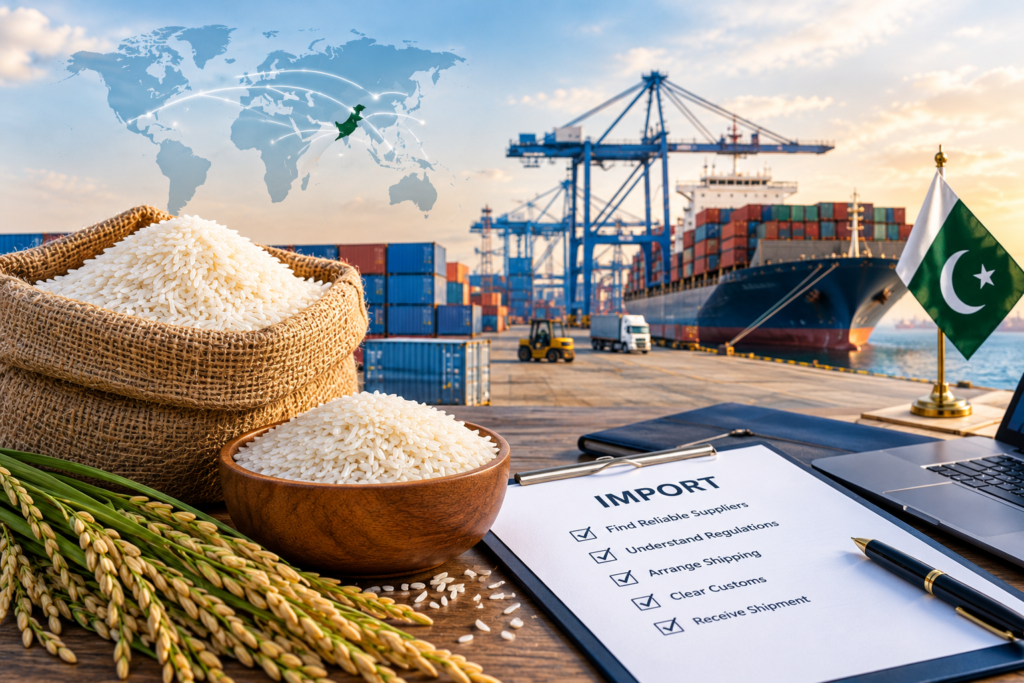
Rice is one of the most heavily traded food grains in the world. Pakistan is one of its most dependable origins, shipping basmati and non-basmati rice to buyers on several continents. The process of importing rice from Pakistan is manageable. It does reward preparation, because the mistakes that cost importers money tend to happen before a container is loaded: a vague specification, an unchecked exporter, or a missing certificate.
This guide covers how to Import Rice from Pakistan, the process in the order a buyer actually meets it, from deciding what to buy to clearing the shipment at your port.
Why Pakistan Is on So Many Buyers’ Shortlists
Pakistan’s rice belt falls mainly in two provinces. According to rating-agency research from PACRA, Sindh is known for long-grain white rice such as IRRI-6 and IRRI-9, while Punjab is the home of aromatic basmati. That split gives buyers two distinct product streams: affordable everyday white rice, and premium aromatic rice.
The volumes are significant too. The U.S. Department of Agriculture’s Foreign Agricultural Service tracks Pakistan’s grain and feed sector. Its reports put annual rice production at roughly nine to ten million tons in recent seasons, with exports running at around five million tons or more. Output and exports swing from year to year with weather, irrigation water and prices, so check the latest figures before you commit to large forward contracts.
Europe has also noticed Pakistani basmati. The Netherlands-based CBI market intelligence service notes that excessive pesticide residues are rarely found in Pakistan’s main “Super Basmati” varieties, which helped the origin after the EU tightened its limits on the fungicide tricyclazole.
Step 1: Define Exactly What You Want to Buy
Most delays in rice trade begin with a loose request such as “basmati rice, good quality.” A supplier can’t quote accurately on that, and you can’t compare quotes fairly. Settle these points first:
- Type: basmati or non-basmati
- Variety: for example Super Kernel Basmati, 1121, PK-386, D-98, IRRI-6 or IRRI-9
- Form: white milled, parboiled (also called sella or steam), or brown (cargo) rice
- Broken percentage: the share of broken kernels allowed
- Packaging: bag size and material, plus whether you want your own private label
| Category | Typical varieties | Common buyer use |
|---|---|---|
| Premium basmati | Super Kernel, 1121 (Kainat) | Retail packs, restaurants, biryani and pulao trade |
| Standard basmati | PK-386, D-98 | Foodservice, price-sensitive basmati lines |
| Long-grain non-basmati | IRRI-9, IRRI-6 | Bulk staple rice, institutional and government-type buying |
| Parboiled | Sella versions of basmati and IRRI | Markets that prefer firmer, non-sticky grains |
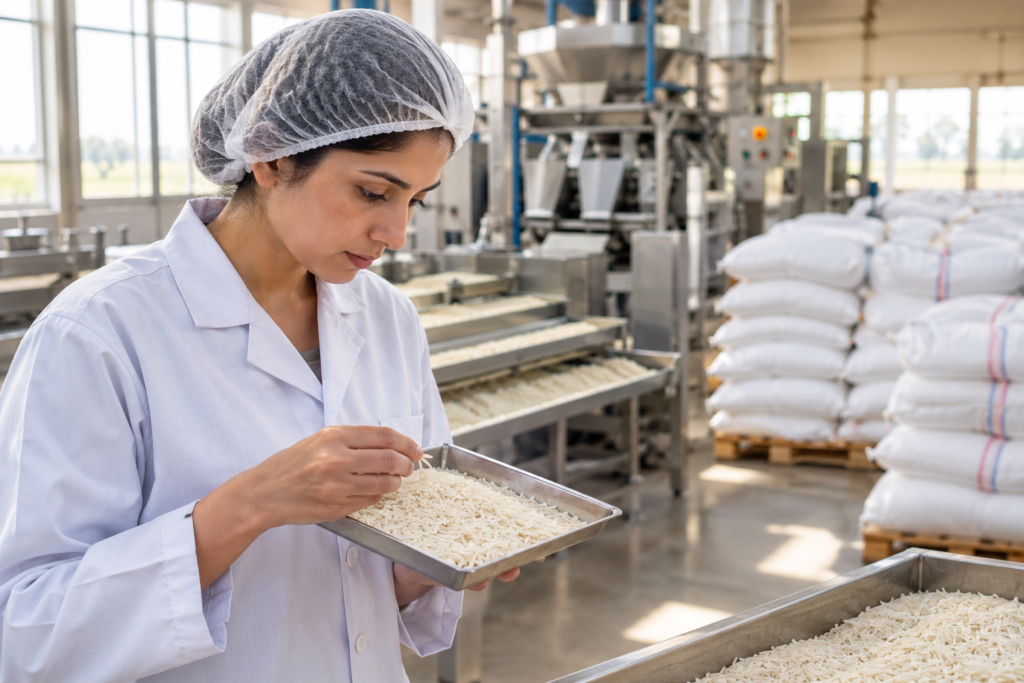
Broken percentage is the specification that shifts price most. Basmati is commonly sold at very low broken levels, while IRRI-6 is traded in grades from 5% broken up to 25% broken, and 100% broken rice is a separate product used in processing and brewing. Ask for the full specification sheet: moisture, average grain length, broken percentage, discolored or damaged grains, and foreign matter. Then write those numbers into your contract.
Step 2: Check Your Own Country’s Import Rules First
Many importers talk to exporters before they check what their own customs and food-safety authorities require. Do it the other way around. Rules vary by destination, but these points come up almost everywhere:
- Phytosanitary requirements. Most countries want a plant health certificate issued by Pakistan’s national plant protection authority. Some run their own approval or registration schemes for foreign mills.
- Pesticide residue limits. The EU is the strictest example, and its maximum residue limits are tested at the border. A consignment that fails can be refused or destroyed at the importer’s cost.
- Contaminant limits. Aflatoxin and heavy metals are checked in many markets.
- Labelling and traceability. Origin, lot numbers and production records matter. Shipments are sometimes held up because of documentation gaps even when laboratory results are fine.
- Duties and quotas. Tariffs, preferential schemes and import licences differ widely by country and by rice type.
Your customs broker or national food authority can confirm the current rules. Rice regulations change, so verify them against official sources instead of relying on a supplier’s assurance.
Step 3: Find and Vet Pakistani Rice Exporters
Pakistan has a well-organized rice export sector. The Rice Exporters Association of Pakistan (REAP) states that its membership is mandatory for rice exporters, so confirming REAP membership is a sensible baseline check. It does not replace your own due diligence.
Before you shortlist a supplier, ask:
- Do you own or operate the milling and sorting facilities, or do you buy from other mills?
- Which varieties and crop years are in stock right now?
- Can you provide a written specification and a retained-sample policy?
- Which export certificates do you routinely supply, and who issues them?
- Which pesticide and contaminant tests do you run, and can I see recent reports?
- What are your usual loading ports and lead times?
- Can you share trade references from buyers in markets similar to mine?
Responsive, specific answers are a good sign. Vague replies, prices far below the market, or an unwillingness to discuss testing are warning signs. Trade portals and fairs are useful for finding names, but they should be the start of vetting, not a substitute for it.
Step 4: Get Samples and Arrange Independent Inspection
Request a pre-shipment sample for each variety and grade you plan to buy. Cook it, measure it, and send it for laboratory testing if your market requires it. Make sure the sample is genuinely representative of the lot, and have the supplier keep a sealed duplicate.
For your first orders, hire an independent inspection company to check quality and quantity at the port or mill before loading. The cost is small compared with the cost of a rejected container. The inspection report can also help you resolve any dispute after arrival.
Step 5: Agree Price, Incoterms and Payment Terms
Rice from Pakistan is generally quoted on the following bases:
- FOB (Free on Board): the price covers the rice loaded onto the vessel at a Pakistani port such as Karachi or Port Qasim. You arrange freight and insurance.
- CFR / CIF: the seller also pays freight (and insurance under CIF) to your destination port.
FOB gives you control over the shipping line and freight cost. CFR or CIF is simpler for first-time importers, though you should still check the insurance coverage under CIF.
Payment methods commonly include a letter of credit (L/C) or telegraphic transfer. Many new buyer-supplier relationships start with an irrevocable L/C or a staged payment structure, and move to simpler terms as trust builds. Whichever method you choose, put the following in the contract:
- Specification and tolerances
- Quantity and permitted tolerance
- Packaging and marking
- Shipment window
- Inspection arrangements
- What happens if the goods do not match the specification
Step 6: Prepare the Documents
A clean document set speeds up customs clearance. A typical rice shipment from Pakistan includes:
- Commercial invoice and packing list
- Bill of lading
- Phytosanitary certificate
- Certificate of origin
- Quality or analysis certificate, and any lab reports your market requires
- Fumigation certificate, where applicable
- Any import permit or licence required in your country
Check every document against your purchase contract and your L/C terms before the vessel sails. Mismatches in names, quantities or descriptions are among the most common reasons payments and clearances get delayed.

Step 7: Plan the Shipment and Arrival
Rice is usually shipped in 20-foot or 40-foot containers, in woven polypropylene bags commonly in 25 kg or 50 kg sizes, though bulk and custom packing are also possible. Ask the exporter how containers are packed, whether liners are used to limit moisture, and how the load is protected during the voyage.
Shipping routes and freight costs can change quickly. Regional disruption in 2026 affected Gulf-area shipping, and Pakistan responded by opening overland trade corridors for some exports. Confirm routing and transit time with your freight forwarder at the time of booking, not just at the time of quoting.
On arrival, arrange for the consignment to be sampled and inspected as your authorities require, and compare it with the pre-shipment report. If there is a problem, notify the supplier and your insurer promptly and keep photographic evidence.
Common Mistakes Importers Make
- Choosing on price alone, then discovering the broken percentage or moisture level differs from what was assumed
- Skipping a sample and relying on a brochure
- Ignoring destination-country pesticide or contaminant limits until the cargo has sailed
- Accepting unclear crop-year information
- Leaving packaging and marking details for “later”
- Not building time into the schedule for documents, testing and port congestion
Sourcing Rice with Saremco Impex Private Limited
Saremco Impex Private Limited is a Pakistan-based export company with a dedicated rice division. According to its website, the rice is milled at the Pasrur Rice Mill in Punjab. The range includes Super Kernel Basmati, 1121 Kainat in white, steam and sella forms, PK-386 and the non-basmati IRRI-6 and IRRI-9 grades.
Several points on the company’s site line up with the checklist above:
- It states that it is a REAP member and ships through Karachi, Port Qasim and Gwadar.
- It lists documents such as the certificate of analysis, phytosanitary certificate and certificate of origin, available on request.
- It describes pre-shipment inspection by independent agencies such as SGS or Intertek.
- It offers private-label and custom packaging.
- It accepts quote requests on FOB Karachi, CFR, CIF and DAP terms, and says it can support smaller trial orders as well as large volumes.
As with any supplier, ask for current specification sheets, recent test reports and the exact certificates your market requires and compare them with your own import rules before you place an order.
Final Thoughts
To import rice from Pakistan with confidence, work through the steps in order: define your specification, check your import rules, vet your exporter, test samples, agree terms, and get the documents right before shipment. Done properly, Pakistan offers buyers a wide choice of basmati and non-basmati rice at competitive prices.
If you are ready to discuss varieties, grades, packaging and destination, you can contact Saremco Impex Private Limited to request product specifications and a quotation for your rice requirements.