How to Source Rice Suppliers in Pakistan: A Buyer’s Guide to Quality, Varieties, and Best Practices
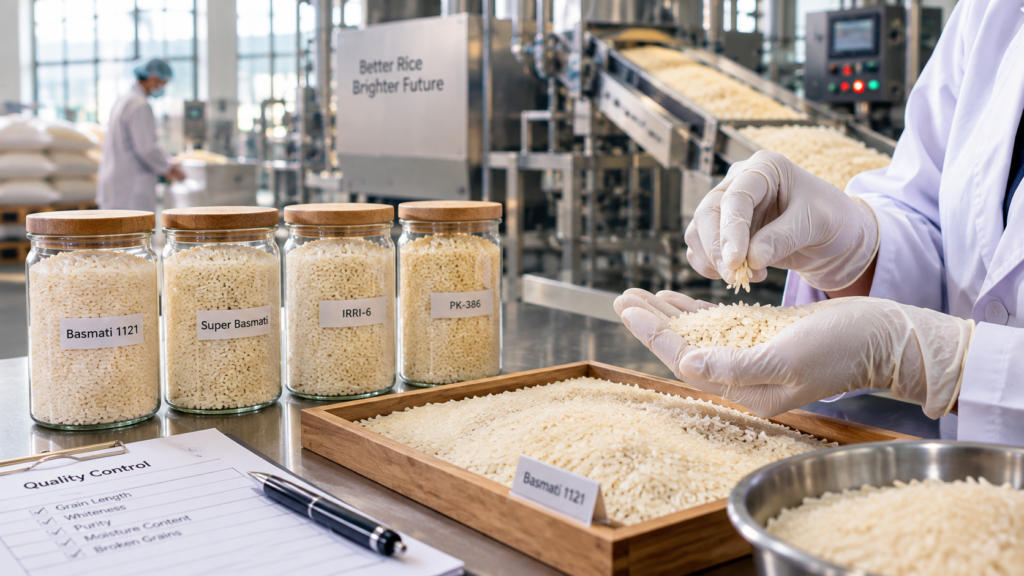
Pakistan stands as one of the world’s largest rice exporters, yet sourcing quality suppliers requires more than searching directories. This guide explains what to evaluate, how to assess suppliers, and what procurement considerations matter most when sourcing rice from Pakistan.
Why Pakistan Is a Strategic Source for Rice
Pakistan ranks among the top five global rice exporters, with strategic positioning in both premium and mass-market segments. The country’s rice industry has experienced substantial growth; during the July-February period of FY 2023-24, Pakistan exported over 3.932 million metric tonnes of rice valued at $2.517 billion, representing a significant 85.83 percent increase compared to the prior year.
This consistent supply volume, coupled with established quality standards, makes Pakistan attractive for private-label and bulk rice programs. However, sourcing success depends on understanding the supplier landscape and local production dynamics.
Understanding Pakistani Rice Varieties and Their Applications
Pakistan produces both premium aromatic and commercial rice varieties, each suited to different market segments and applications.
Basmati Rice
Pakistan is globally recognized for its premium long-grain Basmati rice, particularly Super Basmati and 1121 Basmati, which are renowned for their fragrance, length, and texture. These varieties command higher prices but appeal to premium consumer segments and food service applications requiring showpiece presentation.
During the first eight months of FY 2023-24, Pakistan exported over 472,135 metric tonnes of Basmati rice worth $539.428 million, reflecting a 38.43 percent increase compared to the previous year.
Non-Basmati Rice
The country also produces high volumes of non-Basmati varieties such as IRRI-6 and PK 386, widely exported to Africa and Southeast Asia. These varieties offer cost advantages for bulk buyers and food manufacturers targeting price-sensitive markets.
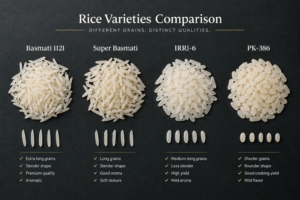
When evaluating a supplier, ask specifically which varieties they handle and in what volumes. This clarifies their operational scale and whether they can fulfill your specifications.
Quality Standards and Specifications to Verify
When assessing potential suppliers, request specification sheets covering:
- Broken grain percentage (typically 5-10% for commercial grades, below 5% for premium)
- Moisture content (12-14% is standard for long-term storage and export)
- Foreign material and impurities (should be below 0.1%)
- Grain length consistency (critical for premium varieties)
- Certification status (HACCP, ISO 22000, FSSAI, or equivalent)
FDA facility registration and HACCP certification are mandatory for US market access; HALAL certification opens Middle East opportunities. Even if you’re not exporting to these markets immediately, suppliers holding these certifications demonstrate quality infrastructure.
Evaluating Supplier Capabilities and Production Scale
Not all rice traders operate the same way. Some are exporters working directly with mills; others are intermediaries. Understanding this distinction matters for consistency and cost.
Questions to clarify with potential suppliers:
- Do you mill the rice or source from established mills?
- What is your typical monthly export volume?
- Can you provide references from existing commercial buyers?
- How do you handle quality control and testing?
- What documentation and certifications do you provide with shipments?
Large, established exporters typically have relationships with multiple mills across major rice-producing regions. Major production areas include Punjab province (Hafizabad, Sheikhupura, Sahiwal), Khyber Pakhtunkhwa (Swat), and Sindh (Larkana, Jacobabad, Badin). If a supplier sources from these established zones, that’s a positive signal.
Packaging Considerations for Private-Label Programs
Bulk wholesale packaging (25kg or 50kg bags) is cost-effective and standard for food service, institutional, and commercial distribution. Retail-ready packaging (1-5kg bags) supports consumer-facing private-label programs but requires higher per-unit investment.
Ask suppliers about their packaging capabilities:
- Can they supply custom-branded bags?
- Do they offer vacuum sealing or specialized food-grade liners?
- What lead times apply for custom packaging?
- Are they equipped for moisture-barrier or modified-atmosphere packaging?
Quality suppliers can accommodate custom printing, labeling, and packaging requirements. Confirm they use food-grade materials compliant with your target market’s standards.
Documentation and Compliance Requirements
Export rice travels with specific documentation. Reputable suppliers provide complete paperwork without requiring follow-up requests.
Standard export documentation includes:
- Certificate of Origin (verifying Pakistan as source country)
- Phytosanitary Certificate (confirming freedom from plant pests and diseases)
- Food Safety/Health Certificate (issued by Pakistani food authority)
- Commercial Invoice (with detailed product specifications)
- Packing List (itemizing exact quantities and packaging details)
- Bill of Lading or Airway Bill (for logistics tracking)
Certifications include ISO, HACCP, Organic, Halal, and SGS inspection for international trade. If your market requires specific certifications, confirm suppliers hold them before committing to orders.
Sampling, Testing, and Quality Assurance
Never commit to bulk purchases without evaluating samples first. Professional suppliers ship samples readily and without delay.
When evaluating samples:
- Taste and aroma (especially important for basmati)
- Cooking performance (grains separate or stick, texture consistency)
- Visual uniformity (grain color, size consistency, absence of damage)
- Moisture and storage stability (rice should not clump or spoil prematurely)
Request samples in your intended packaging format. This clarifies how the product will actually reach end consumers and catches issues early—packaging damage, label quality, or moisture infiltration.
Establish relationships with testing labs if quality control is mission-critical. Third-party lab results carry more weight than supplier-provided data in negotiations.
Pricing, Payment Terms, and Negotiation Strategy
Payment structure typically follows trade finance standards:
- Letter of Credit (LC) at sight (most common for new supplier relationships)
- Telegraphic Transfer (TT) (advance payment, typically 100% for first orders)
- Open account (30-60 days, only with established relationships)
Negotiate pricing based on order volume and frequency. Bulk orders (containers of 20+ metric tons) command better rates than small shipments. If you plan to source regularly, discuss volume discounts and whether the supplier can guarantee consistent pricing.
Building Long-Term Supplier Relationships
The most successful rice sourcing relationships involve regular communication and mutual understanding of expectations.
Best practices for ongoing partnerships:
- Schedule periodic video calls to discuss market conditions, crop forecasts, and pricing
- Provide forecasts of your purchasing needs (even rough estimates help suppliers plan production)
- Give feedback on quality, packaging, and documentation—address issues promptly
- Pay on agreed terms consistently; reliability strengthens supplier relationships
- Consider loyalty arrangements for predictable volume commitments
Suppliers who understand your business objectives are more likely to prioritize your orders during tight supply periods and support product innovation (custom varieties, packaging formats).
Frequently Asked Questions
Q: What is the difference between Basmati and non-Basmati rice, and which should I source?
A: Basmati commands premium pricing due to its aroma, elongation when cooked, and perceived prestige. Non-Basmati varieties (IRRI-6, PK-386) are more economical and versatile for food manufacturing. Choose based on your target market and price positioning. Basmati suits specialty and premium retail; non-Basmati works for food service, commercial buyers, and budget-conscious consumers.
Q: How long does it take to receive rice after placing an order?
A: Typical lead times are 10-14 days after payment for standard orders of available inventory. Custom packaging or larger orders may require 3-4 weeks. Please confirm lead times in writing before committing, as delays can impact your supply chain.
Q: What certifications should a rice supplier hold?
A: HACCP and ISO 22000 are fundamental for food safety. For US export, FDA facility registration is mandatory. For Middle Eastern markets, Halal certification opens doors. Ask suppliers which certifications they hold and request copies of current certificates.
Q: Can Pakistani suppliers accommodate custom labeling and packaging?
A: Yes, established exporters routinely handle custom branding, custom bag sizes, and private-label arrangements. This requires higher per-unit costs and longer lead times. Discuss custom requirements early; some suppliers offer these services at reasonable minimums (often 500kg to 1 metric ton).
Q: What payment method is safest for international rice purchases?
A: A Letter of Credit (LC) is the industry standard for unknown suppliers because banks verify shipment details before releasing payment. Once you establish trust with a supplier, Telegraphic Transfer (TT) advance payment or open account terms become viable options.
Q: How is rice typically shipped to international markets?
A: Most rice travels in 20-foot or 40-foot containers via ocean freight, arriving at your designated port. Suppliers arrange shipping logistics; you pay the freight cost separately under FOB terms. Typical container capacity is 18-20 metric tons of rice.
Q: What should I look for when comparing rice suppliers?
A: Compare on consistency (do they maintain quality across shipments?), documentation completeness, willingness to provide samples and references, communication responsiveness, and flexibility with custom requests. Price is important, but a slightly more expensive supplier with reliable quality is often better than the cheapest option.
Finding and Connecting with Pakistani Rice Suppliers
Pakistan’s rice export industry has matured substantially, with professional traders and exporters operating across major cities. Saremco Impex Private Limited represents one of several private-label-focused suppliers operating within Pakistan’s agriculture division, combining traditional sourcing with export infrastructure.
When beginning your supplier search, consult Pakistan’s trade authorities and export databases for vetted suppliers. Look for companies that clearly document their operations, certifications, and capacity. Request samples from 2-3 suppliers simultaneously; comparing products and service quality will clarify which partnership aligns best with your business.
Sourcing rice from Pakistan offers compelling advantages—established quality, reasonable pricing, and export experience—but only when you partner with suppliers who take quality and communication seriously. Start with clear specifications, sample evaluation, and realistic timelines. Build relationships with suppliers committed to your success, not merely transactional volume.