IRRI-6 Rice Export from Pakistan: Grades, Quality and Buying Guide
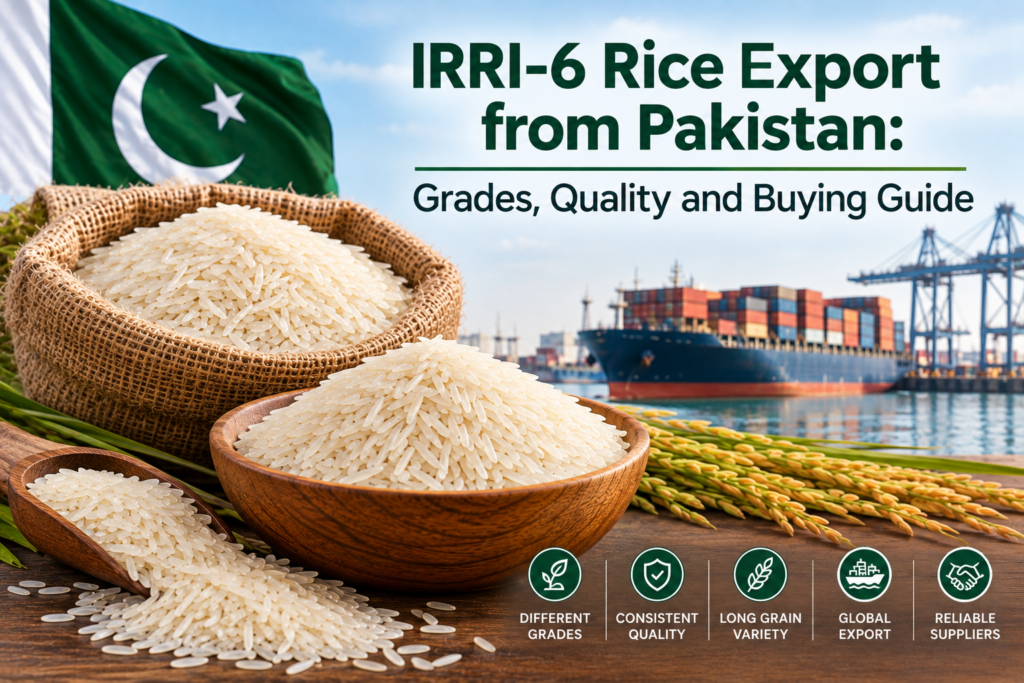
IRRI-6 is the rice most buyers mean when they ask for “Pakistani non-Basmati.” It is a long-grain, everyday white rice that moves in very large volumes, usually bought on price, consistency and shipment reliability rather than aroma. Because the product looks similar from one supplier to the next, the real differences sit in the contract: the broken percentage, the processing style, moisture, packing and paperwork. This guide explains how IRRI-6 rice export from Pakistan works in practice, what the grades mean and what to check before you accept a quotation.
What IRRI-6 Is and Why Importers Buy It
IRRI-6 is a non-Basmati long-grain variety grown mainly in Sindh. Pakistan’s other major non-Basmati variety, IRRI-9, comes from the same IRRI family. The Pakistan Credit Rating Agency describes Sindh as the province that specialises in IRRI-6 and IRRI-9, while Punjab produces most of the Basmati. The TDAP’s overview of rice varieties grown in Pakistan lists IRRI-6 and IRRI-9 as the main non-Basmati types.
Buyers choose it for practical reasons:
- Price. It costs far less than Basmati, which makes it a fit for price-sensitive markets and high-volume programmes.
- Cooking behaviour. Cooked grains stay reasonably separate, so it works for plain rice, pilaf-style dishes and large-batch catering.
- Availability. It is one of Pakistan’s most widely exported rice types, so supply chains, mills and packing lines are well established.
The USDA Foreign Agricultural Service notes that Pakistan ships competitively priced milled rice to East Africa, particularly Kenya, Mozambique and Tanzania, as well as supplying Basmati to Europe and the Middle East. Trade listings also show IRRI-6 offered to Gulf, Asian and African buyers.
IRRI-6 Rice Export Pakistan: Grades Explained
When exporters quote IRRI-6, the grade is nearly always a broken-grain percentage. A “5% broken” lot is the cleanest and most expensive commonly traded grade. A “25% broken” lot contains many more fragments and is cheaper. Typical grades you will see offered include 5%, 10%, 15%, 25% and 100% broken.
Broken kernels are generally understood as fragments shorter than three-quarters of a whole grain. Still, the exact definition and test method can vary between contracts, so write it into yours.
| Grade | Typical use | What to watch |
|---|---|---|
| 5% broken | Retail packs, hotels, quality-conscious wholesale | Appearance and uniformity matter most |
| 10–15% broken | General wholesale, mid-range retail | Good balance of price and look |
| 25% broken | Bulk food aid-type programmes, price-led markets | Check for polish, chalky grain and foreign matter |
| 100% broken | Rice flour, brewing, processed foods | Usually bought for processing, not for plates |
Grade names are not regulated the same way everywhere, so treat the percentage as a starting point. Two suppliers can both quote “25% broken” and still ship noticeably different rice if one has more chalky grains, discoloured kernels or short fragments.
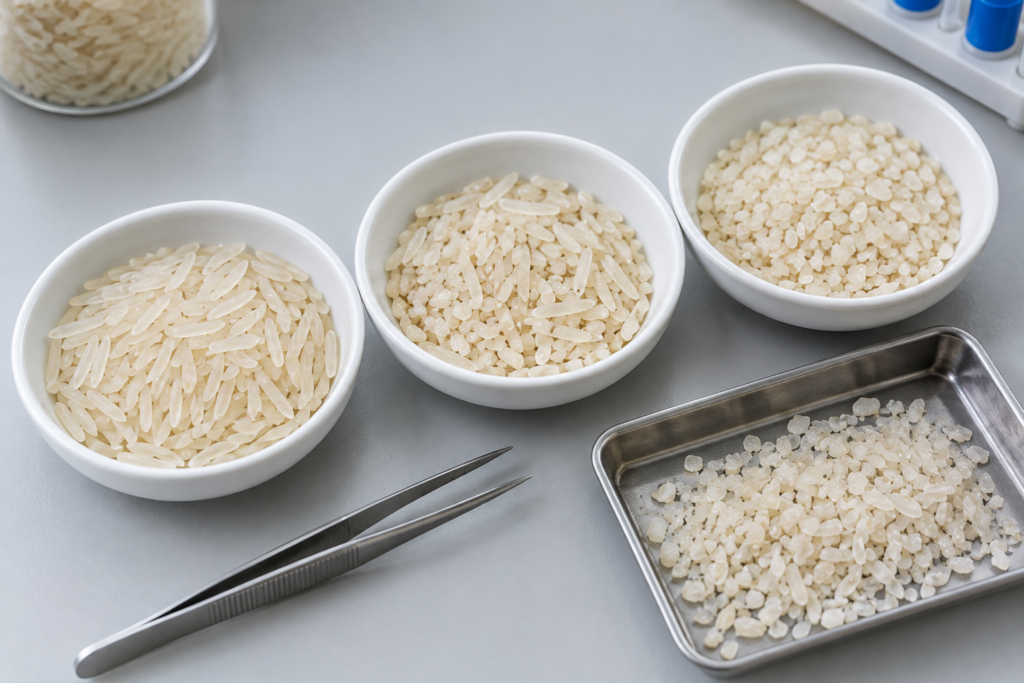
White vs Parboiled IRRI-6
Most IRRI-6 is sold as polished white rice, but parboiled (sella) versions also trade, and the choice affects cooking and shipping.
White (raw milled). Clean, bright and familiar, with a softer bite. It suits markets that expect a traditional white-rice appearance and use it in everyday home cooking.
Parboiled (golden). The rice is soaked and steamed in the paddy before milling, which hardens the kernel. It breaks less during milling, cooks firmer and holds up better in large pots. Many African and Gulf buyers prefer it for those reasons.
If you are unsure which your market wants, ask your own customers or distributors what they currently stock. The wrong style can be as costly as the wrong grade.
Quality Parameters to Put in the Contract
Adjectives like “premium” or “export quality” mean nothing in a dispute. Measurable terms do.
- Broken percentage and method. State the maximum and how it is measured.
- Moisture content. Trade offers commonly specify a maximum around 14% for milled non-Basmati, and Saremco Impex’s own site lists a 12–13% maximum for its rice. Agree on a limit with your supplier and confirm it in the pre-shipment test.
- Average grain length. Trade listings generally describe IRRI-6 as a medium-long grain of around 6 mm. Ask for the figure on the supplier’s current specification sheet.
- Foreign matter and discoloured grains. Stones, husk, damaged or yellow kernels should have stated limits.
- Polish. Single or double polish changes the appearance and sometimes the price. Specify what you want.
- Crop year. Old stock can look fine and cook differently, so name the crop year if it matters.
- Insects and odour. Ask for a statement that the rice is free from live insects and off-smells at loading.
For a deeper explanation of how moisture, broken grain and foreign matter are tested before shipment, the Saremco Impex guide on how export rice is graded and inspected covers the same checks, although it focuses on Basmati.
Packaging, Loading and Shipping Terms
Common packing for IRRI-6 in bulk is 25 kg or 50 kg woven polypropylene bags, with private label printing available from many exporters. Some buyers want retail packs, and others want one-tonne bulk bags for repacking at the destination. Confirm:
- bag type, net weight and print requirements
- whether the container will be loaded with palletised or loose bags
- how the supplier protects the cargo from condensation on long voyages
- the Incoterm, such as FOB Karachi, CFR or CIF, so freight and insurance are clearly assigned
Port and vessel timing can swing delivery dates, so ask the exporter for realistic lead times in writing rather than relying on an informal estimate.
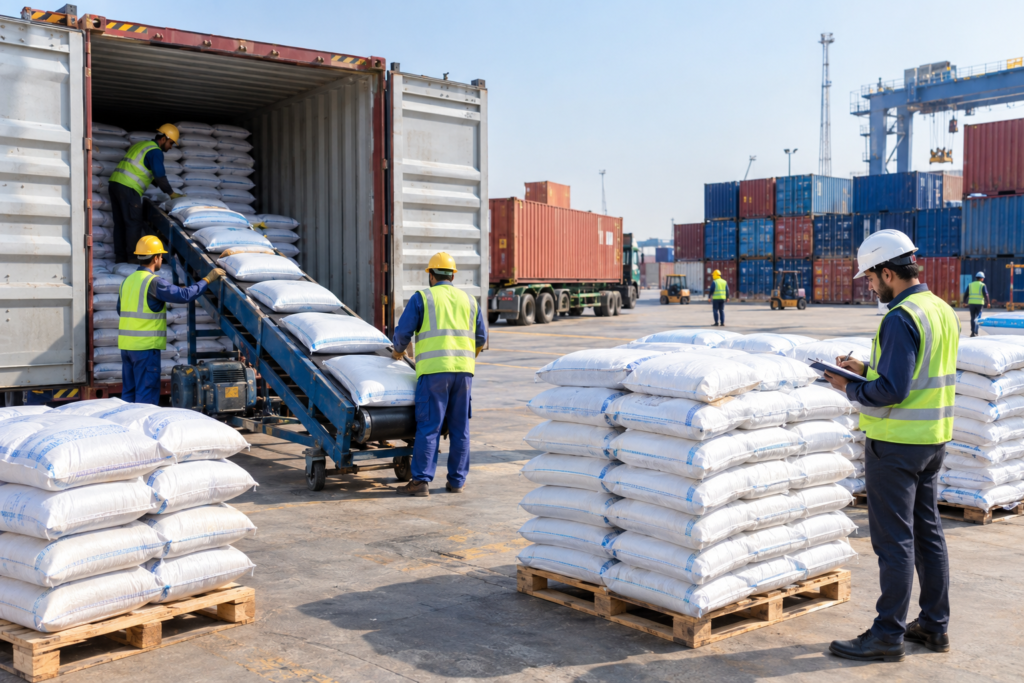
Documents and Compliance
A typical export set includes a commercial invoice, packing list, bill of lading, certificate of origin and a phytosanitary certificate. Depending on the destination, you may also need a certificate of analysis, a fumigation certificate or additional declarations. Some countries apply their own rules on pesticide residues, labelling and import licences, and those rules change.
Confirm the exact list with your own customs or food-safety authority and with the exporter before you sign. Do not assume that a document that cleared one market will clear yours.
Comparing Supplier Quotations
Two IRRI-6 offers that look different on price often differ on terms. Put them side by side on the same basis:
- Same broken grade and the same definition.
- Same processing style, white or parboiled.
- Same polish, moisture limit and crop year.
- Same packaging and net weight.
- Same Incoterm and loading port.
- Same inspection and documents, including who arranges and pays for them.
Ask for a sample, cook it and keep a sealed counter-sample. A supplier who resists sampling or independent inspection is telling you something.
Where Saremco Impex Fits
Saremco Impex Private Limited is the international trading and export arm of Daa Group. Its official website lists a rice division with a Pasrur rice mill in Punjab and two rice brands.
Non-Basmati rice sits under Daa Prime Rice, the brand the site describes as its value-focused everyday range. The site lists PK-386, IRRI-6 and IRRI-9 under it and positions the range for commercial kitchens, catering, institutional supply and price-sensitive export markets. Premium Basmati varieties are sold separately under Daa Heritage Rice, so buyers who want IRRI-6 should ask about the Daa Prime range.
According to the website, the company offers retail and bulk packing from 1 kg to 50 kg, jumbo bulk bags, private label options and documents on request, including certificates of analysis, phytosanitary certificates and certificates of origin. It also states that shipments are inspected before loading by third parties such as SGS or Intertek.
Which broken grades, white or parboiled styles and packing formats are available for IRRI-6 should be confirmed directly with the team, along with current certificates and test reports.
Conclusion
A good IRRI-6 rice export order to Pakistan starts with a clear brief: the broken grade, white or parboiled, moisture limit, packing, crop year, delivery terms and documents. Write those into the contract and test a sample before you commit.
If you are planning an import and want specifications, packaging options or a quotation for Daa Prime Rice, you can reach the Saremco Impex team through the Saremco Impex website. Tell them your destination, the grade you are considering, your expected volume and your preferred delivery terms so they can respond with relevant details.