IRRI-6 Rice Suppliers in Pakistan: Wholesale and Bulk Buying Guide
Finding a source for IRRI-6 is easy. Finding one that ships the same rice in the third container as in the first is harder. Pakistan has a large number of mills, brokers and traders offering this long-grain white rice, and from a distance their quotes look alike. This guide is for importers and wholesalers who already know they want IRRI-6 and now need to choose who to buy it from. It covers how the supplier landscape is structured, how to vet exporters, what to put in a bulk contract and how to compare offers fairly.
Table of Contents
- Who Actually Sells IRRI-6 from Pakistan
- Basic Checks Before You Request a Quote
- IRRI-6 Rice Suppliers Pakistan Buyers Can Compare: What to Ask
- Wholesale and Bulk: Sizing the Order
- Terms of Sale, Payment and Risk
- Inspection and Documents
- Common Red Flags
- Where Saremco Impex Fits
- Conclusion
Who Actually Sells IRRI-6 from Pakistan
Not everyone offering IRRI-6 owns a mill. When you search for IRRI-6 rice suppliers Pakistan-wide, you will meet three kinds of sellers:
- Mill-owning exporters that buy paddy, mill it and ship under their own control.
- Exporters without mills that source milled rice from several mills and handle packing, documents and shipping.
- Brokers and traders that connect buyers to either of the above and take a margin.
None of these is automatically bad. A well-run trading exporter with strong mill relationships can be more flexible than a single mill. The risk is opacity: if you do not know where your rice is milled, you cannot know what the next lot will look like. Ask directly who mills the rice, where, and whether the supplier controls the sorting and packing.
IRRI-6 is mostly a Sindh crop. The Pakistan Credit Rating Agency notes that Sindh specialises in IRRI-6 and IRRI-9 while Punjab produces Basmati, and the TDAP’s overview of rice varieties lists both as the principal non-Basmati types. That matters for sourcing: ask which crop and which growing area the lot comes from, because crop conditions affect grain quality from year to year.
Basic Checks Before You Request a Quote
A few simple checks screen out most unreliable sellers.
Registration and trade standing. The Rice Exporters Association of Pakistan says on its official website that membership became compulsory for all rice exporters, so a genuine rice exporter should be able to show REAP membership. Ask for the member details and company registration number, and cross-check them yourself.
Physical address and mill location. A real exporter can name its office, its mill and its loading port. Be cautious of sellers who offer only a phone number and a price.
Export history. Ask which markets the supplier has shipped to and whether it can provide buyer references you can contact. Treat unverifiable claims about “thousands of containers” with caution.
Willingness to be inspected. A supplier confident in its rice will accept third-party pre-shipment inspection and will let you appoint the inspector.
Consistent answers. Ask the same specification question to two different people at the company. The answers should match.
IRRI-6 Rice Suppliers Pakistan Buyers Can Compare: What to Ask
Put the same questions to every shortlisted supplier, in writing, so the answers can be compared line by line.
- Which broken grades do you offer, and how is “broken” defined and measured?
- Is the rice white, parboiled or both, and which polish level?
- What is your moisture limit at loading?
- What are the limits for foreign matter, discoloured and chalky grains?
- Which crop year is available, and how is old stock handled?
- What packaging do you offer, and is private label printing possible?
- What are your minimum order quantity, loading port and Incoterm options?
- Which inspection company can verify quality and quantity before loading?
- Which documents do you issue, and how quickly after shipment?
- What are your payment terms?
A supplier who answers all ten clearly is already ahead of most.

Wholesale and Bulk: Sizing the Order
IRRI-6 is usually traded in full container loads or larger bulk lots, and a lot of supplier terms depend on order size. As a general pattern:
- Trial or first orders are often a single container. This lets you test the rice and the supplier’s reliability before committing to volume.
- Repeat container programmes allow you to agree a stable specification and regular shipments, often with better terms.
- Large bulk or vessel shipments are priced and managed differently, usually with their own inspection and financing arrangements.
Some trade listings quote minimum orders in the hundreds of metric tons, so do not assume a supplier will accept a small first order. Ask early and plan accordingly. For retail or smaller wholesale buyers, a supplier that offers smaller packed formats, such as 1 kg to 5 kg packs, may be more practical than one that deals only in bulk sacks.
Terms of Sale, Payment and Risk
Bulk rice contracts are usually written on international trade terms. Common Incoterms for Pakistani rice include FOB Karachi, CFR and CIF. Under FOB, you arrange the freight, and under CFR or CIF, the supplier does. The right choice depends on whether you or the supplier gets better freight rates and who you want to carry shipping risk.
Typical payment methods for first orders include a letter of credit or a telegraphic transfer with an advance and balance against documents. Neither is automatically safe. A letter of credit can be difficult to operate if the terms are poorly drafted, and a large advance transfer carries counterparty risk if you have not verified the seller. For a first transaction, consider a smaller shipment, an independent inspection and a payment structure that releases the balance only against agreed documents.
Whatever you choose, write the specification, tolerances, inspection method, delivery window and remedies into the contract rather than relying on emails or a proforma invoice.
Inspection and Documents
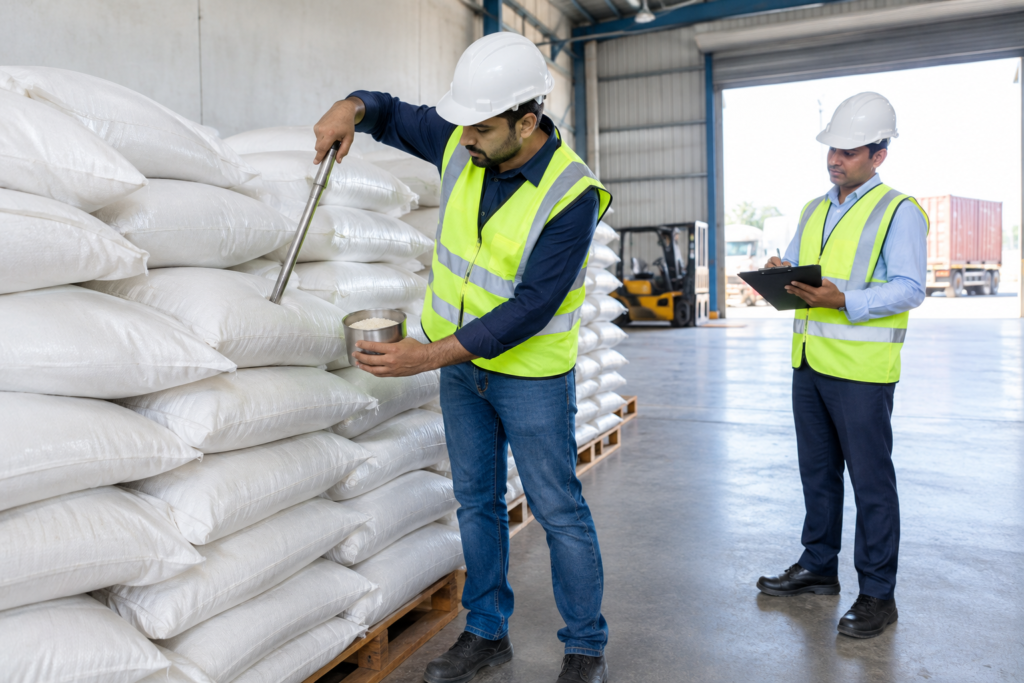
Third-party inspection is the simplest protection you have. A recognised inspector can verify quality, quantity, packing and loading, and can issue a report you can use if there is a dispute. Agree in advance who appoints the inspector, who pays, and what happens if the lot fails.
A typical shipping set includes a commercial invoice, packing list, bill of lading, certificate of origin and a phytosanitary certificate. Depending on the destination, you may also need a certificate of analysis, a fumigation certificate or other declarations. Requirements differ by country, so confirm the list with your own customs or food-safety authority before you commit.
Common Red Flags
Some warning signs show up repeatedly in bulk rice transactions:
- A price far below every other quote, with no explanation.
- Reluctance to provide a sample or accept independent inspection.
- Vague specifications such as “export quality” with no tolerances.
- Pressure to pay a large advance quickly.
- Documents that do not match the product, port or quantity.
- A supplier that cannot name its mill or its loading port.
If two or more of these appear, pause the transaction and verify further.
Where Saremco Impex Fits
Saremco Impex Private Limited is the international trading and export arm of Daa Group. Its official website lists a rice division with a Pasrur rice mill in Punjab, and it states that the company is a member of the Rice Exporters Association of Pakistan.
Non-Basmati rice is offered under the Daa Prime Rice brand, which the site describes as its value-focused everyday range. The site lists PK-386, IRRI-6 and IRRI-9 under it and positions the range for commercial kitchens, catering, institutional supply and price-sensitive export markets. Premium Basmati sits in the separate Daa Heritage Rice range, so buyers looking for IRRI-6 should ask about Daa Prime.
According to the website, the company offers packing from 1 kg to 50 kg, jumbo bulk bags, private label options and documents including certificates of analysis, phytosanitary certificates and certificates of origin on request. It also says shipments are inspected before loading by third parties such as SGS or Intertek, and its quotation form offers FOB Karachi, CFR, CIF and DAP terms.
As with any supplier, ask for the current IRRI-6 specification sheet, the broken grades and processing styles available, and up-to-date certificates and test reports. Compare these against every other supplier on your shortlist.
Conclusion
Choosing among IRRI-6 rice suppliers in Pakistan comes down to evidence rather than promises. Verify who the supplier is and where the rice is milled. Write the specification into the contract, test a sample, appoint an independent inspector and structure payment so you can walk away if something does not match.
If you are planning a wholesale or bulk purchase and want specifications, packaging options or a quotation for Daa Prime Rice, you can contact the Saremco Impex team through the Saremco Impex website. Share your destination, grade, volume, packing and preferred delivery terms so they can respond with relevant details.