Rice Export from Pakistan: Complete Guide for International Buyers
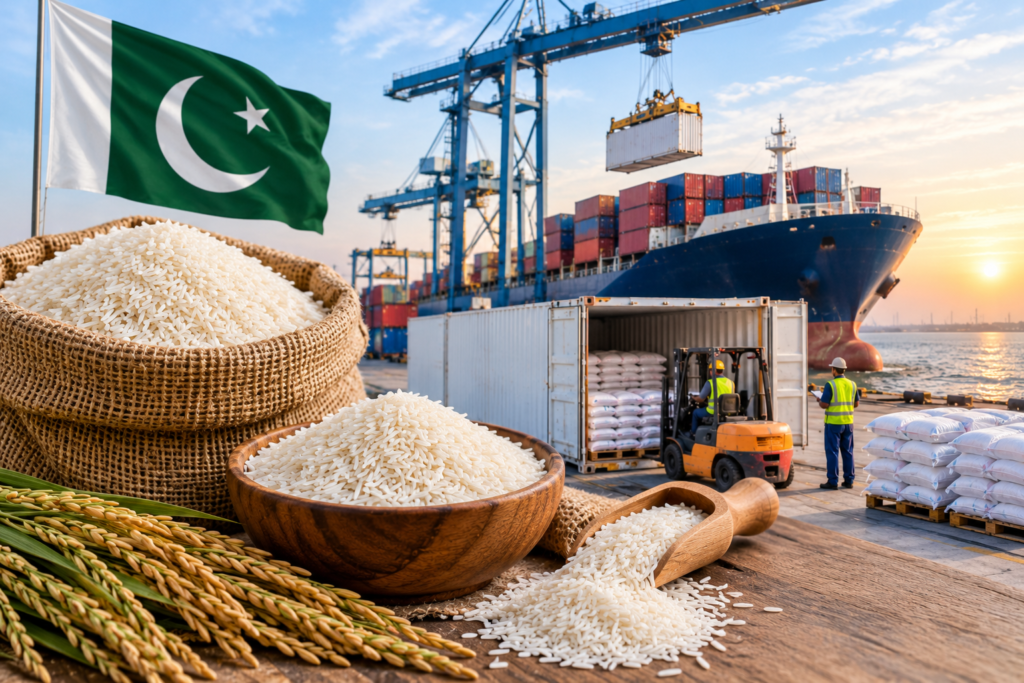
Pakistan is one of the few countries that can supply both premium long-grain basmati and large volumes of everyday white rice, which is why importers in the Middle East, Africa, Central Asia and Europe keep it on their sourcing lists. Rice export from Pakistan is also a trade that rewards preparation. Prices move with each harvest, rules on fumigation and residues are tightening, and the gap between a good supplier and a poor one shows up in the container, not in the quotation.
This guide covers what Pakistan ships, how the grades work, which documents a shipment needs, what has changed in logistics, and what to ask a supplier before you commit.
Why Pakistan Is a Serious Rice Origin
Pakistan ranks among the world’s leading rice exporters, and rice is one of its largest agricultural export earners. Over the July 2025 to June 2026 fiscal year, Pakistan Bureau of Statistics figures reported by The Nation put total rice exports at about 4.29 million tonnes worth roughly $2.29 billion. That was a clear step down from the previous year’s 5.8 million tonnes, which tells you something useful: this is not a flat market, and buyers who watch the cycle negotiate better.
The same data shows how differently the two rice families behave. Basmati held up much better than the rest, with roughly 795,000 tonnes shipped for about $843 million, close to the prior year’s level. Non-basmati carried the decline.
The USDA Foreign Agricultural Service projects exports of around 4.7 million tonnes for 2025/26 and about 4.9 million for 2026/27, with the 2026/27 crop forecast lower on reduced planted area. Forecasts change, so treat them as a direction, not a promise, and confirm availability with the supplier before you plan a purchase.
Main Rice Types Exported from Pakistan
Basmati rice from Pakistan
Basmati is the premium category. It is long-grained, aromatic, and elongates when cooked, which is why it dominates biryani, pulao and restaurant menus. Suitable growing areas are limited, so production grows slowly, and that scarcity supports its price. According to USDA reporting, basmati has traded at around $1,000 per tonne FOB, though quotes vary by grade and season.
Within basmati, buyers will meet names such as Super Basmati and the longer-grain 1121 type. The specification matters more than the name. Ask for grain length, broken percentage, moisture and age of the crop on every quotation.
Non-basmati: IRRI-6, IRRI-9 and PK-386
Non-basmati rice makes up the large majority of Pakistan’s export tonnage. IRRI-6 is the workhorse, usually sold by broken percentage (for example, 5%, 15% or 25% broken). IRRI-9 and PK-386 appear alongside it in USDA’s description of the export mix. These varieties are bought for volume: government tenders, wholesalers, and food-service or retail repacking in price-sensitive markets.
Sellers also offer parboiled (sella) and steamed rice, which holds its shape better in cooking and is popular in several Gulf and African markets. Confirm the process, as milling and parboiling methods differ between mills.
Reading a Rice Specification
Two lots with the same variety name can be very different products. These are the points that separate them:
- Variety and grade: the exact type, such as 1121 basmati or IRRI-6 white, and the stated grade.
- Broken percentage: the share of fractured grains. Lower numbers cost more and cook more evenly.
- Moisture: high moisture raises the risk of mould and quality loss in transit.
- Foreign matter and defects: chalky, damaged, discoloured or immature grains, plus stones and husk.
- Milling degree: how well the rice is polished, which affects appearance and cooking.
- Crop year: aged basmati cooks fluffier, so ask whether the lot is new or old crop.
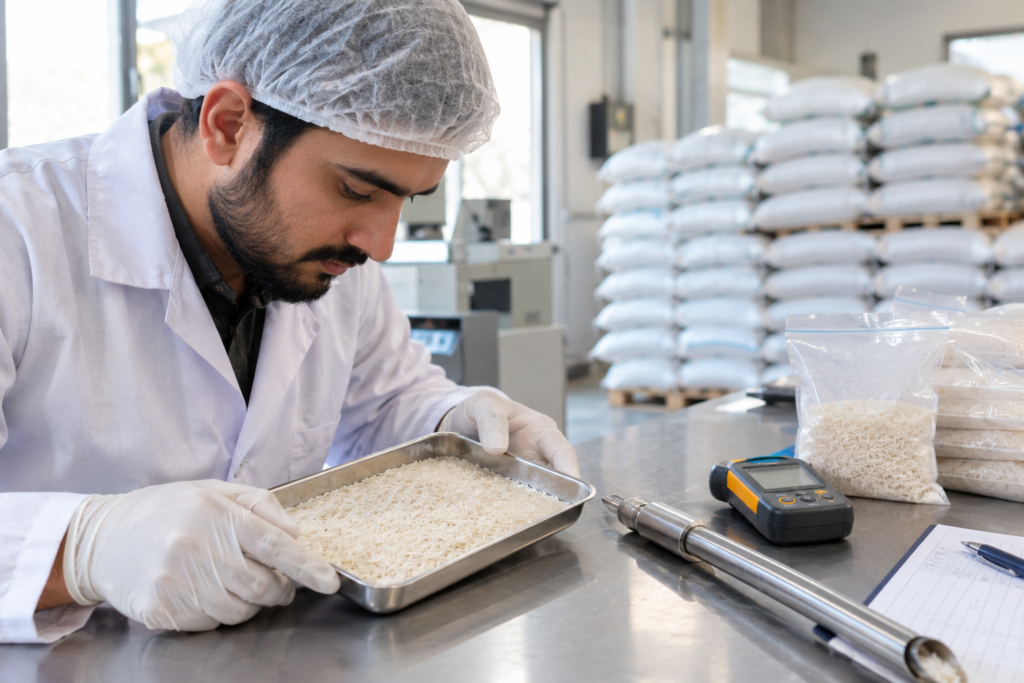
Ask for a sample and a pre-shipment inspection, and agree on tolerances in the contract. Disputes usually come from specifications that were vague at the start.
What a Rice Shipment Needs: Documents and Compliance
Paperwork is where many first-time importers lose time. A typical shipment includes a commercial invoice, packing list, bill of lading, certificate of origin and a phytosanitary certificate, with additional documents depending on your country’s rules. Some destinations ask for an inspection report or a fumigation certificate.
On the Pakistani side, rice export clearance runs through the electronic system. Since 2022, rice consignments shipped from Karachi’s seaports under the main rice tariff codes have been cleared through the Pakistan Single Window, which also supports the electronic phytosanitary certificate issued by the Department of Plant Protection. Pakistan’s plant quarantine rules sit under the Plant Quarantine Act of 1976, as outlined on the International Plant Protection Convention portal.
Residues and contamination deserve special attention. After shipments were intercepted in several markets, including the European Union, Pakistani authorities reinforced requirements such as fumigation treatment and freedom from extraneous matter like soil and weed seeds. If you import into the EU or another strict market, tell your supplier the exact maximum residue limits and mycotoxin thresholds up front, and request lab analysis for the lot you are buying rather than a general statement of compliance.
Packaging, Containers and Shipping
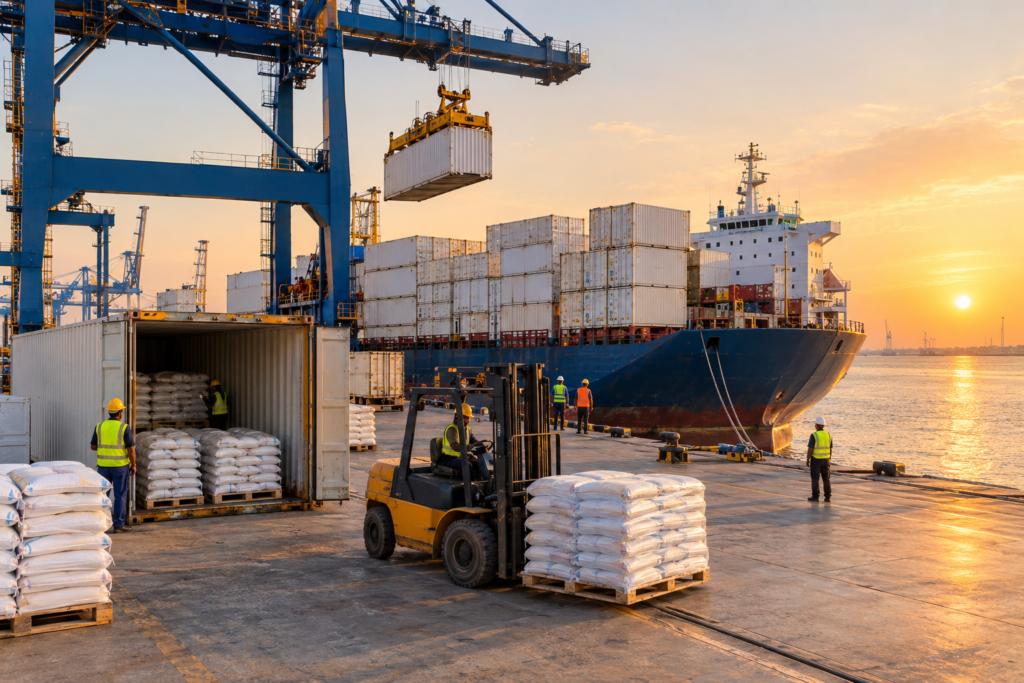
Rice is commonly packed in polypropylene or jute-style sacks, often 25 kg or 50 kg, or in retail bags for branded orders. Bulk buyers frequently take 20-foot or 40-foot containers loaded from Karachi, with bagged cargo sometimes moving on bulk vessels for very large tonnages. Sound packing, dry containers and proper fumigation are what protect the rice over a voyage of several weeks.
Shipping routes have recently become harder. USDA’s July 2026 update notes that disruption around the Strait of Hormuz has created logistics challenges for Pakistani rice, and that the government has opened six overland corridors toward Iran and onward to Central Asia. If you buy for Gulf or Central Asian delivery, confirm the route, transit time and who carries the risk before you sign.
Know your trade terms. FOB means the price covers loading at the Pakistani port and the buyer arranges freight. CIF includes freight and insurance to your port. The difference can look small on paper, so compare offers on the same basis.
How to Evaluate a Rice Supplier
Cheap quotes are easy to find. A dependable supplier is harder. Before awarding a first order, put these questions to any exporter:
- Can you share a sample that matches the offered specification, and will the shipment match it?
- Who inspects the cargo before loading, and can an independent surveyor attend?
- Which documents will accompany each shipment, and who files them?
- What fumigation and residue testing is done, and can you provide reports for my destination?
- What are the packing options, container loading procedure and typical lead time from order to vessel?
- What are the payment terms, and what happens if the cargo fails inspection at destination?
Clear, specific answers matter more than a polished brochure. Be careful with any supplier that offers certifications, volumes or prices without being willing to prove them.
Working With Saremco Impex Pvt. Limited
Saremco Impex Pvt. Limited is a Pakistan-based agricultural processing and export company focused on sourcing, processing and global supply of agricultural products and by-products. Its current published range centers on maize and biomass materials, and it operates through a structured sourcing network across Pakistan’s agricultural regions, with containerized export handling from Pakistan.
For buyers, that export-handling approach is relevant when you want one point of contact for specifications, documentation and shipment coordination across Pakistani agricultural commodities. If you are looking at rice, the practical step is to send an export inquiry with the variety, grade, quantity, packaging, destination and delivery terms you need, and the team can tell you what can be arranged and on what basis.
Conclusion
Rice export from Pakistan offers real depth for importers, from aromatic basmati to high-volume IRRI-6. Still, results depend on clear specifications, correct documentation, residue compliance and a realistic view of shipping routes. Compare offers on the same terms, test samples before you commit, and treat supplier transparency as part of the product.
If you are planning to source agricultural products from Pakistan, contact Saremco Impex Private Limited with your product requirements, quantities and destination to discuss specifications, availability and quotations.