Rice Exporters in Pakistan: How to Find Reliable B2B Suppliers
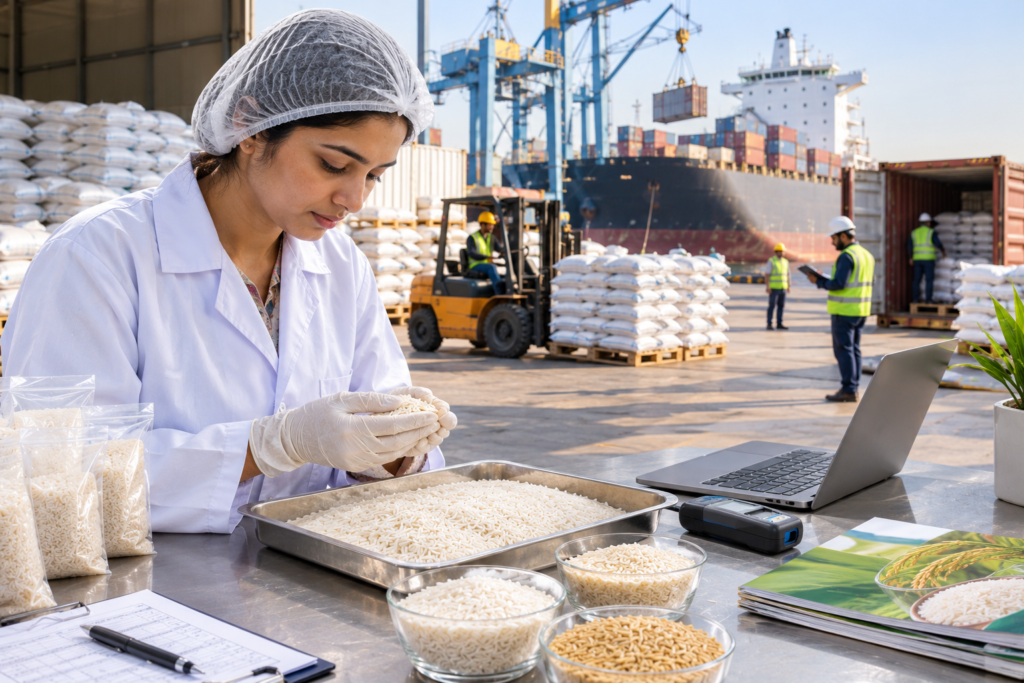
Pakistan ships millions of tons of rice every year, and that is exactly what makes supplier selection tricky. A large market means plenty of choice, but it also means trading houses, mills, brokers and one-container resellers, all quoting prices that look similar on paper. For an importer or distributor, picking among the rice exporters in Pakistan is less about finding a supplier and more about finding one whose rice, paperwork and shipping discipline match what you promised your own customers.
This guide walks through how the Pakistani rice trade is structured, which varieties and specifications matter, how to check an exporter before you wire a deposit, and what is worth knowing about current market conditions.
Pakistan’s Place in the Global Rice Trade
Rice is one of Pakistan’s most important agricultural exports. Pakistan exported about 5.2 million tons in 2024/25, a fall of roughly 20 percent on the year before, according to the USDA Foreign Agricultural Service’s Pakistan grain reports. The same agency projects 2025/26 exports at around 4.7 million tons, and describes non-basmati varieties such as IRRI-6, IRRI-9 and PK-386 as more than 85 percent of the volume.
Two things follow from this for buyers:
- Volume and value tell different stories. Non-basmati dominates tonnage, but basmati earns far more per ton. USDA noted basmati selling at roughly $1,000 per ton FOB in early 2026.
- Conditions shift quickly. Export policy, minimum export prices, crop size and shipping routes all move the market. A supplier who was competitive last season may not be this one.
Destinations are concentrated in Africa, the Middle East and, increasingly, Central Asia, so Pakistani exporters generally have experience with bulk African tenders as well as premium-packed basmati for retail markets.
Know What You Are Buying Before You Look for a Supplier
Many failed supplier relationships start with a vague enquiry. “Pakistani rice, 500 tons” can mean five very different products. Settle your product definition first.
Basmati
Basmati is long, slender, aromatic grain that elongates on cooking. The names buyers usually come across are 1121, Super Kernel and PK-386, though what is sold under each label varies by mill and by crop year. Basmati can be offered as white (raw), sella (parboiled) or steam-processed rice, and the choice affects cooking behavior, colour and price.
IRRI-6 and other non-basmati types
IRRI-6 is the workhorse of Pakistani exports, widely purchased for everyday cooking in African and other price-sensitive markets. It is typically offered in different broken-grain grades, from 5 percent broken up to 25 percent and beyond, as white, parboiled or sometimes brown rice. IRRI-9 and PK-386 also appear in export lists, with PK-386 often positioned between basic long grain and premium basmati.
Specifications to put in every enquiry
A serious quotation request should state:
- Variety and crop year
- Milling degree and colour (white, sella, steam, brown)
- Maximum broken percentage
- Average grain length, raw and, for basmati, cooked
- Maximum moisture
- Tolerance for foreign matter, chalky or damaged kernels and red grains
- Packing (PP bags, jute, retail pouches), weight per bag and container loading plan
- Incoterms (FOB Karachi, CFR, CIF) and destination port
If your own buyer is a supermarket chain, add residue limits or any destination-market regulatory requirements to the list. These vary by country, so confirm them with your local food authority before you finalize a contract.
Types of Rice Exporters You Will Meet
Not every business that sells rice does the same job, and the distinction affects accountability, price and control over quality.
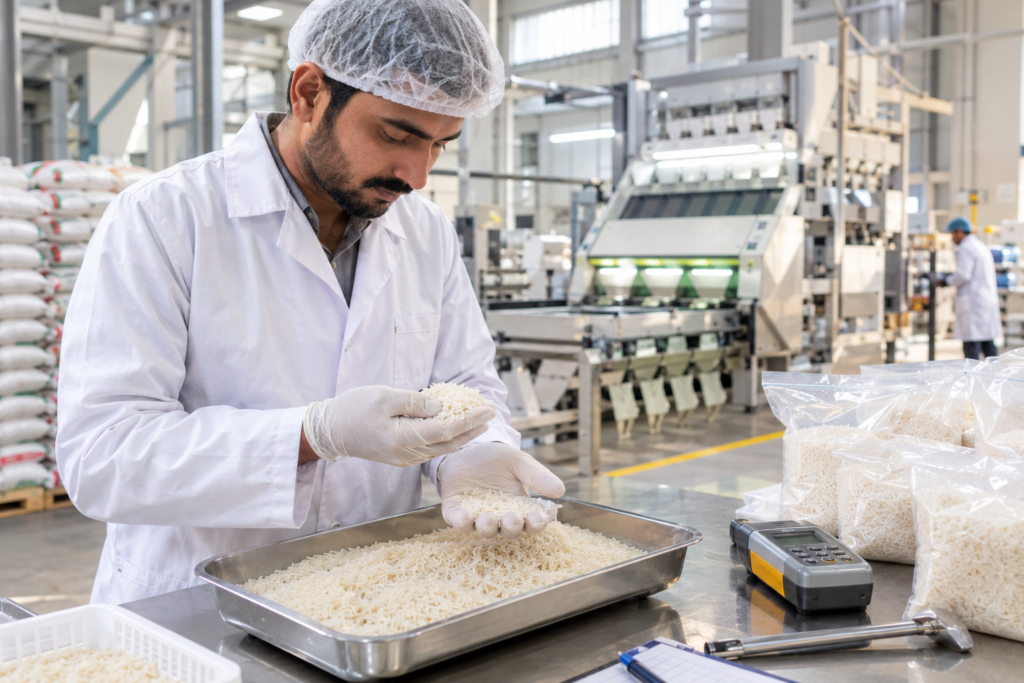
Mill-owning exporters process paddy themselves. They can usually speak with authority about milling, sorting and the exact lot you are buying, and they may have more flexibility on specifications. The trade-off is that their capacity and product range can be fixed by what their plant handles best.
Trading exporters buy from several mills and sell under their own contracts. This can be useful for blended orders or when you need several varieties at once, but you should ask which mill actually produces your lot and whether you may inspect it.
Brokers and agents introduce buyers to sellers and earn a commission. Good ones save time. Poor ones add a layer between you and the person responsible for the cargo, so confirm early who the contracting party and shipper will be.
None of these models is automatically better. What matters is that the exporter is transparent about which one they are.
How to Vet Pakistani Rice Exporters: A Practical Checklist
1. Confirm they are a legitimate, registered exporter
Pakistan’s rice trade has an established industry body, the Rice Exporters Association of Pakistan (REAP), which was formed in 1988–89 and has liaised with the Ministry of Commerce and other government bodies on exporter issues. Its published history notes that membership became compulsory for rice exporters through the Ministry of Commerce, so asking a supplier for their REAP membership details is a fair and normal due-diligence step. Combine it with checks on company registration, tax registration and a verifiable business address.
2. Ask for samples, then match the shipment to the sample
Request a pre-shipment sample that represents the lot, not a hand-picked best-case handful. Test it against your specification and keep a sealed counter-sample. Many disputes come down to whether the cargo matched the sample, so agree in writing how that will be judged.
3. Use independent inspection
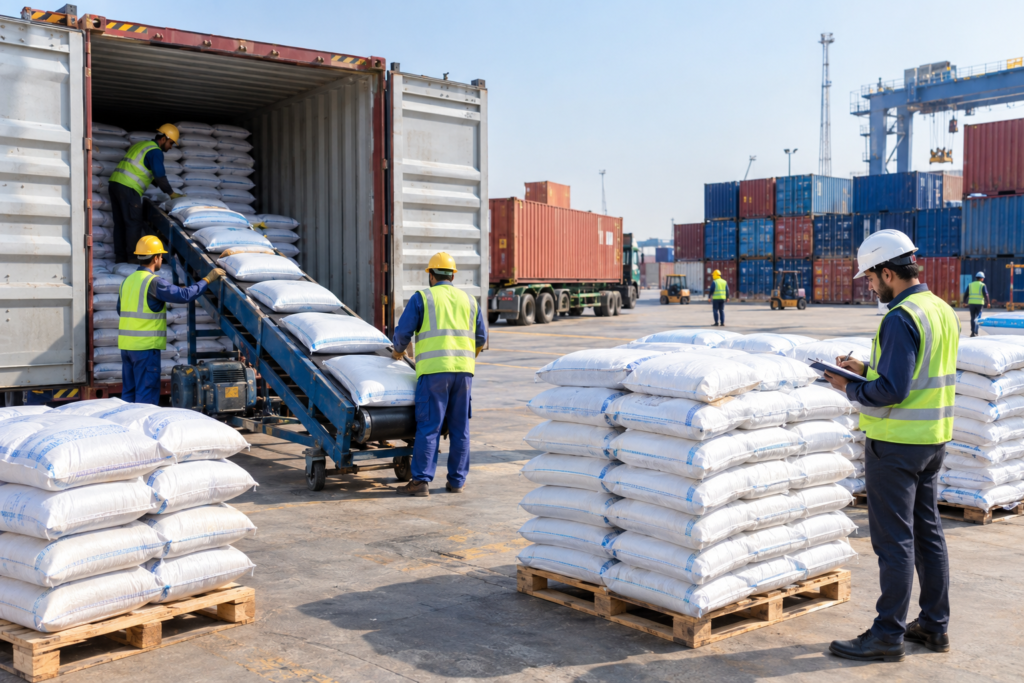
For anything beyond a small trial, consider appointing an independent inspection company to check quality and quantity at loading. Pakistan’s major exporters commonly work with international inspection firms, and logistics providers’ guides to Pakistani rice exports, such as DHL’s overview of exporting rice from Pakistan, mention third-party inspection as part of the standard quality process.
4. Check the documents that will actually travel with the cargo
Ask what the exporter normally provides: commercial invoice, packing list, bill of lading, certificate of origin, phytosanitary certificate and any inspection or quality certificates your destination requires. Do not accept a verbal promise that “everything will be arranged.” List each document in the contract.
5. Make the payment terms match the risk
First orders are where trust is lowest on both sides. Letters of credit remain a common way to protect both parties on larger shipments, while smaller trial orders may use a staged payment structure. Whatever you choose, tie payment to documents or inspection results rather than to promises.
6. Look for consistency, not just a low quote
A price much lower than other offers for the same specification deserves a question, not a celebration. Differences can come from higher broken percentage, older crop, more moisture, weaker packaging or a quotation that excludes costs the others include. Ask each exporter to quote on the same sheet: same specs, same Incoterm, same loading port.
7. Test their communication
An exporter who answers technical questions clearly, explains lead times honestly and tells you when something is not possible is usually safer than one who agrees with everything. Pay attention to how they handle a difficult question about shipment timing or quality tolerance.
Red Flags in Rice Export Offers
Walk away, or at least slow down, when you see any of these:
- Prices that are far below the market with no explanation
- Refusal to provide samples or allow inspection
- Pressure for a large advance payment to an unfamiliar personal account
- Vague specifications such as “best quality” with no broken percentage, moisture limit or grain length
- No clear answer on who the shipper and contracting company are
- Photos that look like stock images rather than the supplier’s own facility or product
Market Conditions Worth Understanding Before You Order
Rice trade is sensitive to policy and logistics, so check the current picture before negotiating.
Prices differ widely by grade. Non-basmati such as IRRI-6 5 percent broken trades at a very different price point from premium basmati, and published export prices change with harvest outlook and global competition. Treat any price list as a snapshot and ask for a fresh quotation with a validity date.
Shipping routes can change quickly. In its July 2026 update, USDA noted logistical challenges for Pakistani rice exports linked to the closure of the Strait of Hormuz, and reported that the government had opened six new overland corridors for trade to Iran and on to Central Asian republics. If your cargo moves through or near the Gulf, ask your exporter how they plan to handle routing, freight and delay risk. The USDA’s Grain and Feed update for Pakistan is a useful starting point for monitoring this.
Crop outlook matters. That same update lowered the 2026/27 rice production forecast to 9.1 million tons on reduced planting area, with exports forecast at 4.9 million tons. Buyers planning contracts for the coming season should discuss availability and price flexibility with suppliers early.
Building a Long-Term Supply Relationship
A single good shipment does not make a dependable supplier. Look for signs that an exporter can repeat quality across seasons:
- They keep consistent specifications from one shipment to the next.
- They explain crop-year differences openly rather than hiding them.
- They are willing to adapt packing, labeling and documentation to your market.
- They respond promptly when a problem arises and propose a fix.
Start with a trial container, document everything, and expand volume once the first few shipments confirm what the sample promised. If you have two or three suitable exporters, keeping them in your network gives you flexibility when prices, crop conditions or shipping lines change.
Sourcing from Pakistan with Saremco Impex Private Limited
Saremco Impex Private Limited is a Pakistan-based agricultural processing and export company, and its published product range centers on maize and agricultural by-products such as corn cob and biomass materials for international buyers. The company describes a sourcing, processing and export approach built around clean processing, moisture checks, bulk packaging and buyer coordination, which is the same discipline an importer should expect from any Pakistani agri supplier, including in the rice trade.
If you are sourcing from Pakistan and want to talk through specifications, packaging, documentation or shipment coordination, the team at saremco impex private limited can discuss your requirements and tell you what it can and cannot supply. For rice-specific enquiries, ask directly about current availability before you plan a purchase.
Conclusion
Choosing among rice exporters in Pakistan comes down to preparation and verification. Define the variety, grade and packing precisely. Check registration and track record, test samples, use independent inspection and write every document into the contract. Compare quotations on a like-for-like basis, and keep an eye on policy, crop forecasts and shipping routes, because they can change the economics of a deal within weeks.
Ready to discuss a Pakistani agricultural sourcing requirement? Contact Saremco Impex Private Limited with your product specifications, quantities and destination, and the team can respond with what it can offer.