Short Grain Rice Exporters from Pakistan: Top 5 Suppliers for Global Buyers
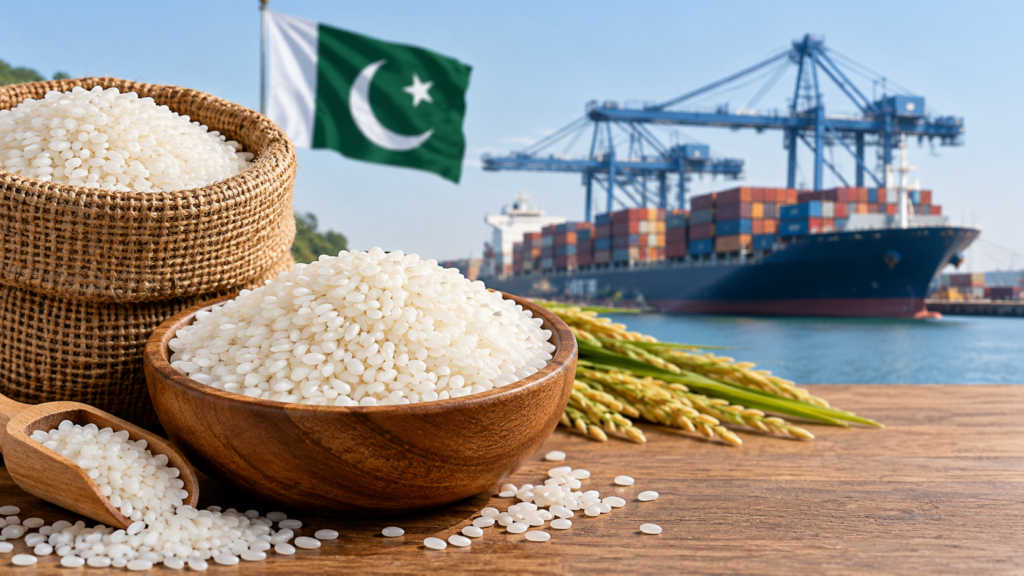
Pakistan is best known for basmati, but a large share of its rice trade is non-basmati white and parboiled rice sold in bulk to Africa, the Middle East and Asia. Buyers searching for short grain rice from Pakistan are usually looking for something specific: a rounder, softer-cooking grain at a competitive price, shipped from a supplier who can document what is in the container.
This guide covers what “short grain” means in Pakistani export trade, which varieties are relevant, what to check before ordering, and five exporters worth looking at, starting with Saremco Impex Private Limited.
Short Grain Rice in Pakistan’s Export Trade
Rice is one of Pakistan’s largest export earners. According to FY25 trade figures reported by Profit, the country shipped about 5.8 million metric tons of rice, and non-basmati made up more than 85% of that. Most of that volume is IRRI-type rice from Sindh and Punjab.
A clarification saves buyers a lot of back-and-forth. The Trade Development Authority of Pakistan lists IRRI-6 and IRRI-9 among the popular export varieties. IRRI-6 is the one most often described as short or short-medium grain. Some listings, such as this Pakistan Trade Portal product page, describe it as short-medium and IRRI-9 as medium-long. Other Pakistani exporters sell the same IRRI-6 as “long grain” at roughly 6 mm average length.
So “short grain” is not a single standard. Two suppliers can use different labels for similar rice. Always ask for the average grain length in millimetres, the broken percentage and a physical sample, and do not rely on the label alone.

What to Check Before Choosing a Short Grain Rice Exporter
Price per ton is only one part of the decision. These points matter more than most first-time buyers expect:
- Grain specification: average length in mm, broken percentage (5%, 15%, 25%), moisture, and whether the rice is raw white or parboiled (sella).
- Milling and sorting: color sorting and length grading reduce rejected lots. The IFC project record for Matco shows the kind of polishing, grading, color-sorting and packing lines a serious processor operates.
- Documentation: phytosanitary certificate, certificate of origin and a quality analysis report should come as standard.
- Packaging: 25 kg, 50 kg or bulk bags, plus private-label options if you resell.
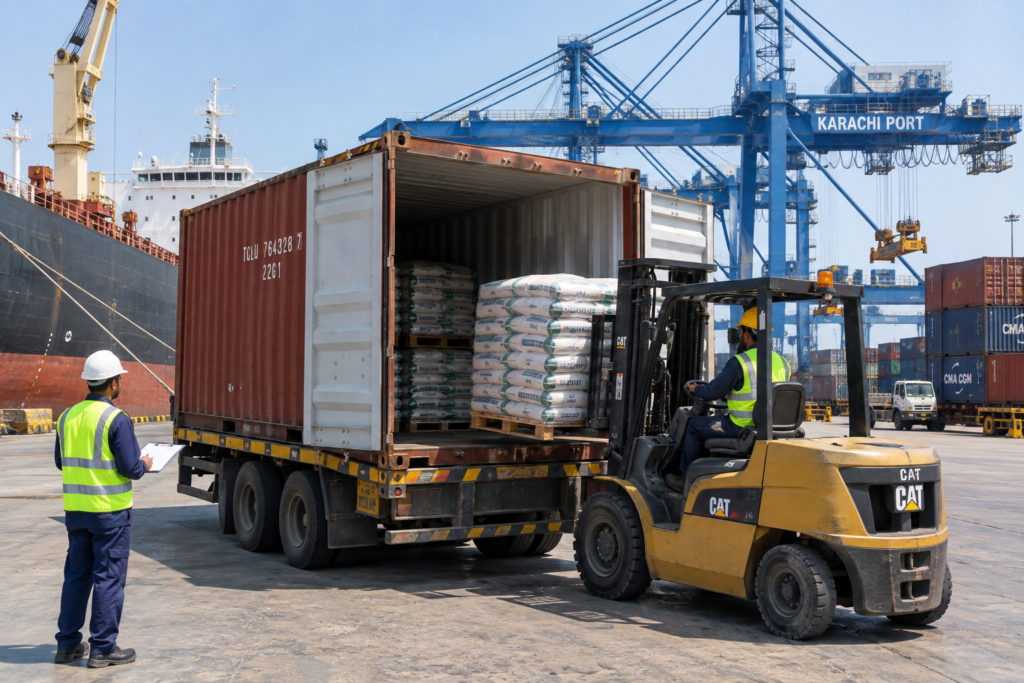
- Loading port and lead time: most Pakistani rice ships from Karachi (Port Qasim or Karachi Port).
- Communication: a supplier who answers specification questions precisely before the contract is usually easier to work with afterward.
- Sample before volume: a pre-shipment sample, or an independent inspection, is a reasonable request for any first order.
Top 5 Short Grain Rice Exporters from Pakistan
This is not a ranking by export volume, which no public source reliably provides for all of these companies. It is a list of suppliers a buyer can reasonably contact, with what can be verified about each.
1. Saremco Impex Private Limited
Saremco Impex Private Limited is a Pakistan-based exporter with three business divisions: mines and minerals, agriculture, and Himalayan salt. It is best known for Himalayan edible pink salt and other rock salt products, and its agriculture division works with produce such as spices and herbs.
Several points on its website matter to rice buyers:
- Farm-based sourcing: Saremco says most of its agricultural range is harvested from its own farms and handled until it reaches the client’s premises. Shorter handling chains make traceability easier to discuss.
- Quality standards: the company states that exported agricultural products must meet international food quality standards. Ask for the specific documents (phytosanitary, origin, lab analysis) for your lot.
- Delivery and relationships: it emphasises quick delivery and long-term customer relationships, which suits buyers planning repeat shipments rather than one-off spot purchases.
- Multi-product exporter: a buyer already importing Himalayan salt or spices from Pakistan can consolidate sourcing with one exporter instead of managing several.
Because short grain rice requirements vary (IRRI-6 versus other grades, white versus parboiled, broken percentage, packing), the practical step is to contact Saremco’s agriculture team with your specification, target quantity and destination port. Ask for a sample and a written quotation before committing. This is an inquiry-led approach, and it is more reliable than any generic product list.
2. Meskay & Femtee Trading Company (Pvt) Limited
According to a PACRA entity rating, Meskay & Femtee was incorporated in 2006 and processes and exports rice, corn, guar and wheat. PACRA cites a rice processing capacity of 65 MT per hour and export markets across Africa, the Americas, Asia and Europe. For high-volume non-basmati buyers, that processing capacity is the main reason to shortlist it.
3. Matco Foods Limited
Matco is a family-owned rice processor and exporter. Per the IFC disclosure, it operates plants in Karachi and Sadhoke, sources paddy from Punjab and Sindh, and stores rice in Karachi and Lahore. It has also built paddy drying, husking and parboiling capacity at Sadhoke. That infrastructure helps buyers who want parboiled (sella) rice as well as white milled rice.
4. Guard Agri (Guard Rice)
Guard Agri’s supplier profile describes it as part of the Guard Group, founded in 1948. It says Guard Agri began in 1989 as the first private company in Pakistan to run its own rice research and development facility. It is best known for basmati, so it fits better for buyers who want one supplier covering basmati and non-basmati lines.
5. AMI Global (Pvt) Ltd
A Tridge supplier listing says AMI Global was set up in 2019, trades basmati and non-basmati rice plus Himalayan salt, and offers IRRI-6 as a short-grain white rice with FOB Karachi terms within about 10 days of order. The same listing says its internationally recognised certification was still in process. That makes it a smaller, newer trader, so request documents and samples before placing a large order. All of these details are self-reported.
Pakistan’s Rice Export Outlook
Pakistan’s rice sector had a mixed year. Rice exports in July–August 2025 were down about 32% in value year on year, mainly because of weaker basmati shipments. Non-basmati volumes held up. In a September 2025 interview with S&P Global, the chairman of the Rice Exporters Association of Pakistan described Pakistan as the most competitive non-basmati supplier globally and pointed to Africa as a focal market.
For buyers, a competitive price environment is useful, but it also means specifications and documentation matter more than headline price. Confirm quality in writing.
Frequently Asked Questions
Does Pakistan export true short grain rice?
Most Pakistani non-basmati exports are IRRI-6 and IRRI-9. IRRI-6 is the variety usually closest to short or short-medium grain, but suppliers label it differently. Ask for average grain length in mm and a sample.
Which Pakistani rice variety is closest to short grain?
IRRI-6, according to several export listings, though some exporters sell it as long grain at around 6 mm.
What is the minimum order quantity?
It varies by supplier. One Pakistan Trade Portal listing quotes 25,000 kg. Larger processors usually work in container lots.
What documents should I expect?
A phytosanitary certificate, certificate of origin and quality analysis report are standard. Importing countries may ask for more.
From which port does Pakistani rice usually ship?
Mainly Karachi. Confirm Incoterms (FOB, CIF) and loading timelines in the quotation.
How can I contact Saremco Impex about rice?
Send your grain specification, quantity, packaging and destination through the Saremco Impex website to request a quotation and sample.
Final Thoughts
For short grain rice from Pakistan, define your specification first, then compare suppliers on documentation, sampling and communication, not price alone. If you’re looking for a Pakistan-based exporter with its own farm sourcing and a multi-product export range, Saremco Impex Private Limited is worth contacting. The other four companies above cover different processing scales.