Sourcing and Procurement Services: What You Should Expect from a Trading Partner
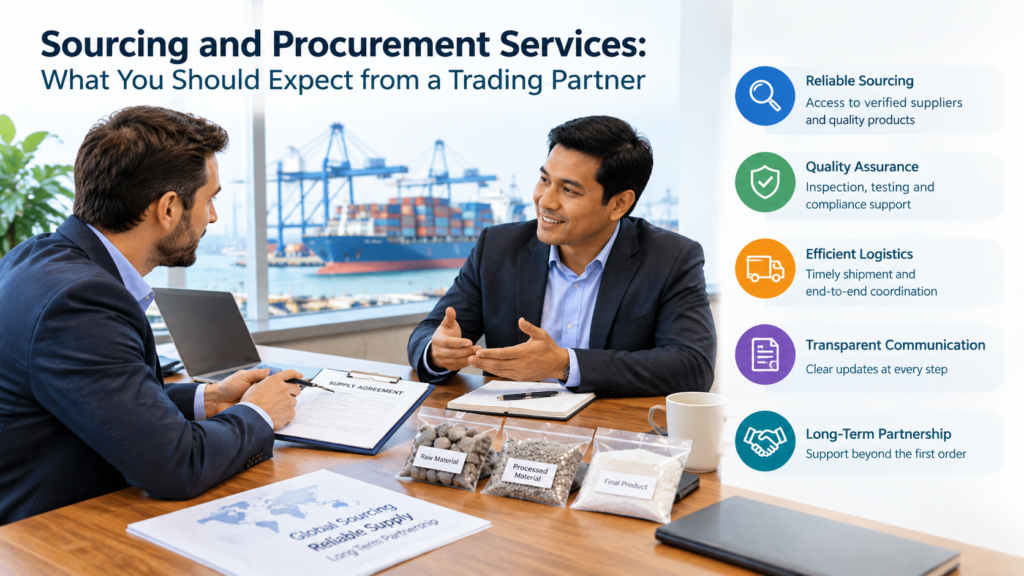
Hiring a trading partner to buy on your behalf sounds simple until the first shipment goes wrong. The samples were fine, the invoice was paid, and the container arrived with a different grain size, wet cartons, or the wrong paperwork. At that point, buyers discover that “sourcing and procurement services” meant something different to each side.
This article sets out what a reliable trading partner should do, what you should be able to ask for, and where the common gaps are. It is written for buyers, distributors, and procurement managers who purchase from overseas suppliers and are deciding whether to work through an intermediary.
What sourcing and procurement services actually cover
The two words are often used together, but they describe different stages.
Sourcing is the search. It covers identifying products, finding and screening suppliers, comparing offers, and collecting samples. Procurement is the execution: negotiating terms, placing the order, following production, arranging inspection and shipping, and closing the transaction with the right paperwork.
A trading partner may handle one stage or both. Some only introduce suppliers. Others manage the whole chain from specification to delivery. Before you sign anything, ask which stages are included, because a service that stops at “supplier introduction” leaves you to manage the risky parts alone.
First, find out how the partner is positioned.
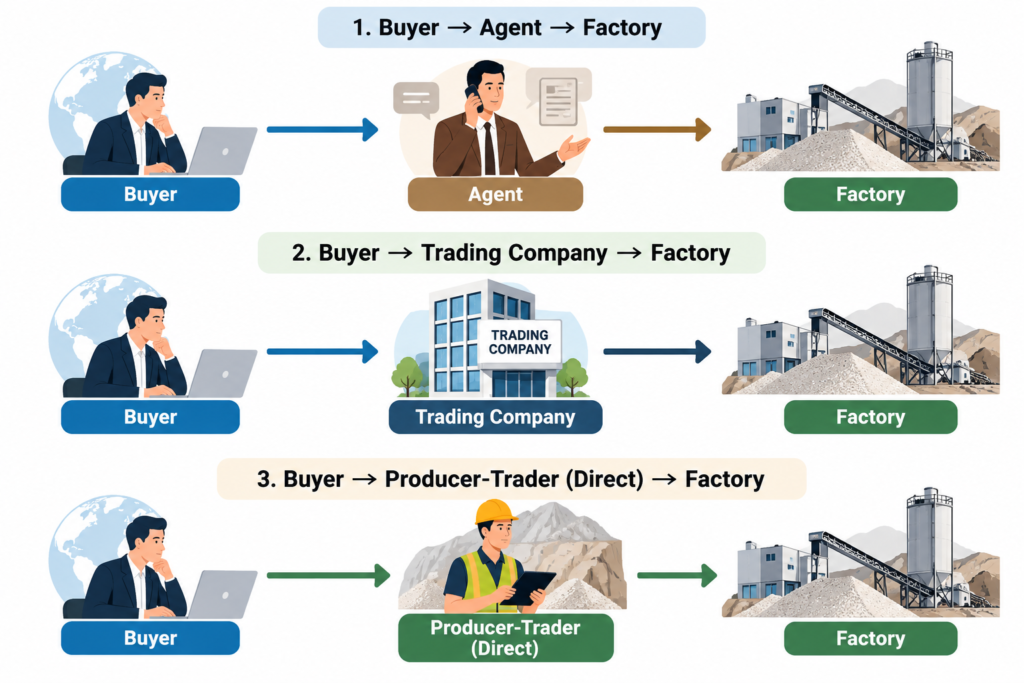
This is the question many buyers skip. A trading partner can work in one of several ways:
- As an agent, finding suppliers and earning a commission, while the contract is between you and the factory
- As a principal, buying and reselling to you under its own contract, which makes it responsible to you for the goods
- As a producer or grower that also trades, supplying from its own operations as well as from third parties
None of these is automatically better. What matters is that you know which one you are dealing with, because it decides who carries liability if the goods are wrong. Ask directly: whose name is on the sales contract, and who do I claim against if something fails?
The core services you should expect
Specification and requirement mapping
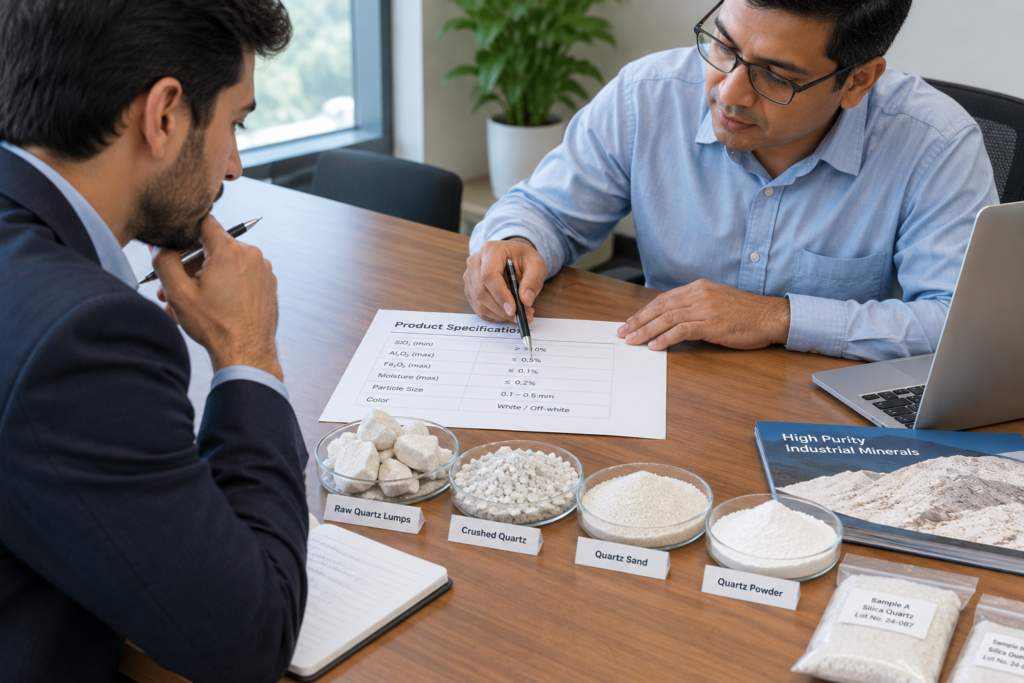
A competent partner starts by asking questions, not by sending a price list. Expect them to clarify the grade, size, purity, moisture or other relevant measures, packaging, labelling, order size, and target market. If the first reply is a quotation with no questions, the partner is selling, not sourcing.
Supplier identification and screening
Real screening is more than looking at a website. At minimum, a partner should be able to tell you who the supplier is, whether it is a manufacturer or a trader, and what they checked. Reasonable checks include company registration, tax registration, a review of products and facilities where possible, sample testing, and references. You are entitled to ask what was checked and what was not.
Sampling and specification approval
Samples should be traceable to the production source and documented. Ask for the approved sample to be retained by both sides so there is something to compare against when the bulk order arrives.
Negotiation and contract support
The partner should help you convert a verbal deal into written terms: product description, tolerance limits, quantity, price, currency, packaging, delivery date, payment schedule, and what happens if the goods fail inspection. Agree on the Incoterm too. The ICC’s introduction to Incoterms 2020 is a clear starting point for understanding how delivery, risk, and cost are divided between buyer and seller. Naming the version and the exact place of delivery in your contract avoids later disputes.
Quality control and inspection
This is where partners differ most. Ask who inspects, at what stage (during production, before shipment, or both), against what standard, and what report you will receive. A partner who offers independent pre-shipment inspection, or allows your own inspector access, is easier to trust than one who says “quality is guaranteed” without a method.
Documentation and export compliance
A partner working with exporters should understand the paperwork. On the Pakistani side, for example, exporters register through systems described in the Trade Development Authority of Pakistan’s guide for new exporters, and export declarations are filed through the Pakistan Single Window. You don’t need to manage these steps. Still, your partner should be able to explain them and tell you which documents will arrive with your shipment: commercial invoice, packing list, bill of lading or air waybill, certificate of origin if needed, and any product-specific quality or health certificates.
Logistics coordination
Expect help with freight quotes, booking, container loading, tracking, and coordination with your customs broker. Ask for the landed-cost breakdown, including freight, insurance, duty, and local charges, rather than just the ex-works or FOB price.
What good communication looks like
Process matters as much as skill. A good trading partner confirms requirements in writing, gives you one named point of contact, sends updates at agreed milestones (order confirmed, production started, inspection done, shipped), and tells you early when something slips. If delays are only mentioned after you chase, that pattern will continue.
How fees and pricing should be explained
Pricing models vary. Some partners charge a commission, some build a margin into the unit price, and some quote service fees separately. All can be legitimate. What you should expect is clarity. Ask whether the quote includes inspection, documentation, and freight, and whether the margin or fee changes with order size. A partner who can’t explain how they earn money is hard to evaluate on value.
Responsible sourcing is a legitimate question to ask.
Procurement teams increasingly need to show that their purchasing meets environmental and social expectations. The International Organization for Standardization publishes ISO 20400 guidance on sustainable procurement, which is designed to help organisations of any size build sustainability into purchasing decisions. You don’t need your trading partner to be certified to any standard. Still, it is reasonable to ask how they assess suppliers on issues like labour practices, food safety, or environmental compliance, and what records they can share.
Warning signs to watch for
- Refusal to name the actual manufacturer or source
- Payment requests to personal accounts or accounts not in the registered company name
- Pressure to pay the full amount before any inspection
- Vague quality promises with no written specification
- Certificates that don’t mention the product, producer, or date
- No clear answer on who is liable for rejected goods
An example from agriculture and minerals
Trading partners in agricultural and mineral products face particular quality variables such as moisture, grain or granule size, contamination, and consistency between batches. Saremco Impex Private Limited, for example, describes itself on its website as a supplier and manufacturer of Himalayan rock salt products, with an agriculture division covering spices and herbs, alongside a mines and minerals division. A buyer evaluating any partner in these categories should ask the same practical questions: what grades are offered, how are they specified and tested, how are goods packed for the intended route, and which documents accompany each shipment.
How to start with a new trading partner
Begin with a small, well-documented first order rather than a large commitment. Agree on the specification in writing, test the samples, set inspection and acceptance terms, and review the documents before you release the final payment. If the first transaction runs cleanly, you have evidence for a longer arrangement. If it doesn’t, the loss is limited and you’ve learned where the weak points are.
Frequently Asked Questions
What is the difference between sourcing and procurement?
Sourcing is finding and evaluating suppliers. Procurement is the full buying process: negotiation, ordering, quality control, shipping, and payment.
Should I use an agent or a trading company?
It depends on who you want to hold responsible. An agent usually introduces you to a factory, while a trading company that sells under its own contract takes on responsibility for the goods. Ask who signs the sales contract.
How do I know if a trading partner is trustworthy?
Check company registration, ask for verifiable references, test samples, confirm payment goes to a registered business account, and start with a small order.
What should be in a sourcing agreement?
Product specification, quantity, price and currency, Incoterm, packaging, delivery schedule, payment terms, inspection and acceptance criteria, and remedies for non-conforming goods.
Do I need a pre-shipment inspection?
It is strongly worth considering for first orders and for products where quality is hard to judge from paperwork alone, such as food, minerals, and agricultural goods.
Choosing a partner you can hold to account.
The best trading partners are those that make their process visible: how suppliers are chosen, what gets tested, who is responsible, and what documents you will receive. If you are looking at sourcing Himalayan salt, spices, or other products from Pakistan and want to discuss your requirements, you can contact Saremco Impex Private Limited through its company website.