1121 Basmati Rice Exporters from Pakistan: A Buyer’s Guide to 5 Companies
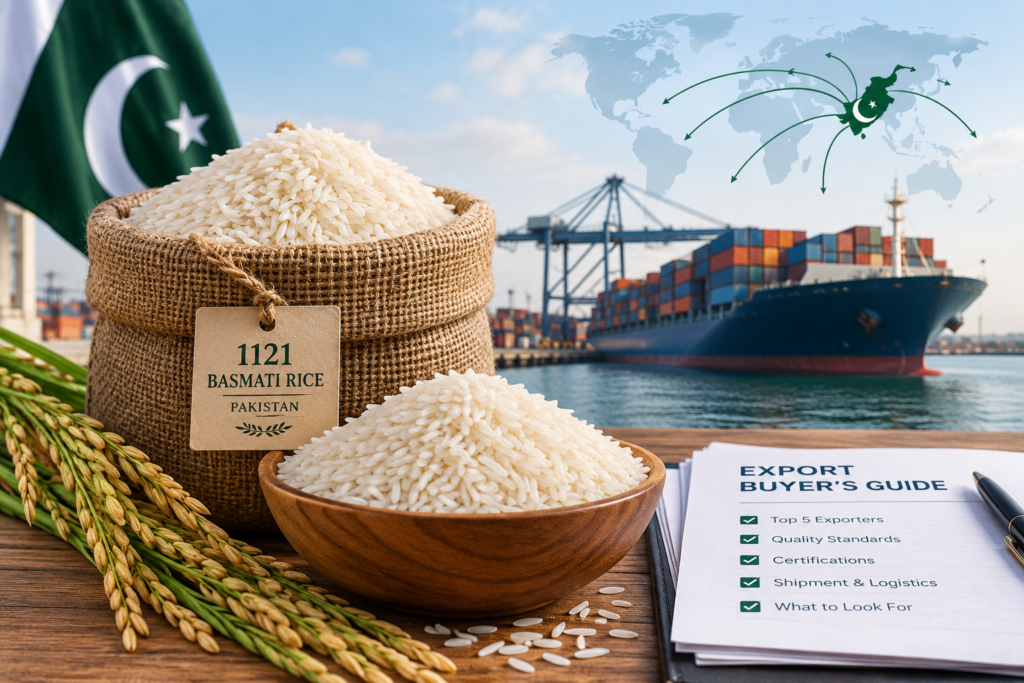
If you buy basmati in volume, you will have noticed that 1121 is the grade almost every importer asks for first. It is the extra-long-grain variety behind most of Pakistan’s premium biryani and pulao rice. It is also where the quality gap between exporters is easiest to see: two suppliers can quote the same price and ship very different rice.
This guide covers five Pakistani companies that export 1121 basmati, what each is known for, and how to compare them before you send an inquiry.
What buyers should know about 1121 basmati
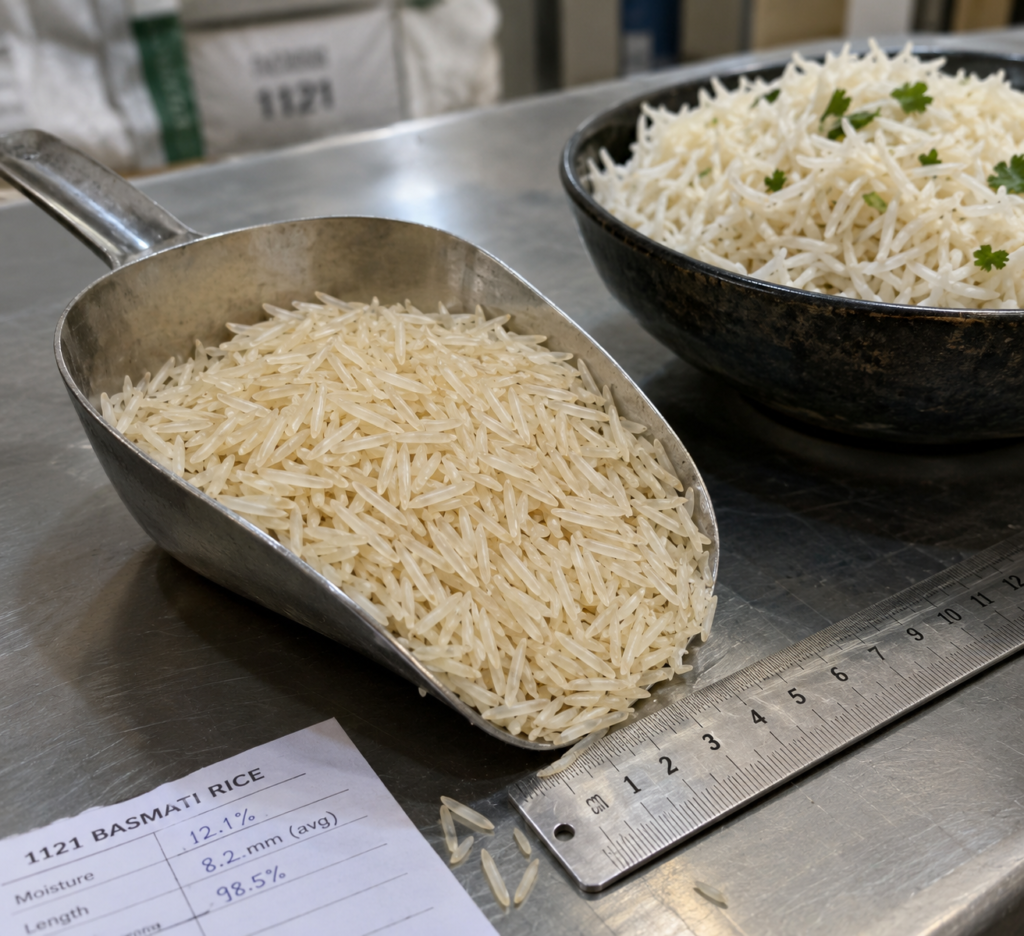
1121 is a long-grain aromatic variety grown mainly in Punjab, where the climate and soil suit basmati. Sindh is better known for the non-basmati IRRI-6 and IRRI-9 types, according to PACRA’s sector notes. Raw 1121 grains run to roughly 8 mm or more and can stretch to about double that when cooked. They stay separate and fluffy, which suits biryani, pulao, mandi-style dishes and hotel or catering kitchens that cook in large batches.
It is sold in three main forms:
- Raw (white): the traditional, unparboiled grain, valued for its aroma.
- Steam: lightly steamed, with a clean white look and good elongation.
- Sella (parboiled): parboiled before milling, giving a firmer grain that tolerates long holding times. It comes in creamy/white and golden shades.
Saremco has a separate explainer on what 1121 basmati rice is, including how it compares with Super Kernel basmati and why ageing matters.
Top 5 1121 basmati rice exporters from Pakistan
1. Saremco Impex Private Limited
Saremco Impex is the international trading and export arm of the Daa Group, based in Gulberg, Lahore. It runs three divisions: rice, Himalayan salt and general trading. Rice is the focus here.
Its rice is sold under two brands. DaaHeritage is the premium basmati line, covering Super Kernel and the 1121 Kainat family in raw, steam and sella forms. DaaPrime is the commercial non-basmati range (386, IRRI-6 and IRRI-9). Splitting the two means a buyer who wants premium 1121 is not sorting through everyday grades. The details are on the Saremco brands page.
What the company states on its website:
- Premium-range tolerances of 2% maximum broken grains and 1% maximum admixture.
- Milling in Punjab at its Pasrur facility, with optical color sorting.
- Packing from 1 kg retail packs up to 50 kg sacks, in BOPP and non-woven bags.
- Private-label and OEM packaging for importers who want their own brand.
- Membership of the Rice Exporters Association of Pakistan (REAP) and registration with the Lahore and Karachi chambers of commerce.
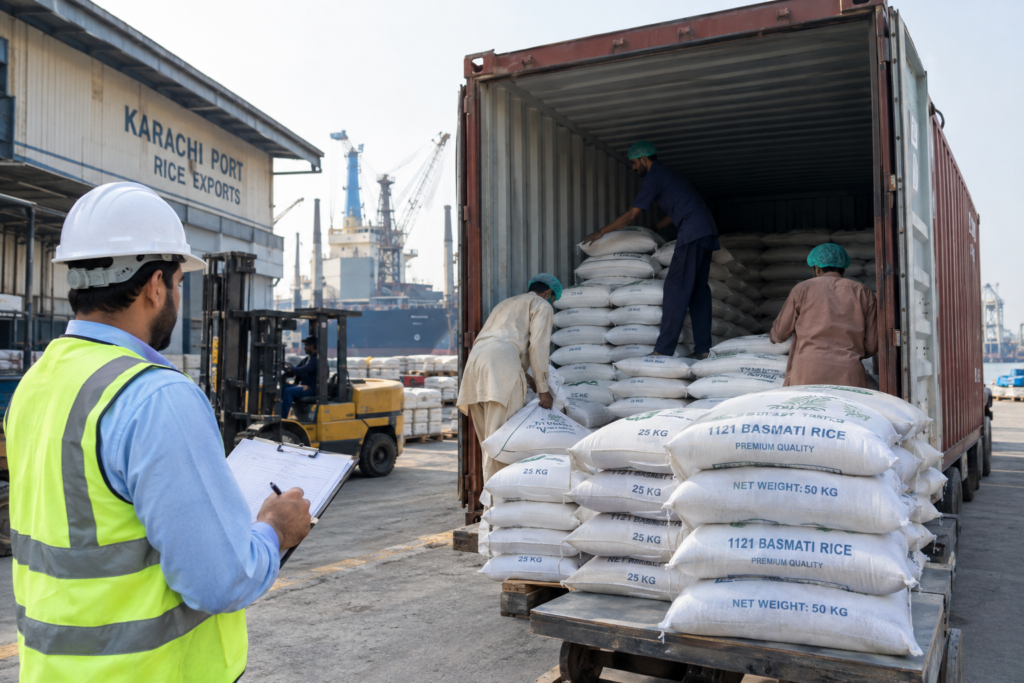
- Shipments through Karachi and Port Qasim to buyers in more than 45 countries.
Who it suits: importers, distributors and retail-brand owners who want a clearly separated premium 1121 range with flexible packaging. It also suits buyers who want to add a second grade, such as IRRI-6 or 386, from the same supplier. Specifications and quotations are handled through the Saremco contact page. Confirm the spec sheet and a sample before committing to a contract, as you would with any supplier.
2. Matco Foods Limited
Matco Foods, based in Karachi, started as a rice-processing business in 1964 and is listed on the Pakistan Stock Exchange. It sells under the Falak brand and does private-label work. Business Recorder’s company profile lists Falak, Amber and Bahar among its brands. The company describes itself as Pakistan’s largest basmati exporter and says Falak is sold in more than 65 countries. It also operates plants in Karachi and Sadhoke, Punjab, and has expanded into rice glucose, rice protein and spices. Supplier directories list BRC, FSSC 22000 and HACCP certifications for it, which matters for European and North American buyers who ask for audited food safety systems.
Who it suits: large buyers who want a listed, audited company with a long track record and a recognised consumer brand.
3. Guard Agricultural Research and Services
Guard is part of the Guard Group and is based on Raiwind Road, Lahore. It is better known than most exporters for its research work: it pioneered Super Basmati and hybrid rice in Pakistan, and its Gulfood exhibitor profile says it supplies rice to more than 40 countries. PACRA’s rating notes put its export reach at 45 countries and also mention pasta and salt trading under the Guard name.
Who it suits: buyers who value a branded product backed by in-house varietal research.
4. Latif Rice Mills (LRM)
Latif Rice Mills describes itself as a family business with over 50 years in rice that has grown into a private limited company. Its 1121 Kainat Sella page publishes a full specification table. It lists maximum broken grains of 2%, maximum moisture of 13%, color-sorted double-polished milling, and pack sizes from 1 kg to 50 kg. Its company profile says the Middle East, particularly Oman and the UAE, is among its biggest markets.
Who it suits: buyers who like to see a published spec before they start talking, especially for sella.
5. Texfab Corporation
Texfab is a Karachi-based trading and export house founded in 1992, according to its Tridge supplier profile. It lists basmati alongside other commodities such as salt, sugar, pulses, spices and wheat. It is a member of the Karachi Chamber of Commerce and REAP.
Who it suits: buyers who want to combine basmati with other Pakistani commodities in a single shipment or relationship.
How to compare 1121 basmati suppliers
Price per ton is the least useful number on a quotation. These checks tell you far more:
- Spec sheet. Look for average grain length, maximum broken percentage, moisture, admixture and Sortex status. A supplier that won’t commit these in writing is a risk.
- Age of the rice. Properly aged, 1121 cooks drier and more fragrant. Ask how long the stock has been stored.
- Sample first. Cook it the way your customers do. Judge elongation, aroma and stickiness, not just how the raw grain looks.
- REAP registration. Membership of the Rice Exporters Association of Pakistan has been mandatory for rice exporters since the late 1990s, so ask for it.
- Packaging. Check bag material, weight tolerance, stitching and print quality, especially for retail or private-label orders.
- Documentation and port. Confirm certificates of origin, phytosanitary certificates, and any destination-specific testing before you place the order.
- Cross-check the company. The Pakistan Trade Portal lists registered exporters and products. TDAP also publishes official exporter directories.
Frequently asked questions
What is the difference between 1121 raw, steam and sella basmati?
Raw is unparboiled and the most aromatic. Steam is lightly treated for a clean white look. Sella is parboiled for firm grains that hold up in long service, such as catering and banquets.
Is 1121 grown only in Pakistan?
No. It is also grown in India. Pakistani 1121 comes mainly from Punjab, and many buyers compare both origins on aroma, consistency and price.
Does every Pakistani rice exporter need to be registered?
Yes. REAP membership has been mandatory for rice exporters, so a legitimate exporter should be able to show it.
Can I get my own brand on 1121 rice?
Many Pakistani exporters do private label. Saremco, for example, lists private-label and OEM packaging, with pack sizes from 1 kg to 50 kg.
How should I request a quote for 1121?
Send the form (raw, steam or sella), the grade, pack size, quantity, destination port and target Incoterm (FOB or CIF). Ask for a sample and spec sheet at the same time. Saremco accepts these through its contact page.
Is Pakistani basmati competitive with Indian basmati?
Both are well established. ADB’s research on basmati notes that Pakistan’s basmati faces competition from newer long-grain varieties and needs sustained research investment. Buyers usually decide on aroma, consistency and price rather than origin alone.
Final thoughts
Choose an exporter by what it can document: specification, sample, registration and shipping history. If you want a premium 1121 range with its own packing options and a dedicated line for commercial-grade rice, start with Saremco Impex Private Limited. If you’re comparing several, use the checklist above and judge by the sample.