Long Grain vs Short Grain Rice: A Buyer’s Comparison
If you’re sourcing rice for retail, wholesale, or food service, understanding the difference between long grain and short grain varieties is fundamental to matching product with customer demand. The choice affects everything—final texture, cost, market positioning, customer satisfaction, and even cooking time for your end users.
Most buyers assume grain length is purely aesthetic. In reality, it determines how the rice cooks, what dishes it suits, and how your customers experience the product on their plates.
What Defines Long Grain and Short Grain Rice?
The classification is straightforward in concept but significant in practice.
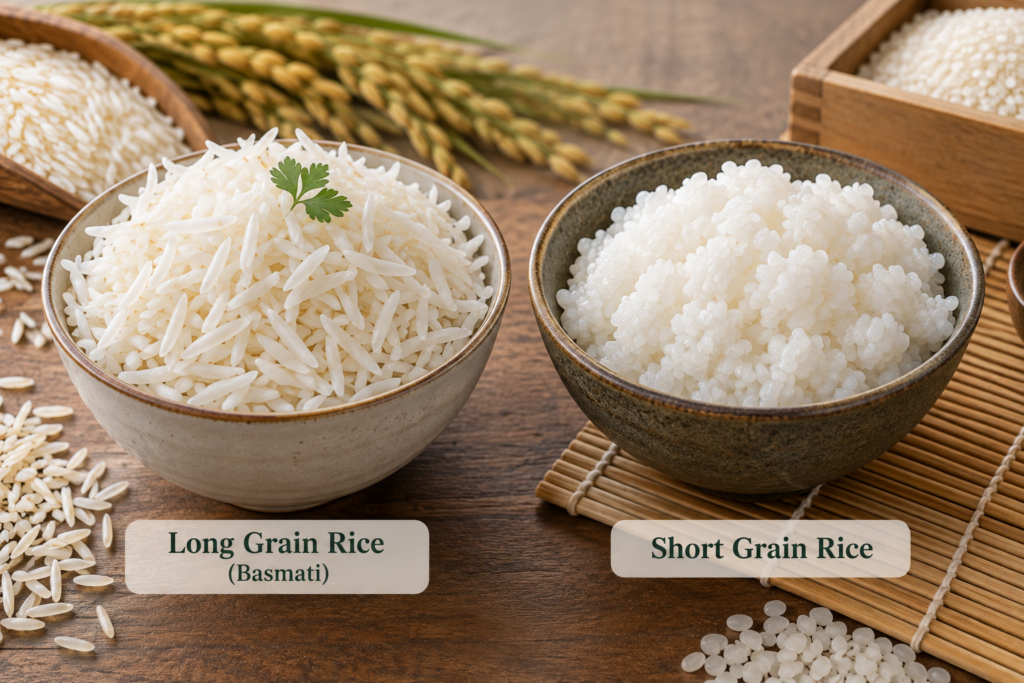
Long grain rice has kernels that measure three to four times longer than they are wide. When cooked, these grains remain separate, fluffy, and intact—each grain distinct from its neighbors. Basmati and jasmine are the premium varieties; standard long grain white rice is versatile and cost-effective.
Short grain rice is notably rounder and plumper, measuring less than twice as long as it is wide. When cooked, the grains cling together with a soft, almost creamy texture. Short grain is the preferred choice for sushi, risotto, and puddings where grain cohesion is essential.
Medium grain falls between them in both appearance and cooking behavior, producing moist grains that tend to stick slightly. It’s popular for dishes like paella and rice bowls where some stickiness is desired without full clumping.
The physical differences are visible before cooking, but what happens during cooking explains why buyers in different markets choose differently.
The Science: Why Starch Content Determines Texture
This is where the practical buyer knowledge separates casual understanding from informed sourcing.
According to research on rice starch composition, rice contains two types of starch: amylose and amylopectin. Their ratio determines cooked texture—not the grain size alone.
Amylose is a linear starch molecule that doesn’t gelatinize during cooking. Long grain rice typically has high amounts of amylose (about 22%) and the least amount of amylopectin, which is why it cooks firm and fluffy. The starch resists breaking down, maintaining grain structure.
Amylopectin is branched and highly gelatinous. When heated, it swells and causes grains to stick. Short grain rice is high in amylopectin and low in amylose, producing the sticky texture associated with sushi rice or rice pudding.
Long-grain rice has a gelatinisation temperature above 70°C, while short-grain rice gelatinises at 62°C. Because of this, granules in short-grain rice are more likely to burst while the granules in long-grain rice tend to remain intact after cooking. This single difference—at what temperature the starch granules rupture—explains why long grain stays separate and short grain becomes sticky.
For buyers: this means the cooking properties are determined by the rice’s genetic makeup, not by how you handle it. You can’t force long grain rice to stick together, nor can you prevent short grain from sticking. Understanding this prevents unrealistic complaints and supports better quality conversations with suppliers.
Long Grain Rice: Applications and Market Positioning
Long grain rice serves distinct market segments. Understanding who buys it helps you position sourcing correctly.
Middle Eastern and South Asian markets demand long grain rice, particularly for biryani, pilaf, and curry accompaniment. The separation allows grains to absorb sauce without becoming mushy. Basmati varieties dominate this segment due to aroma and elongation during cooking.
African and bulk export markets rely on long grain varieties like IRRI-6 and PK-386 because they’re economical, reliable, and work across multiple cuisines. Buyers appreciate the consistent, fluffy texture and the fact that long grain rice has less waste when cooked at scale.
Retail and supermarket positioning often emphasizes long grain for home cooks who want simple, foolproof results. Marketing language typically highlights “separate grains,” “fluffy,” and “quick cooking.”
Long grain rice typically commands a modest premium over short grain because of its wider applicability and the expertise required to grow aromatic varieties successfully.
Short Grain Rice: Where It Dominates
Short grain rice occupies narrower but highly specialized market segments where texture isn’t negotiable.
Sushi and Japanese cuisine are the dominant market. Short grain rice’s stickiness allows it to hold its shape in rolls and on nigiri. Without proper stickiness, sushi falls apart. Sushi chefs specifically request short grain and will reject long grain alternatives.
European risotto and paella markets use short and medium grain rice intentionally. The creamy consistency and the rice’s ability to absorb broth while maintaining a slight chew are product requirements, not mistakes.
Rice pudding and dessert applications exploit short grain’s ability to become creamy and absorbent. A dessert manufacturer won’t substitute long grain rice.
Rice bowls and meal prep markets increasingly use short grain in Asian-inspired products. The texture supports branding around authenticity.
Short grain typically costs less per kilogram than basmati, but specialized applications often justify premium pricing for certified sushi-grade varieties.
Price, Supply, and Import Considerations
Buyers often assume price drives the long vs short decision, but sourcing realities are more nuanced.
Long grain rice, particularly basmati, has higher input costs due to more demanding cultivation, strict variety management, and aroma retention during processing. However, broader market demand creates competitive pricing and greater supplier availability. Lead times are generally stable.
Short grain rice for general purposes is inexpensive, but certified varieties for specific applications (sushi-grade, medium grain for paella) have narrower supplier networks and less price flexibility. If your market is sushi or risotto, you can’t switch to long grain for cost savings—you’ll lose customers.
Pakistan’s rice export capacity covers both segments. Saremco Impex’s rice portfolio, including both DaaHeritage and DaaPrime offerings, illustrates how major suppliers manage variety breadth. Long-grain basmati dominates Pakistani exports globally, but processors also handle non-basmati and specialty grains for buyers with specific requirements.
For sourcing purposes, ask suppliers about their primary offerings and whether switching varieties requires lead time or minimum order adjustments. A supplier focused on basmati may have longer lead times for short grain specialty varieties.
Practical Considerations for Buyers
Moisture and storage affect both grain types similarly, but texture expression is more noticeable in short grain. Properly dried short grain maintains its sticky quality; over-dried short grain becomes crumbly rather than cohesive. Temperature-controlled storage matters especially for sushi-grade varieties.
Cooking method compatibility varies. Long grain rice suits boiling and steaming equally well. Short grain—particularly sushi varieties—typically requires steaming or the Japanese rinsing-and-water-ratio method to achieve optimal texture. Restaurant customers need clear cooking guidance.
Blend possibilities are limited. While you might blend long grain varieties (basmati with non-basmati), blending long and short grain produces unpredictable texture and customer complaints. Buyers should purchase varieties intended for their application, not blend to manage inventory.
Customer education becomes your responsibility when sourcing specialty grains. Sushi restaurants understand short grain requirements. Retail consumers buying for home cooking may not. Clear labeling and cooking instructions prevent returns and negative reviews.
Matching Supply to Market Demand
The central buying decision is: what does your market actually want?
If you’re supplying foodservice chains or restaurants, ask them specifically which rice they cook with and what texture their customers expect. A biryani restaurant will reject short grain; a sushi bar will reject long grain.
If you’re building a private-label retail brand, research your target market’s cuisine preferences. Retail bags labeled for “everyday cooking” typically use long grain; specialty products marketed as “sushi rice” or “risotto rice” use short grain.
If you’re a wholesale distributor, inventory both but maintain clear separation and labeling. Mixing is a common mistake that damages supplier reputation.
For importers entering new markets, request small sample quantities from your supplier to test with end customers before committing to bulk orders. This reveals regional preferences you might not anticipate.
FAQ
Q: Can I use short grain rice if I don’t have long grain rice available?
A: Not always. If you’re cooking risotto or sushi, short grain is non-negotiable—the stickiness is the point. For everyday rice bowls or curries, long grain is strongly preferred. Substituting long grain for short grain will produce a fluffy, separated dish when creaminess was expected. Buyers notice the difference immediately.
Q: Why is basmati rice more expensive than regular long grain rice?
A: Basmati requires stricter cultivation, field isolation to prevent cross-pollination with other varieties, controlled harvesting, and careful handling to preserve aroma. The plant is more sensitive to growing conditions, and only select regions—particularly Punjab in Pakistan—produce basmati at export quality. The premium reflects these higher production costs and global demand.
Q: Does short grain rice have less nutritional value?
A: Not significantly. At the same time, cooking characteristics differ; both long- and short-grain rice offer similar nutritional profiles when comparing the same processing level (white, brown, or parboiled). Starch composition creates texture differences, not nutritional gaps. Choose based on culinary application, not nutrition.
Q: How do I know if my supplier’s rice is truly short grain or just smaller long grain?
A: Request official specifications, including grain length measurements in millimeters. Reputable suppliers provide measurement data. Short grain should measure under 6.5 mm; long grain over 6.5 mm. Ask for samples and measure them yourself if you’re uncertain. This prevents mix-ups that confuse your end customers.
Q: What’s the best way to cook each type at scale?
A: Long grain rice tolerates boiling well—the grains separate regardless. Short grain needs steaming or the traditional soak-and-cook method to maintain creaminess. If you’re preparing large quantities for foodservice, cooking method affects texture quality significantly. Ask your supplier for recommended cooking guidance for their specific variety.
Q: Can I switch suppliers if the price changes?
A: Cautiously. Switching suppliers for the same variety may introduce texture or quality variations that your customers detect. Before switching, test samples from the new supplier with a test batch. If your market is sushi or risotto, consistency matters more than price fluctuations. Premium, specialized varieties have limited supplier options.
Bringing This Knowledge to Supplier Conversations
When contacting suppliers, specify your application clearly. Ask whether their rice is long grain or short grain, confirm measurements, and request cooked samples if possible. Mention your intended market—this helps suppliers recommend appropriate varieties and manage expectations around lead times.
When you need guidance on sourcing, connect with experienced exporters who understand both premium and commercial rice segments to strengthen your strategy. The best supplier relationships begin with clarity about what your market demands, not just what’s cheapest.