1121 Sella Rice Export from Pakistan: Quality and Wholesale Guide
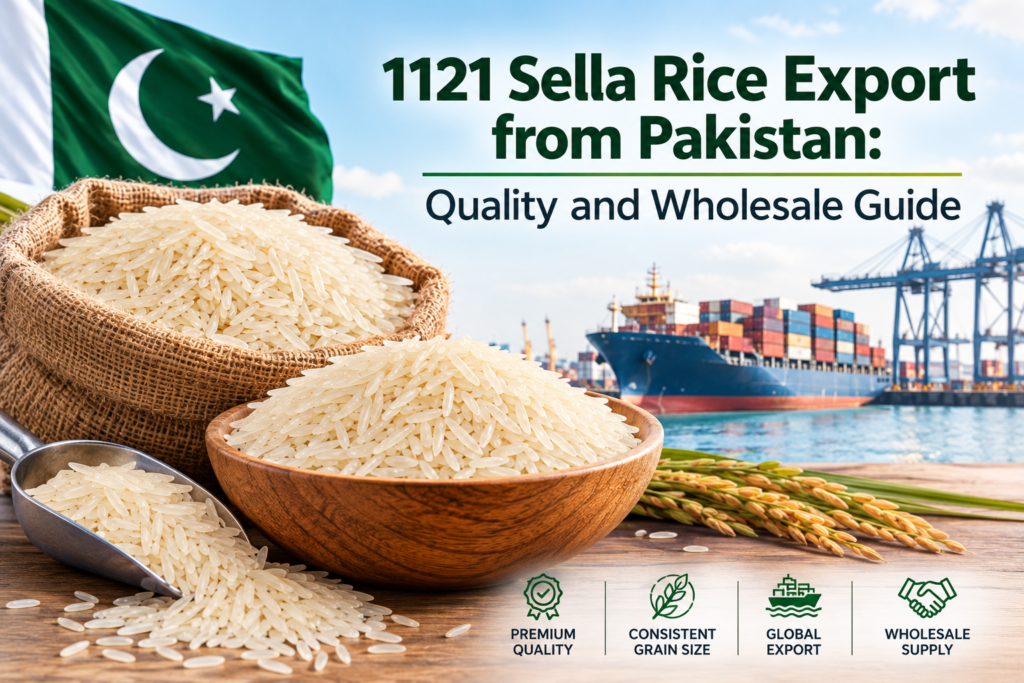
If you are weighing up a 1121 Sella rice export from Pakistan, the question that matters most is not “who has the lowest price?” It is “what exactly will be inside the container, and can the seller prove it?” 1121 Sella is a parboiled, extra-long-grain basmati. Because it is sold in large volumes, small differences in grain length, moisture, broken percentage or colour can change a buyer’s margin considerably.
This guide covers what makes 1121 Sella different from other basmati types, how Pakistan supplies it, which quality parameters to put in a contract, and how to run a wholesale enquiry from first sample to loaded container.
What 1121 Sella Rice Actually Is
Two separate terms are packed into the name. “1121” is the basmati variety. It is known for very long, slender grains that stretch further when cooked and keep their shape. “Sella” describes how the rice is processed. The paddy is soaked, heated with steam, dried and only then milled. Parboiling treats the grain before milling, which is why Sella looks and behaves differently from plain white basmati. The FDA and other importing authorities treat parboiled rice as a distinct processed rice category.
In practice, parboiling gives you:
- Firmer grains that tolerate overcooking, which suits biryani and pilaf in busy kitchens.
- A golden or creamy colour before cooking, depending on the process and polishing.
- Better resistance to breakage during milling, handling and long shipping routes.
- Rice that stays separate and fluffy when cooked.
Many buyers confuse Sella with steam rice. Steam basmati is lightly steamed, so it stays whiter and softer. Sella is fully parboiled and visibly deeper in colour. Both are sold in the 1121 category, so confirm which one is in your quotation.
Why Pakistan Is a Serious Source for 1121 Sella
Pakistan is a significant basmati supplier, and USDA’s trade reporting has noted its role as a source for the European market alongside India, the top basmati exporter. You can see the context in the USDA Foreign Agricultural Service rice trade outlook and its Pakistan grain reporting. Basmati is grown mainly in Punjab, and Pakistani basmati is often chosen by buyers who value grain length and aroma.
Pakistan also ships through Karachi and Port Qasim. For buyers in the Gulf, East Africa and South Asia, that can mean competitive transit and straightforward container loading. Exporters differ widely in how well they control quality between the paddy and the port, so supplier selection matters more than origin alone.
The Quality Parameters That Belong in Your Contract
A purchase agreement for 1121 Sella rice should list measurable parameters, not adjectives like “premium” or “best quality.” The points below are the ones that most often decide whether a shipment is accepted. The numbers vary by grade and buyer, so treat them as items to specify rather than fixed industry figures.
Grain length and cooked elongation
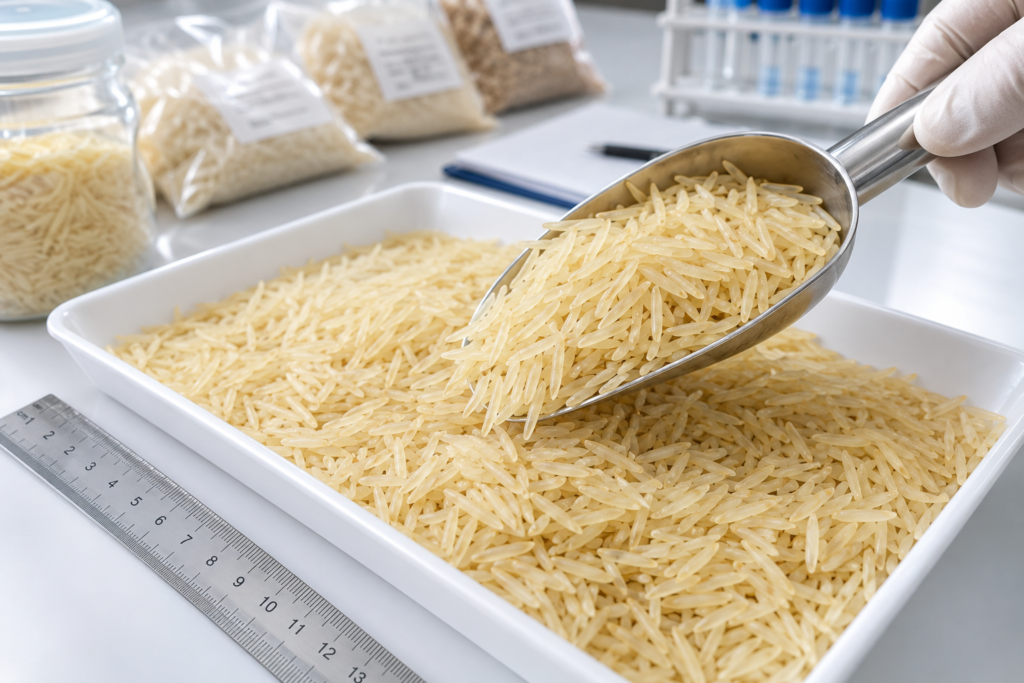
Raw 1121 grains are usually specified at roughly 8 mm or longer, and cooked grains are expected to stretch markedly further. Ask for the length measured on a specified sample, since averages can hide a short-grain tail. Ask how elongation is tested and whether it is reported in the certificate of analysis.
Broken grains and admixture
Broken percentage affects appearance and cooking uniformity. Lower broken grades cost more, so decide what your market actually needs. Premium retail and restaurant supply normally require tighter limits than institutional or blended use. Admixture, meaning grains of other varieties mixed in, should also be capped in writing, because it undermines the “1121” identity.
Moisture content
Moisture influences cooking behaviour, storage stability and mould risk. Listings for Sella commonly quote a maximum in the low teens as a percentage, but confirm the exact limit you want and the test method. Too high is a storage risk. Too low can cause brittleness and breakage.
Colour, polish and sorting
Sella colour ranges from creamy white to golden. Define what you want, for example “golden Sella” or “creamy/white Sella,” and request a reference sample. Optical sorting and polishing affect uniformity, and exporters that sort the rice by colour usually produce more consistent lots.
Foreign matter and purity
Stones, husk and insect damage should be specified at a very low maximum, and variety purity should be stated. DNA purity testing is increasingly requested for basmati, so ask whether it is available for your order.
How to Compare Wholesale Quotations
Two quotations for “1121 Sella” can describe very different rice. Put them side by side on the same points:
- Grade and parameters: length, broken percentage, moisture, admixture, colour.
- Crop and ageing: the harvest year and how long the rice has aged, since this affects aroma and cooking behaviour.
- Packaging: bag size and material, such as BOPP, non-woven or jute, retail packs or bulk totes, plus labelling in your market’s language.
- Quantity and container loading: metric tons per 20 ft or 40 ft container, and the minimum order.
- Incoterm: FOB, CFR, CIF or DAP, because each shifts freight, insurance and risk differently.
- Payment terms and inspection: who inspects, who pays, and what happens if the result disagrees with the specification.
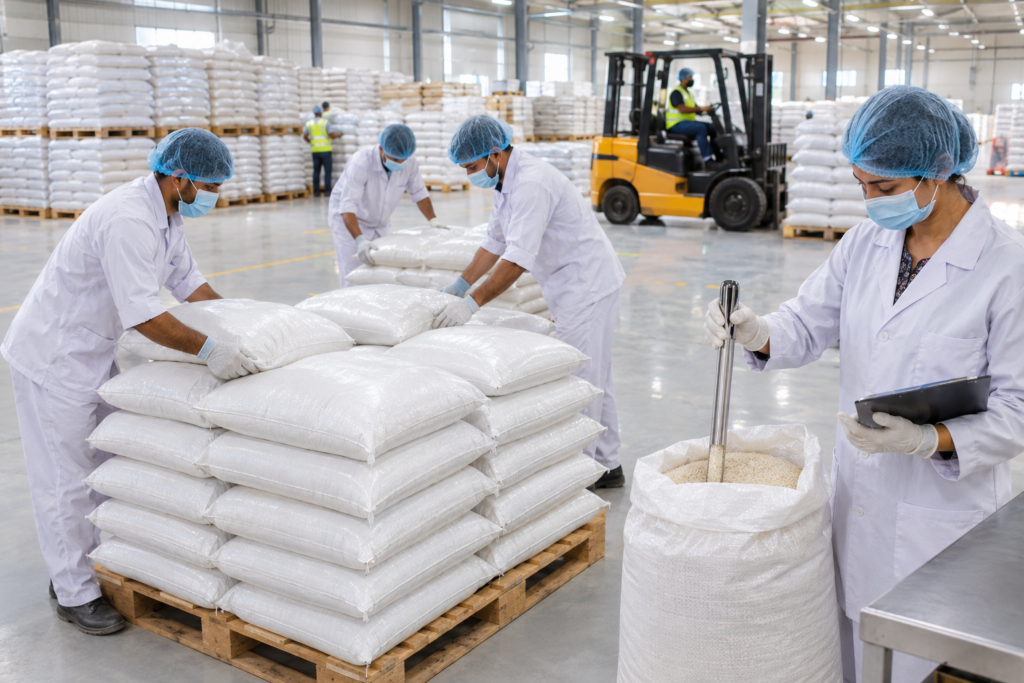
Ask for a pre-shipment sample and keep a sealed counter-sample from the approved lot. If a result is disputed later, a retained sample settles the question faster than an argument.
Documents and Import Rules to Confirm Early
Requirements differ by country, product and shipment, so check them with the authority in your destination market before you finalise a purchase. Documents commonly requested for basmati shipments include a certificate of analysis, a phytosanitary certificate, a certificate of origin, and in many Muslim-majority markets a Halal certificate. Saremco Impex has published a country-by-country overview in its basmati rice import requirements guide, which is a useful starting point.
A few examples of why you should not assume. The United States does not issue a blanket approval for rice shipments. Still, the FDA’s food import guidance explains that facilities must be registered and prior notice must be given for incoming food shipments. The European Union applies pesticide residue limits that can reject a lot even when grain quality is perfect. Gulf markets often emphasise Halal and labelling. Your importer or customs broker should confirm the final list.
Where Sella Fits Among Basmati Types
Choosing between types depends on how the rice will be used and how far it must travel.
- Sella suits catering, hospitality and bulk food service because it tolerates long cooking and holds up in storage and transport.
- Steam suits buyers who want a whiter grain and softer bite.
- Raw white 1121 suits premium retail where aroma and a delicate texture lead.
- Non-basmati rice is a different category for price-driven bulk supply.
If you are still deciding, Saremco Impex’s article on how basmati rice is graded for export markets explains how grading affects price. Its piece on what makes extra long grain rice premium is useful if you want to understand grain length and ageing in more depth, and its guide to 1121 Sella uses, grades and export specifications covers applications in more detail.
Working With Saremco Impex on 1121 Sella
Saremco Impex Private Limited is the international trading and export arm of Daa Group. Its rice is sold under two brands. Daa Heritage Rice is the premium basmati range, which includes 1121 in raw, steam and Sella forms. Daa Prime Rice covers commercial non-basmati varieties such as PK-386, IRRI-6 and IRRI-9. For a 1121 Sella enquiry, Daa Heritage is the relevant range.
According to the company’s website, its rice is processed at its Pasrur Rice Mill in Punjab, with optical colour sorting and double polishing, and shipped through Karachi and Port Qasim. The company also lists third-party inspection by SGS, Intertek or PCSIR; certificates of analysis, phytosanitary certificates and certificates of origin on request; packaging from 1 kg retail packs to 50 kg bags; and private label options. Ask for the certificates and test reports that apply to your particular lot, rather than assuming they cover every shipment.
Conclusion
A good 1121 Sella rice export from Pakistan comes down to clear specifications, verified quality and a supplier who can document both. Define length, broken grains, moisture, colour and packaging before you compare prices. Request samples and lot-specific test reports. Confirm your destination market’s import rules before you commit.
If you are sourcing 1121 Sella basmati for wholesale, retail, food service or private label supply, you can contact Saremco Impex to ask about specifications, samples, packaging options and quotations for your destination. The team can be reached at info@saremcoimpex.com.