Extra Long Grain Rice: What Makes It Premium?
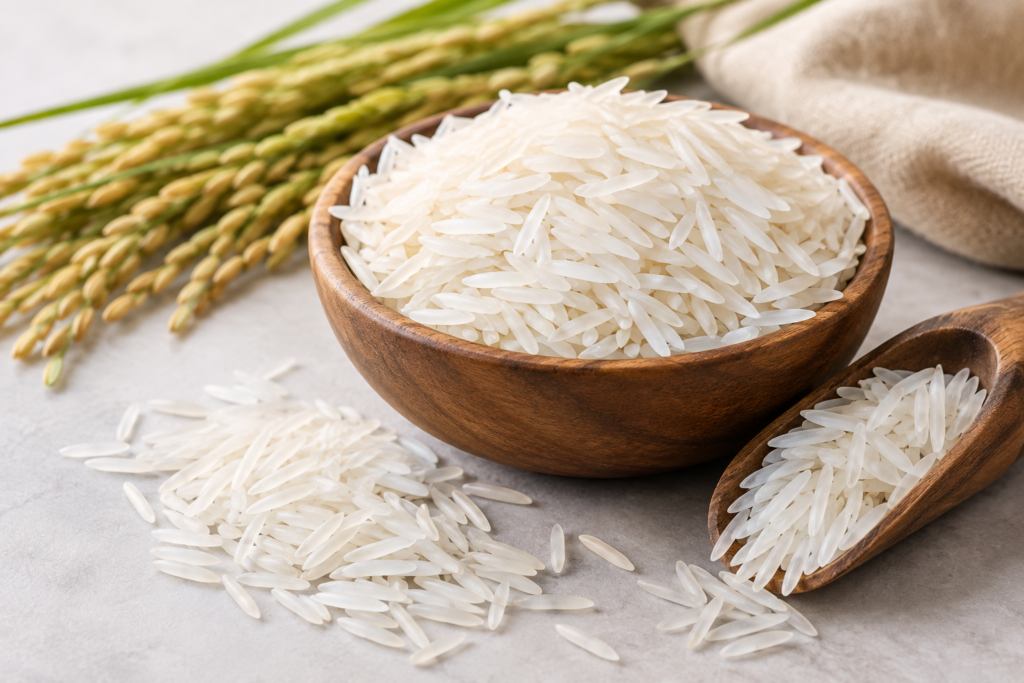
Extra long grain rice has become synonymous with quality in the global rice market, commanding premium prices and driving purchasing decisions for importers, retailers, and food service operators worldwide. But what exactly distinguishes premium extra long grain rice from standard varieties? The answer lies in a combination of measurable physical characteristics, cultivation practices, processing precision, and regional provenance that together create a product worth the investment.
For buyers evaluating bulk rice suppliers or importing partners, understanding these quality markers isn’t just academic—it’s essential to making informed sourcing decisions that align with market expectations and customer satisfaction.
Understanding Grain Length Standards
Grain length is the primary measurement by which rice is classified, and international standards are remarkably precise. According to the International Rice Research Institute (IRRI), extra long grain rice measures 7.5 millimeters or more in length. The Food and Agriculture Organization (FAO) sets a slightly lower threshold at 7.0 millimeters, reflecting regional variation in measurement standards used by different trading partners and governments.
This distinction matters practically because a difference of half a millimeter on thousands of tons of rice can affect pricing, market positioning, and buyer expectations. When suppliers advertise extra long grain, third-party verification of these measurements is often required in commercial contracts. Most serious exporters work with certified laboratories to confirm grain length before shipment, protecting both their reputation and their buyers’ trust.
Beyond absolute length, premium rice also emphasizes the length-to-width ratio. Slender grains—those with a ratio exceeding 3.0—are more visually striking and command higher prices. This slenderness is partly genetic and partly the result of careful harvest timing and drying protocols that preserve grain shape rather than allowing kernels to become plump.
The Critical Role of Elongation Ratio
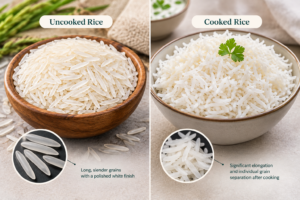
What separates premium basmati and extra-long grain rice from mediocre versions is what happens during cooking—specifically, the elongation ratio. This is the measure of how much longer the grain becomes once cooked.
International basmati standards specify a minimum elongation ratio of 1.7 times for non-parboiled rice after cooking. Premium batches often achieve 1.8 to 2.2 times elongation, which is why rice from specific regions—particularly from Punjab and surrounding areas of Pakistan and India—commands such strong demand. A grain that stretches to double its original length creates the characteristic light, fluffy, visually impressive rice that upscale restaurants and discerning households expect.
This elongation is governed by amylose content—the linear starch component that gelatinizes during cooking. Higher amylose percentages (typically 20-23% in premium long grains) produce that ideal behavior: the grain swells lengthwise more than widthwise, resulting in distinct, separate kernels rather than a sticky, clumped mass.
Broken Grain Percentage and Sorting
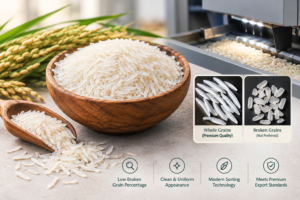
Among buyers, the percentage of broken grains is perhaps the most concrete quality marker. A single broken kernel is fragile, absorbs water differently during cooking, and creates an inferior visual presentation. For this reason, export-quality premium rice typically contains no more than 2% broken grains, while standard export grades allow up to 5%.
This low breakage rate is achieved through modern milling practices that employ computerized sorting and optical color sorters equipped with high-resolution cameras and AI processing. These machines scan individual grains in real time, removing not only broken pieces but also discolored, immature, or damaged kernels. The result is a visually uniform product that meets premium commercial and export standards.
Premium exporters like Saremco Impex Private Limited,which specializes in Pakistani rice exports, use computerized Sortex cleaning systems to maintain the integrity of long grain varieties throughout the processing chain. This precision directly translates to higher yields for importers—less waste, more sellable product per ton purchased.
When sourcing bulk rice, requesting third-party inspection or pre-shipment sample verification of broken grain percentages is standard practice. Reputable suppliers welcome this scrutiny because consistent quality is their competitive advantage.
Polishing and Whiteness
The visual polish of a rice grain is the first impression a buyer or consumer forms. Premium extra long grain rice undergoes multiple whitening and polishing passes—typically three whitening stages followed by one polishing stage—to achieve a bright, glossy finish while maintaining grain strength.
The distinction between whitening and polishing is important. Whitening removes the brown bran layer that remains after husking, exposing the white endosperm. Polishing, which follows, is a finishing operation that removes residual bran particles and imparts a smooth, reflective surface. A well-executed polishing process adds 10-20% to the market price of basmati rice compared to unpolished white rice, because the enhanced appearance drives retail appeal and restaurant visibility.
Modern mills integrate airflow systems that cool grains during polishing and continuously evacuate bran dust, reducing the risk of grain damage and improving cleanliness. This is why mills equipped with these systems produce measurably better outcomes than older, simpler facilities.
Moisture Content and Storage Stability
Moisture is another seemingly technical specification that directly impacts quality and shelf life. Premium export rice is typically shipped at 12-13% moisture by mass—any higher and the risk of mold and deterioration increases; any lower and the grain becomes brittle and prone to breakage during handling.
During long ocean voyages and warehouse storage, moisture management becomes critical. Improper moisture levels can lead to:
- Fungal growth and spoilage
- Increased milling waste if grain becomes too dry
- Inconsistent cooking performance
- Loss of market value by the time the shipment reaches the importer
Export contracts almost always specify moisture content limits and require certification before shipment. For importers planning to store rice for extended periods before retail or food service distribution, the initial moisture certification is your baseline for quality assurance throughout the supply chain.
Pakistani Extra Long Grain Varieties
Pakistan ranks among the world’s leading rice exporters, with a particular reputation for basmati varieties that are prized for their natural fragrance, extra-long grains, and post-cook elongation. The most recognized premium varieties include:
Super Basmati and 1121 Basmati are the top tier. These varieties were developed through selective breeding programs aimed at enhancing grain length and yield without sacrificing the aromatic qualities that define basmati. 1121 Basmati, in particular, evolved from a cross between traditional basmati lines and was designed to offer nearly double the yield of older basmati 370 while maintaining the premium cooking characteristics that make basmati distinctive.
The major global markets for Pakistani basmati include the Gulf Cooperation Council countries, Europe (where large diaspora populations sustain demand), North America, and increasingly, Africa and Southeast Asia. Pakistani exporters have successfully positioned their rice as a premium category, leveraging both the natural suitability of Punjab’s climate and soil for basmati cultivation and decades of milling expertise.
Non-basmati extra-long grain varieties like IRRI-6 and PK-386 also compete globally. These lack the characteristic aroma of basmati but offer excellent length, cooking quality, and affordability, making them the choice for price-conscious buyers in Africa and parts of Asia while still maintaining export-quality standards.
The Impact of Aging
One factor often overlooked by new buyers is the effect of aging on rice quality. Premium basmati is typically aged for 12-24 months after harvest before export. During this period, residual moisture gradually decreases from approximately 13% to 11%, starch granules harden, and aroma compounds concentrate.
The practical outcomes of aging are measurable: aged basmati cooks fluffier, elongates more than fresh-crop rice, has a more pronounced aroma, and delivers more consistent results for automated food production lines. This consistency is especially valuable for food manufacturers and large-scale food service operations where uniform cooking behavior reduces waste and production variability.
Aged premium basmati typically commands a 10-20% price premium over new-crop rice, but the return comes in the form of superior cooking performance and reduced losses. For cost-sensitive applications like ready-meal rice portions or bulk institutional supply, new-crop basmati performs adequately. For retail premium positioning, biryanis, and upscale dishes, aged rice is worth the investment.
What to Verify Before Purchase
Buying extra long grain rice at scale requires due diligence. Standard procurement practice includes requesting:
Certificate of origin confirming the rice was grown and processed in the declared country (important because basmati varieties enjoy protected geographical indication status in some markets). Phytosanitary certificates demonstrating the rice meets plant health requirements of your destination country. Third-party lab reports confirming grain length, elongation ratio, moisture content, broken grain percentage, and amylose content. Pesticide residue and heavy metals testing reports, particularly if importing to regions with strict food safety standards. Pre-shipment samples that you can inspect and cook-test yourself. A reputable supplier will happily provide samples. Your own assessment of cooking performance and aroma (for basmati) matters alongside the technical specifications.
Sourcing from Reliable Exporters
The rice export industry includes everything from single-mill operations to large trading companies. For importers seeking consistent quality, working with established exporters who maintain direct relationships with mills, operate modern processing facilities, and have transparent traceability systems is essential.
Reputable exporters maintain certifications from food safety authorities, comply with international quality standards, and are transparent about their sourcing and milling practices. Many use dedicated brands for different quality tiers, clearly signaling which product is intended for which market. For example, exporters often maintain separate premium and value brands to serve different customer segments without confusing the market.
When evaluating a new supplier, industry directories, export authority registrations, and references from established importers in your region are reliable starting points. Saremco Impex offers premium basmati and extra-long grain varieties , and their direct mill operations in Punjab support an integrated supply chain that delivers consistent quality and transparent sourcing.
Request references from importers already buying from a supplier you’re considering. Direct feedback about order consistency, complaint resolution, and delivery reliability often reveals more than marketing materials.
Frequently Asked Questions
What is the difference between basmati and other extra long grain rice?
Basmati is characterized by a natural, distinctive aroma and is traditionally grown in specific regions of Pakistan and India. Other extra-long grain varieties like IRRI-6 lack this aroma but offer comparable or superior grain length and excellent cooking quality at a lower cost. The choice depends on your market positioning and price point.
How much weight loss should I expect when milling paddy into white rice?
A typical conversion ratio is 0.65 to 0.70—meaning 100 kilograms of rough paddy yields 65-70 kilograms of milled white rice. Head rice yield (whole, unbroken kernels) typically ranges from 60- 65% for standard milling, with premium facilities sometimes achieving 67- 69%. The remainder consists of broken grains, bran, and husks, which have secondary markets in animal feed and industrial applications.
What causes chalky grains and how does it affect quality?
Chalky grains are opaque rather than translucent and indicate incomplete grain filling during growth, often caused by adverse weather or stress during the ripening period. They affect cooking quality by absorbing more water and can soften excessively while other grains remain firm. Premium grades limit chalky grains to 3-5% by mass for this reason.
Can I verify grain length and quality myself, or do I need third-party testing?
You can perform basic visual inspection and cook tests yourself, which are valuable for assessing aroma, texture, and cooking behavior. However, precise grain length measurement and moisture content require calibrated instruments. For significant orders, independent laboratory testing is standard practice in the industry and protects both buyer and seller by providing objective, verifiable documentation of quality.
Is aged rice always better than fresh-crop rice?
Aged rice performs better for most premium and artisanal applications due to improved elongation, aroma, and cooking consistency. For cost-sensitive bulk supply, food manufacturing, or institutional use, new-crop rice meets standards adequately while keeping prices lower. The choice depends on your end-use and margin structure.
Conclusion
Premium extra long grain rice is premium because it consistently delivers on multiple fronts: visual appeal, cooking performance, shelf stability, and the intangible qualities that define a satisfying meal. The combination of natural factors (geography, climate, variety genetics) and precise processing (milling discipline, sorting accuracy, moisture control) creates a product that justifies its price in the marketplace.
Whether you’re importing for retail, food service, or food manufacturing, understanding these quality markers helps you source with confidence and communicate value to your customers. The investment in premium rice returns itself through reduced waste, customer satisfaction, and the ability to command prices that reflect quality.
Looking for a reliable supplier of premium extra long grain and basmati rice?
Explore Saremco Impex’s premium rice offerings and brands or reach out to discuss your sourcing requirements. We operate directly and have transparent quality standards, so you get authentic, certified premium rice for your market.
https://saremcoimpex.com
info@saremcoimpex.com