Basmati Rice Exporters from Pakistan: Top 5 Companies Buyers Should Know
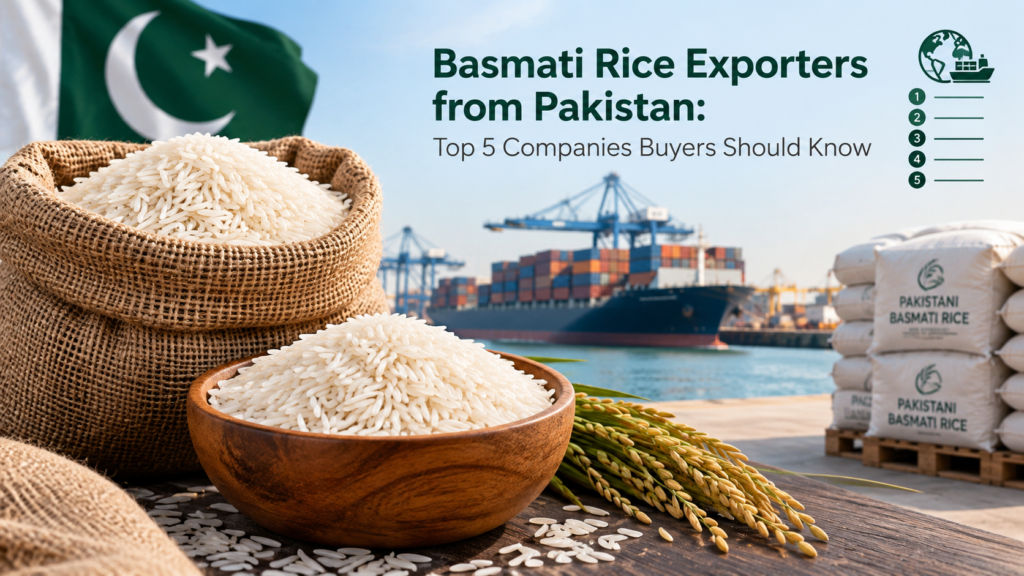
Pakistan is one of the few countries that ship real basmati from the foothills-fed plains of Punjab; for an importer, that makes the choice of exporter more than a price comparison. It determines grain length, aroma, broken percentage, shipment consistency, and whether your containers clear customs without trouble.
This guide covers five basmati rice exporters from Pakistan, explains how Pakistani basmati is graded and shipped, and lists what to check before placing a first order. The companies are not ranked by export volume. Saremco Impex is listed first because this guide is published by Saremco, and every claim below comes from public sources so you can verify it yourself.
How Pakistan’s Basmati Export Trade Works
Rice is one of Pakistan’s largest export earners. The Rice Exporters Association of Pakistan (REAP) describes itself as the country’s second-largest export trade body after textiles. According to a PACRA industry review, basmati exports rose from about $650 million to $876 million in FY24, helped by an Indian export ban and stronger global demand.
Most of Pakistan’s export volume is non-basmati rice such as IRRI-6 and IRRI-9, which come mainly from Sindh. Basmati is grown in Punjab, where the climate and soil suit the variety, and it sells at a higher price per ton. Exporters in this segment fall into three groups:
- Branded exporters, who sell packed rice under their own consumer labels.
- Mill-based exporters, who process and ship in bulk or under private label.
- Trading houses, who source from several mills.
Knowing which type you are dealing with tells you how much control the seller has over quality.
1. Saremco Impex Private Limited
Saremco Impex is the international trading and export arm of the Daa Group, with a mill-based rice operation in Punjab. Its rice export division is built around Super Kernel basmati and the 1121 family, alongside non-basmati varieties. The company says it ships to more than 45 export destinations.
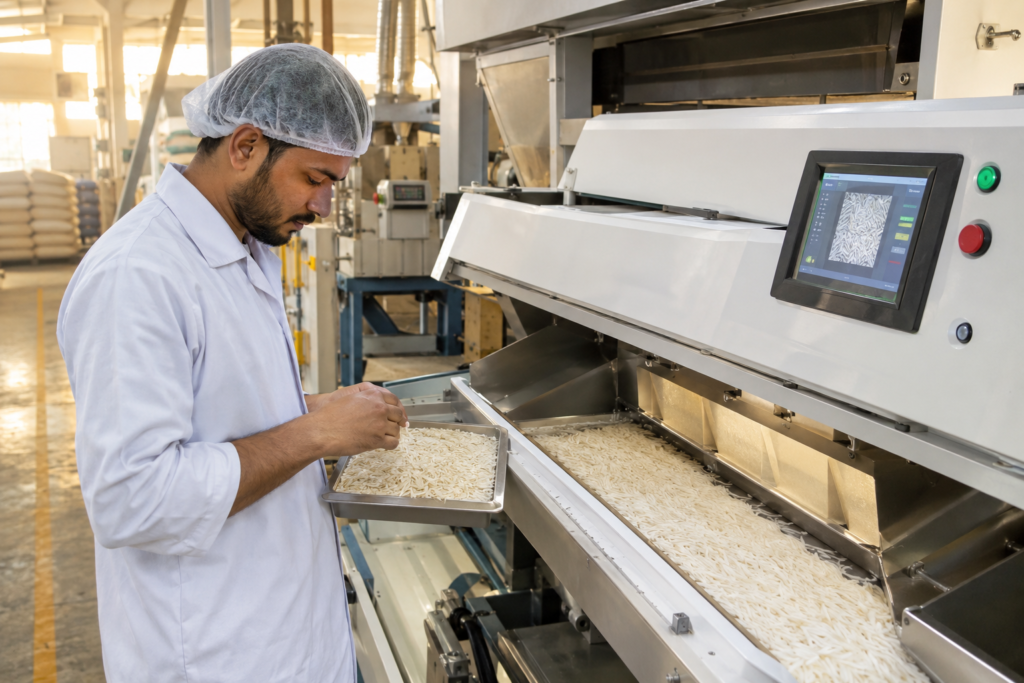
Processing. Saremco says its rice is cleaned, graded, sorted, and milled at its own facility in Pasrur, Punjab. It describes the output as laser-sorted and double-polished. Shipments go through Karachi and Port Qasim. Controlling the mill rather than only trading is what lets an exporter stand behind grain consistency from one container to the next.
Product range. Saremco organizes its rice under two brands, described on its brands page:
- DaaHeritage covers premium basmati: Super Kernel, plus 1121 in raw, steam, and sella forms. It is aimed at retail, hospitality, and quality-led importers.
- DaaPrime covers non-basmati long grain, including 386, IRRI-6, and IRRI-9. It is aimed at catering, institutional supply, and price-sensitive markets.
A single supplier covering both tiers is useful if you serve more than one customer segment. For buyers who want to understand the main variety, Saremco publishes a plain-language guide to what 1121 basmati rice is and a technical note on 1121 sella specifications and grades.
Testing and documentation. Saremco states that its export lots, including Super Kernel and 1121 Kainat, are backed by pre-shipment laboratory testing from SGS, Intertek, and PCSIR. It also says it handles certification and export paperwork as a standard part of each order. These are exactly the items buyers in the EU, UK, and GCC ask for, and its guide to basmati rice import requirements by country explains how they differ by destination.
Customization. Saremco lists bulk export, customized packaging, and private-label supply. That suits distributors building their own brand.
Who it suits. Importers and distributors who want a mill-linked supplier with documentation and private-label options, and who may also source other Pakistani commodities such as Himalayan salt from the same company.
2. Matco Foods Limited
Matco Foods is a Karachi-based, publicly listed company and probably the best-known name in Pakistani basmati. Its own company profile on the Pakistan Trade Portal describes it as the largest basmati exporter from Pakistan, with more than 50 years in the rice industry. It reports that its Falak brand is sold in over 50 countries, that it exports private-label rice to more than 70, and that it runs five rice processing plants in Karachi and Sadhoke, Punjab.
Matco also produces rice syrups, rice protein, and Himalayan salt, so it is a diversified food processor rather than a pure rice exporter. It suits large buyers who want an established brand or high-volume private label.
3. Guard Agricultural Research & Services (Guard Rice)
Guard comes from the seed and research side of the industry. According to PACRA’s rating report, the company was incorporated in 1989 and was the first private-sector organization in Pakistan to set up an in-house rice research and development facility. Its packed basmati is sold at home and exported under the Guard name to more than 45 destinations across Asia, the Middle East, North America, Africa, Europe, and Australia.
Its Gulfood exhibitor profile credits it with helping bring Super Basmati to domestic and international markets. Guard is a good fit for buyers who want branded, retail-ready packs with a long track record.
4. Irfan Noman Brothers (Private) Limited
Irfan Noman Brothers is a large processor-exporter incorporated in 1998. PACRA’s rating summary reports a processing capacity of 360,000 metric tons a year and exports to Malaysia and more than 40 other countries. Its business has been mainly non-basmati, with basmati volumes being added as part of a push toward value-added rice.
It is relevant if you need volume in both categories from one source. Please confirm current basmati availability directly, as the focus described in the rating report may have shifted.
5. Al-Khair Rice Mills (Private) Limited
Al-Khair is a newer, basmati-focused mill, incorporated in 2019. PACRA’s rating report says it deals mainly in 1121 basmati in classic and premium grades, Super Basmati, and PK 386 long grain, with processing capacity expanded to 30 metric tons an hour. Its revenue has included both local sales and exports.
A younger mill can be flexible with new buyers, but review its export history carefully before committing to large orders.
Basmati Varieties You’ll See in Export Quotes
| Variety | Typical use | Notes |
|---|---|---|
| Super Kernel / Super Basmati | Premium retail, hospitality | Long slender grain, strong aroma, traditional Pakistani export variety |
| 1121 (raw, steam, sella) | Biryani, pulao, catering | Extra-long grain with very high elongation after cooking |
| PK 386 | Value long grain | Common in price-sensitive markets |
Sella is parboiled before milling, which makes the grain firmer and less likely to break in cooking. Steam-treated rice is processed differently and gives a cleaner white appearance. Saremco’s explanation of how basmati is graded for export markets covers raw grain length, color, broken percentage, and moisture in more detail.
How to Choose an Exporter: A Practical Checklist
- Confirm export registration. REAP membership has been compulsory for rice exporters since 1998-99, according to its published history. Ask any supplier for proof of current membership.
- Ask whether they own the mill. A supplier who mills their own rice can usually answer questions on grain length and broken percentage with more authority than one who only trades.
- Request written specifications. Grain length, broken percentage, moisture, purity, and crop year should all appear on the quotation.
- Check pre-shipment testing. Pesticide residue limits differ between the EU, UK, and Gulf markets, so ask which labs the exporter uses and request sample reports.
- Order a sample first. Cook it, measure the elongation, and check the aroma before negotiating a container price.
- Agree on the Incoterms and payment terms early. FOB, CFR, and CIF each shift risk and cost differently, as does L/C versus T/T.
- Clarify packaging. Bag size, liner type, and labeling for private label should be fixed before production starts.
For export support more broadly, the Trade Development Authority of Pakistan’s agro-food division is a useful official contact.
Frequently Asked Questions
Which are the main basmati rice exporters in Pakistan?
Established names include Saremco Impex, Matco Foods, Guard Agricultural Research & Services, Irfan Noman Brothers, and Al-Khair Rice Mills. Many others operate through REAP, so compare specifications and documentation rather than company size alone.
What is the difference between Super Kernel and 1121 basmati?
Super Kernel is the traditional premium export variety known for aroma and slender grain. 1121 is an extra-long grain variety valued for how far it lengthens when cooked, and it is popular in catering and biryani.
What is sella basmati rice?
Sella basmati is parboiled before milling. The result is a firmer grain that holds its shape better in large-batch cooking and tends to suit long supply chains and food service.
What is the minimum order for Pakistani basmati?
It varies by exporter, variety, and packaging. Most bulk quotes are made per container. Confirm the quantity and terms directly with your chosen supplier.
What documents come with a basmati rice shipment?
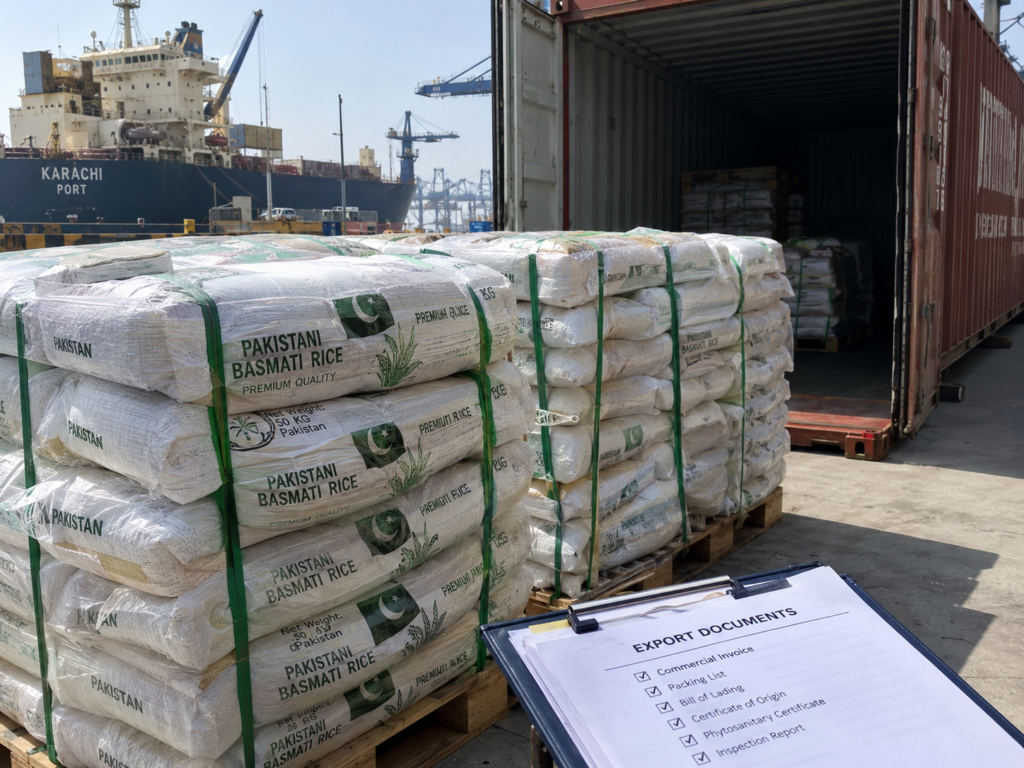
Typically, a commercial invoice, packing list, bill of lading, certificate of origin, and phytosanitary certificate, plus lab reports where the destination requires them. Requirements differ by market, so confirm before shipping.
Can Saremco Impex supply private-label basmati?
Saremco states that it offers bulk export, customized packaging, and private-label supply. You can send an inquiry through Saremco Impex with your target market, variety, and quantity.
Final Thoughts
Pakistan offers basmati buyers real choice, from branded exporters with decades of history to newer mills with flexible terms. The right supplier is the one that can show you its specifications, testing, and documentation in writing. If you want a mill-linked exporter with premium and value brands and private-label options, send Saremco Impex Private Limited a sample request and compare it against any other supplier on your shortlist.