Long Grain Rice Exporters from Pakistan: 5 Suppliers Worth Knowing
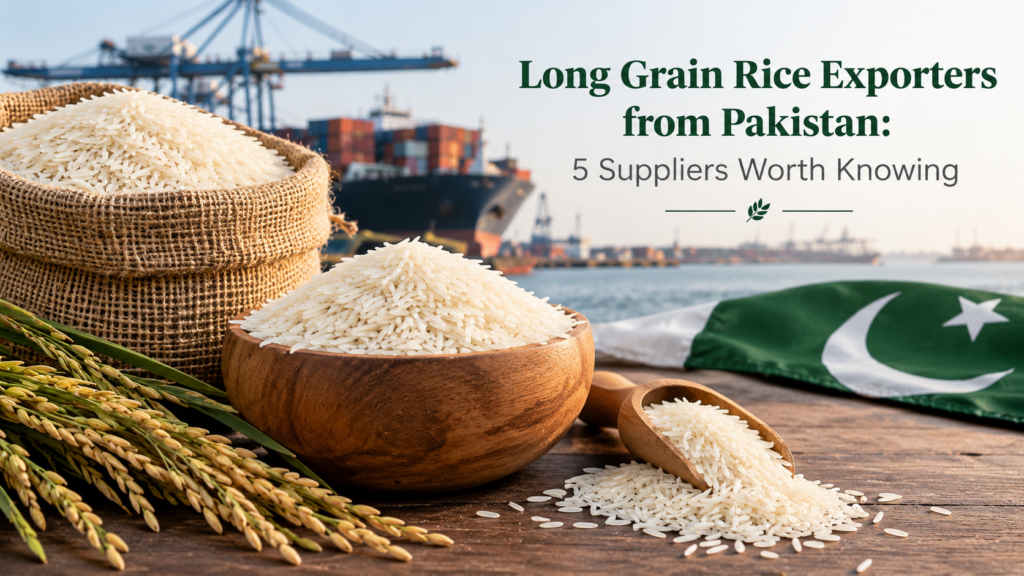
Pakistan sits in the group of major rice-exporting countries, and the Rice Exporters Association of Pakistan (REAP) has publicly described it as the world’s fourth-largest rice exporter. Most of that volume is long grain, from aromatic basmati to the plain white varieties that feed catering kitchens across the Gulf and Africa.
Choosing among the many exporters is harder than it looks, because most of them list similar varieties. This guide explains what “long grain rice” means in the Pakistani trade. It also profiles five exporters, starting with Saremco Impex Private Limited, and sets out the checks that separate a dependable supplier from a risky one. The five are not ranked by size, and all information comes from public sources and each company’s own published material.
What “Long Grain Rice” Means in Pakistan’s Export Trade
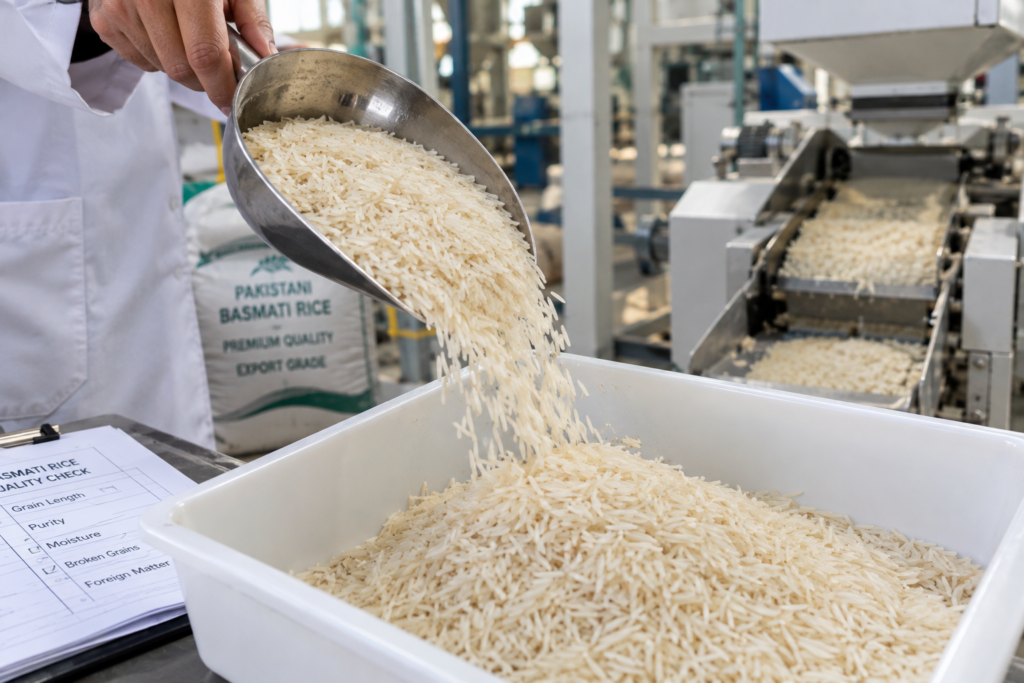
Long grain rice has slender kernels that stay separate and fluffy after cooking, instead of clumping together. In Pakistan, the term covers two broad families:
- Basmati varieties. These include Super Kernel and 1121. They are aromatic and extra-long, and are used for biryani, pulao and premium retail packs. They are grown mainly in Punjab.
- Non-basmati long grain. These include PK-386, IRRI-6 and IRRI-9, which Sindh and Punjab both produce. They have little aroma but give dependable results at lower cost. Hotels, caterers, institutional buyers and price-sensitive markets order them in large volumes.
The same exporter often handles both families, but not always equally well. Some companies built their reputation on basmati, others on high-volume IRRI shipments. Knowing which side a supplier is strongest on helps you narrow the field quickly.
1. Saremco Impex Private Limited
Saremco Impex Private Limited is the international export and trading arm of Daa Group. Its rice business is organised around two brands, which makes it easy for a buyer to match a variety to a market. The rice brands are:
- DaaHeritage Rice covers aromatic basmati and extra-long grain varieties, including Super Kernel, and is presented for export-grade and retail use. Pack sizes run from 1 kg retail bags up to 50 kg.
- DaaPrime Rice covers everyday non-basmati long grain: PK-386, IRRI-6 and IRRI-9. The brand is aimed at commercial kitchens, catering, institutional supply and price-sensitive export markets.
According to its website, the company processes rice at mills in Punjab (Pasrur and Pind Dadan Khan) with optical sortex cleaning, and ships through Karachi and Gwadar. It states that it holds ISO 9001:2015 and HACCP certification and US FDA registration, and that export lots are tested by third-party laboratories such as SGS, Intertek and PCSIR. It also lists more than 45 export destinations and offers private labelling and flexible packaging.
For a buyer, the practical appeal is documentation. Saremco publishes buyer-oriented guides that most exporters leave to the sales call, such as its explanation of how basmati rice is graded for export and its import requirements by country. If you are comparing 1121 sella specifically, its page on 1121 sella basmati grades and export specifications is a good starting point. The company also trades Himalayan pink salt, which suits importers who want to consolidate more than one product from Pakistan.
2. Matco Foods Limited
Matco Foods is a Karachi-based, publicly listed company on the Pakistan Stock Exchange. Its business profile in PSX filings traces its origins to 1964 and describes it as the largest basmati rice exporter from Pakistan. Its Falak brand is sold in dozens of countries, and the company reports multiple rice processing and milling plants. It has also moved into rice-derived ingredients, spices and salt.
The strength here is scale and transparency, since listed companies publish audited results. It suits buyers who want a large corporate counterparty. A smaller buyer may find a company of this size less flexible on small or customised orders.
3. Guard Agricultural Research & Services
Guard is best known for its branded basmati. According to PACRA’s rating report, the company operates across seeds, processed basmati and other food products, and exports to more than 45 destinations in Asia, the Middle East, North America, Africa, Europe and Australia. It was incorporated in 1989, as the first private-sector company in Pakistan to run its own rice research facility.
Its research background is unusual among exporters and gives it strong seed-to-shelf control. The focus is branded, packaged basmati, so buyers looking for bulk non-basmati may find fewer options.
4. United Traders
United Traders is a Karachi-based exporter that, according to its profile on the government-run Pakistan Trade Portal, was established in 1976. Its listed range includes 1121 sella, steam and white, Super Basmati, PK-386, IRRI-9 and D-98, along with brown rice, maize and sesame seeds. It describes its main markets as spanning Asia, the Middle East, Europe, America and Africa.
It is a reasonable fit for buyers wanting a mixed basmati and non-basmati order from one Karachi-based source. As with any company profile on a trade directory, treat the description as a starting point and confirm the details directly.
5. K.K. Rice Mills
K.K. Rice Mills is a useful example of a non-basmati specialist. PACRA’s rating summary says it was incorporated in 2009, obtained its exporter licence from REAP that year, and mainly exports non-basmati rice, with a focus on the Middle East and Africa.
If you’re looking for volume IRRI-6 or IRRI-9 at a competitive price, I recommend including a specialist in your comparison. Premium aromatic basmati is not its main line.
How to Compare Pakistani Long Grain Rice Exporters
Price per tonne matters, but it is rarely the most useful comparison. These checks protect you more:
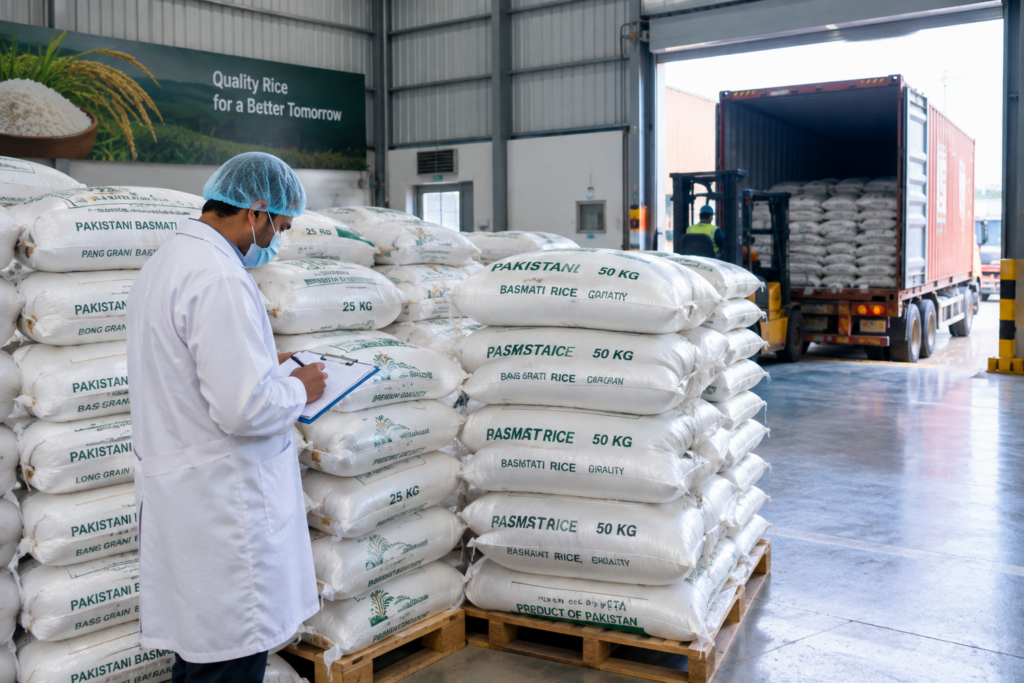
- Get the specification in writing. It should state variety, average grain length, broken percentage, moisture, purity and crop year. “Premium quality” means nothing without numbers.
- Ask for a sample and a laboratory report. Reputable exporters expect this. Pesticide residue results matter most for the EU, where limits are strict.
- Check licences and registration. Exporters of rice in Pakistan must be registered with REAP, whose membership has been compulsory for rice exporters since the late 1990s.
- Confirm the documents. A normal shipment needs a certificate of origin, phytosanitary certificate and certificate of analysis. Some markets also want halal certification or specific labelling.
- Clarify packaging and loading. Ask about bag type, pack weight, private-label options and how containers are loaded and inspected.
- Agree on the inspection process. Third-party pre-shipment inspection protects both sides.
- Start with a trial order. A first container shows how a supplier handles communication and timelines in practice.
The Trade Development Authority of Pakistan publishes exporter directories and trade information that help with cross-checking a company before you commit.
Basmati or Non-Basmati: Which Should You Source?
Choose basmati (Super Kernel, 1121) when aroma, grain length and elongation drive your product, as in restaurants, premium retail and biryani-focused markets. Choose non-basmati long grain (PK-386, IRRI-6, IRRI-9) when you need dependable results across big cooking batches at lower cost, as in institutional catering and mass-market retail.
Many importers split orders between the two. In that case, a supplier that offers both under one roof, as Saremco does with its two brands, can simplify documentation and logistics.
Frequently Asked Questions
Which long grain rice varieties does Pakistan export?
The main ones are Super Kernel and 1121 basmati, plus non-basmati PK-386, IRRI-6 and IRRI-9. Sella (parboiled), steam and white versions are available for several of them.
Is IRRI-6 a long grain rice?
It is generally traded as a long-grain white rice and is known for economy and consistent cooking. Basmati varieties have longer, more slender grains.
What documents come with a rice shipment from Pakistan?
Typically, a certificate of origin, phytosanitary certificate, certificate of analysis, bill of lading and commercial invoice. Some destinations require halal certification or particular labelling.
What is a typical minimum order quantity?
It varies by supplier and variety. Many exporters sell by the container, and a 20-foot container usually holds around 24 to 26 tonnes of bagged rice. Confirm the minimum with each supplier.
How do I verify a Pakistani rice exporter before ordering?
Check REAP registration, request current certifications and lab reports, ask for references in your region, and begin with a sample or a single container.
Can Pakistani exporters supply private-label rice?
Several can, including Saremco Impex, which lists private labelling and flexible packaging among its services. Ask about minimum quantities and artwork requirements.
Final Thoughts
Pakistan has no shortage of capable long grain rice exporters, and each of the five above fits a different buyer. Large listed companies suit buyers who want corporate scale, and specialists suit buyers who want a particular variety at volume. For importers who want both basmati and non-basmati, transparent documentation and private-label flexibility in one place, Saremco Impex Private Limited is worth requesting a quotation and sample from alongside the others.