What Is a Certificate of Origin and Why It Matters for Importers
A shipment of rice can have a perfect invoice, a clean bill of lading and a packing list that matches the last bag, and still pay more duty than expected. The reason is often one missing page: the certificate of origin.
It is one of the shortest documents in the file and one of the most often misunderstood. This guide explains what a certificate of origin is, who issues it, the two main types, and what an importer should check before accepting one.
What a Certificate of Origin Actually Is
A certificate of origin states the country where goods were produced, grown or manufactured. The International Chamber of Commerce describes it as a trade document that businesses, banks and customs officials use to authenticate the origin of exported goods.
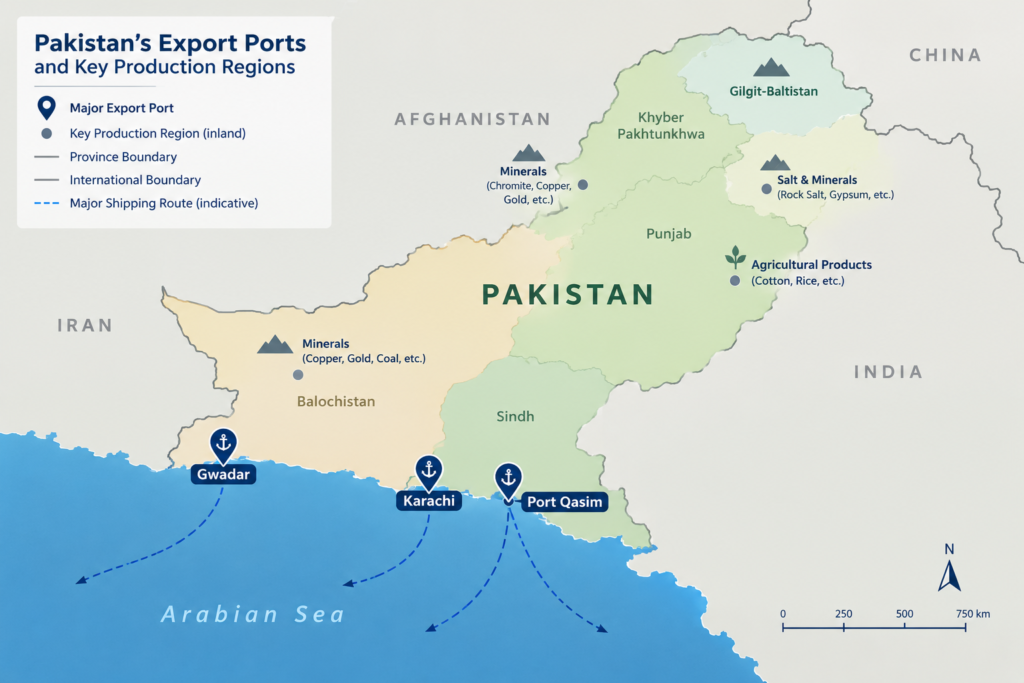
Origin is not the same as where the goods shipped from. A consignment can leave from a transit port in a third country and still be of Pakistani origin. The certificate speaks to where the product was made, not the route it took.
Why Origin Matters to You as the Buyer
Origin affects more than paperwork. The World Customs Organization explains that origin rules are used to implement trade preferences, quotas, anti-dumping measures and countervailing duties, along with statistics. For an importer, that translates into practical questions:
- Duty rate. If a trade agreement gives reduced or zero duty to goods from a particular country, the importer usually needs proof of origin to claim it.
- Admissibility. Some products face quotas or additional duties depending on where they come from.
- Bank requirements. If you pay by letter of credit, the credit may list a certificate of origin as a required document. If it is missing or wrong, the bank can refuse to pay.
- Labelling. Origin marking rules in some markets need to match what is on your paperwork.
Whether you need one depends on your country, your product, and whether you are claiming a preference. This isn’t universal, so please confirm with your customs broker before the order is confirmed.
Two Types: Non-Preferential and Preferential
The WCO and the WTO both separate origin rules into two groups, and the distinction affects which document you will receive.
Non-preferential certificates of origin
This is the standard, or “generic,” certificate. It states the origin of the goods without claiming a special tariff rate. It is commonly used to satisfy a contract, a bank or a customs requirement, or for statistics and origin marking. In most countries, chambers of commerce issue these certificates, in manual or electronic form.
Preferential certificates of origin
A preferential proof of origin supports a claim for reduced or zero duty under a trade agreement. These follow the specific agreement’s rules, which usually set out what a product must satisfy to count as originating. The form and the issuing body vary by agreement, and some agreements allow a statement on the invoice instead of a separate certificate. Never assume the generic certificate will do the same job.
Who Issues It, and How Pakistan Handles It
The issuing body differs by country. Chambers of commerce issue many certificates worldwide, and in some countries customs or trade authorities do so.
For Pakistan, the Trade Development Authority of Pakistan has published a guide to obtaining and amending an electronic certificate of origin through the Pakistan Single Window. It describes how the exporter links the request to the relevant goods declaration and selects the origin criterion, noting that choosing the correct criterion matters for TDAP’s approval. For an importer, the practical takeaway is simple: the certificate is tied to the export declaration, so its details should line up with the rest of the shipping set.
What to Check Before You Accept a Certificate
Mistakes here are easier to fix before shipment than after arrival. Check these items:
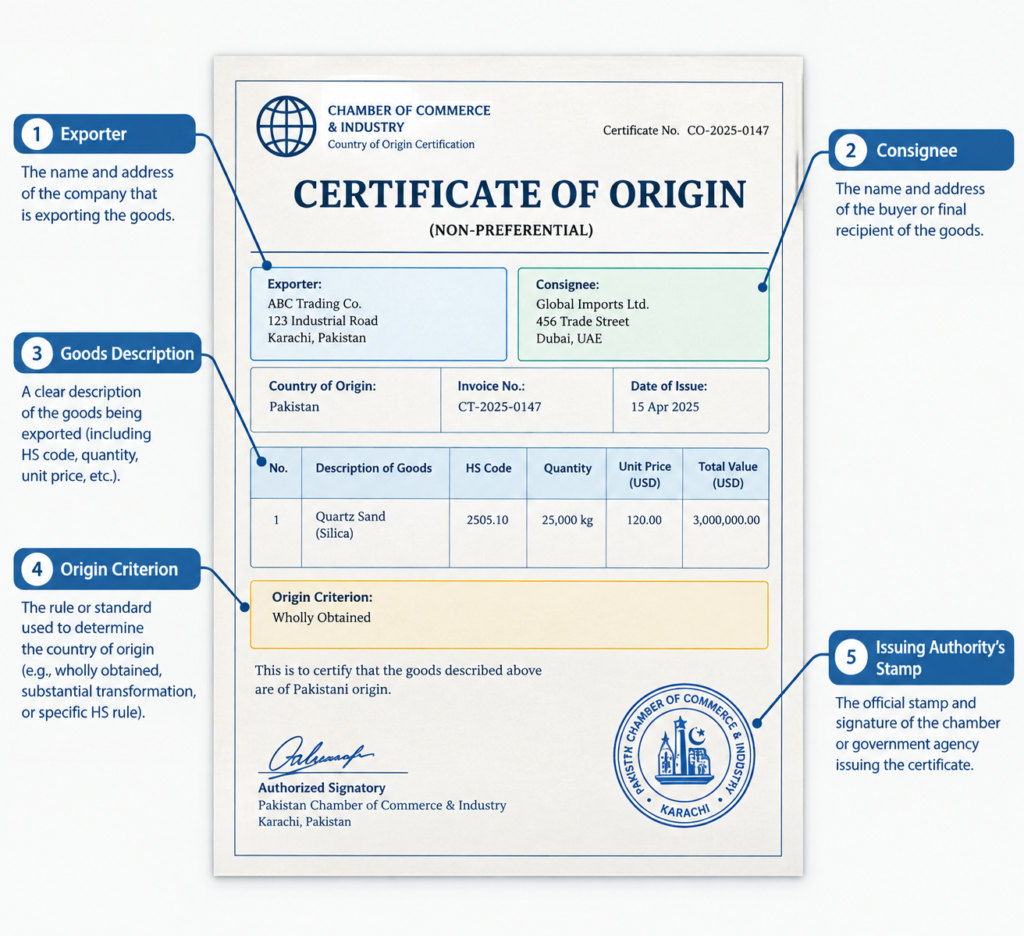
- Names and addresses. Exporter and consignee should match the commercial invoice exactly.
- Goods description. It should be specific and consistent with the invoice, packing list and HS code. “Rice” is weaker than a stated variety and grade.
- Quantities and weights. These should agree with the packing list.
- Origin statement. Confirm the country named is the one you expect, and that the form type suits your purpose.
- Issuing authority and seal. Check that the stamp and signature are present and look authentic. Where the certificate carries an ICC label, the ICC offers a verification tool for it.
- Date and reference numbers. The certificate should refer to the same shipment, invoice number or declaration as the other documents.
- Amendments. If something is wrong, the exporter needs to apply for an amendment. Hand-corrected certificates can be refused.
Common Problems Importers Run Into
- Requesting a certificate only after the goods have shipped, when the buyer’s bank or customs authority expected it earlier.
- Receiving a generic certificate when a preferential proof was needed for a duty reduction.
- Description or quantity mismatches between the certificate and the invoice.
- Misspelt consignee names or old addresses.
- Assuming one certificate will cover every shipment. Each is generally tied to a particular consignment.
Questions to Put to Your Supplier
- Will you provide a certificate of origin with every shipment, and which type?
- Who issues it, and is it paper or electronic?
- Can I see a sample from a previous shipment with confidential details removed?
- How do you handle corrections if a detail is wrong?
- Will the description on the certificate match the invoice and packing list?
A supplier who handles export paperwork regularly will usually answer these without hesitation.
Working with an Exporter
Saremco Impex Private Limited is a Pakistani export company with a rice division and a salt division. Its article on what makes extra long grain rice premium is a useful companion if you are comparing grades before you place an order. Whichever supplier you choose, agree on the paperwork list at the quotation stage, not after the container is booked.
Frequently Asked Questions
What is a certificate of origin in simple terms?
It is an official document that states the country where goods were made or produced. Customs, banks and buyers use it to confirm origin.
Is a certificate of origin always required for imports?
No. Requirements depend on your country, the product, and whether you are claiming a preferential duty rate. Your customs broker can confirm for your specific case.
What is the difference between a generic and a preferential certificate of origin?
A generic, or non-preferential, certificate states origin without claiming special tariff treatment. A preferential proof supports a claim for reduced or zero duty under a trade agreement.
Who issues a certificate of origin?
In most countries, chambers of commerce issue them, though in some cases customs or trade authorities do. In Pakistan, TDAP has published a guide for obtaining electronic certificates through the Pakistan Single Window.
Can a certificate of origin be corrected after it is issued?
Generally, the exporter must request an amendment from the issuing authority. TDAP’s guide covers amending an electronic certificate, but procedures differ by country, so ask your supplier how this is handled.
Does the certificate need to match the invoice?
Yes. Names, descriptions, quantities and references should agree across all documents, since customs compare them.
Final Thoughts
A certificate of origin is short, but it can decide your duty rate, your bank payment and your clearance timeline. Know which type you need, check the details against the invoice and packing list, and settle the document list with your supplier early.
If you are sourcing rice or Himalayan salt from Pakistan and want to discuss the paperwork that would accompany an order, you can reach the team through the Saremco Impex contact page, or browse the divisions from the company homepage.